Porto and Gaia Reject the Road Deck on the Douro High-Speed Rail Bridge, Pressing the Government to Redirect the Funds to a €25 Million Pedestrian-and-Cycle Crossing
The mayors of Porto and Gaia want the car deck dropped from the new high-speed rail bridge over the Douro, arguing the money should pay for a €25 million pedestrian-and-cycle crossing instead. The environmental consultation closes on 29 June.
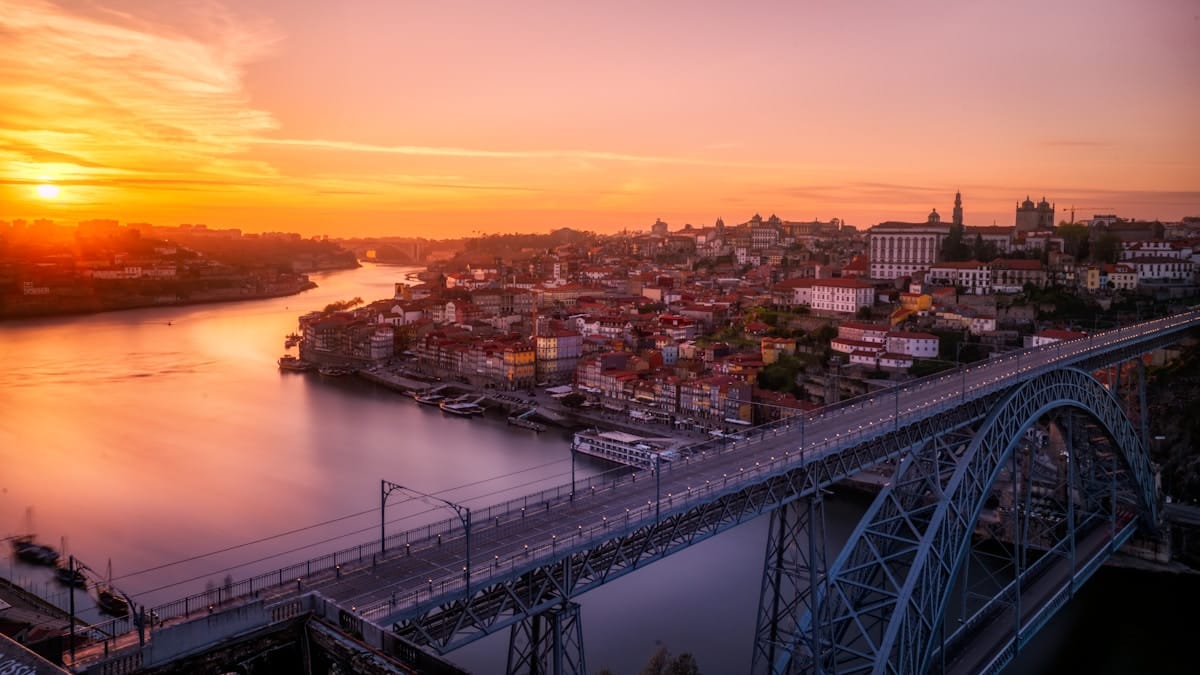
The mayors of Porto and Vila Nova de Gaia have come out against the road deck planned for the new high-speed rail bridge over the River Douro, arguing that the money would be far better spent on a dedicated pedestrian-and-cycle crossing the two cities now want to build together.
The bridge is a central piece of the planned Porto–Lisbon high-speed line (linha de alta velocidade). Under the revised design from the AVAN Norte consortium, it would carry two decks: an upper level for trains and a lower, suspended level for cars, bicycles and pedestrians. Porto mayor Pedro Duarte and Gaia mayor Luís Filipe Menezes say that lower road deck is neither necessary nor justified.
Menezes was blunt, calling the road deck a "barbaridade" (an outrage). He noted that lifting it to a usable height — so it could connect to Gaia’s internal ring road, the VCI (Via de Cintura Interna) — would cost roughly €50 million on the Gaia side alone, with further costly works required in Porto.
- The crossing: a two-deck portal-frame bridge over the Douro on the new Porto–Lisbon high-speed line, replacing the earlier arch design.
- The objection: both councils want the lower road deck dropped and its budget reassigned.
- The alternative: a €25 million pedestrian-and-cycle bridge linking Porto’s Ribeira to the Cais de Gaia — a 250-metre span about 350 metres downstream of the Ponte Luís I, targeted for completion by the end of 2029.
- The clock: the environmental compliance report (RECAPE) is in public consultation until 29 June, with the councils due to respond by 25 June.
Both mayors say Infraestruturas de Portugal (the national rail and road manager) and the consortium had previously signalled that, if the road deck were scrapped, the freed-up funding would flow to other priority projects shared by the two municipalities. The two councils have now formalised a memorandum of understanding to launch the design-build tender for the low-level walking-and-cycling crossing.
The row sits on top of a long-running argument over road access across the Douro, including Gaia’s push to return car traffic to the lower deck of the historic Ponte Luís I, a move Porto has resisted. The high-speed line itself is one of the country’s largest infrastructure bets, intended to slash Porto–Lisbon journey times and eventually plug into the Spanish network — part of the same EU-backed push that also channels money into Portugal through programmes such as the new EEA Grants cycle.
What This Means for Residents
- If you live in Porto or Gaia: a car deck would have meant years of extra works and traffic disruption around the riverfront. Dropping it points to a quieter, walk-and-cycle-first crossing instead.
- For commuters: the real prize remains the high-speed line — faster, more frequent Porto–Lisbon trains — rather than extra road capacity over the Douro.
- For the regional economy: the North has long argued it is short-changed on big-ticket transport investment, an imbalance visible in Portugal’s per-capita output figures. How this budget is reallocated will shape mobility here for a decade.
With the consultation window closing on 29 June, the government and Infraestruturas de Portugal must now decide whether to keep the contested road deck or back the cities’ cheaper, greener alternative. For anyone settling into life on either bank of the Douro, the outcome will help define how Porto and Gaia move for years to come. On the Tagus-crossing, southern-bank and Lisbon-mobility side of the file, the 25 de Abril Bridge's sixtieth anniversary sets the latest reference. On the Porto municipal side of the file, the court freeze on the Mercado do Bolhão stall auction sets out the popular action a traders' association filed on 30 July, what admitting a providência cautelar actually suspends, and the July auction in which a fish stall with a €343.80 base went for €7,550 a month. On the wider question of where the national network is heading, what Portugal has told Brussels about changing the gauge of its railways sets out the Infraestruturas de Portugal study delivered to the European Commission, which prices conversion to European gauge at 6 to 6.9 billion euros and 17 to 30 years of works and concludes that it will hardly be justifiable.