Parpública Delivers Its Report on the Air France-KLM and Lufthansa Bids for TAP on Tuesday, and Eleven Criteria Frame the Government's Choice
ECO reports the evaluation of the two binding offers for 44.9 percent of TAP reaches the finance and air transport ministers on 1 September. The tender specification requires a reasoned appraisal of absolute and relative merit, and price is only the first of eleven criteria.
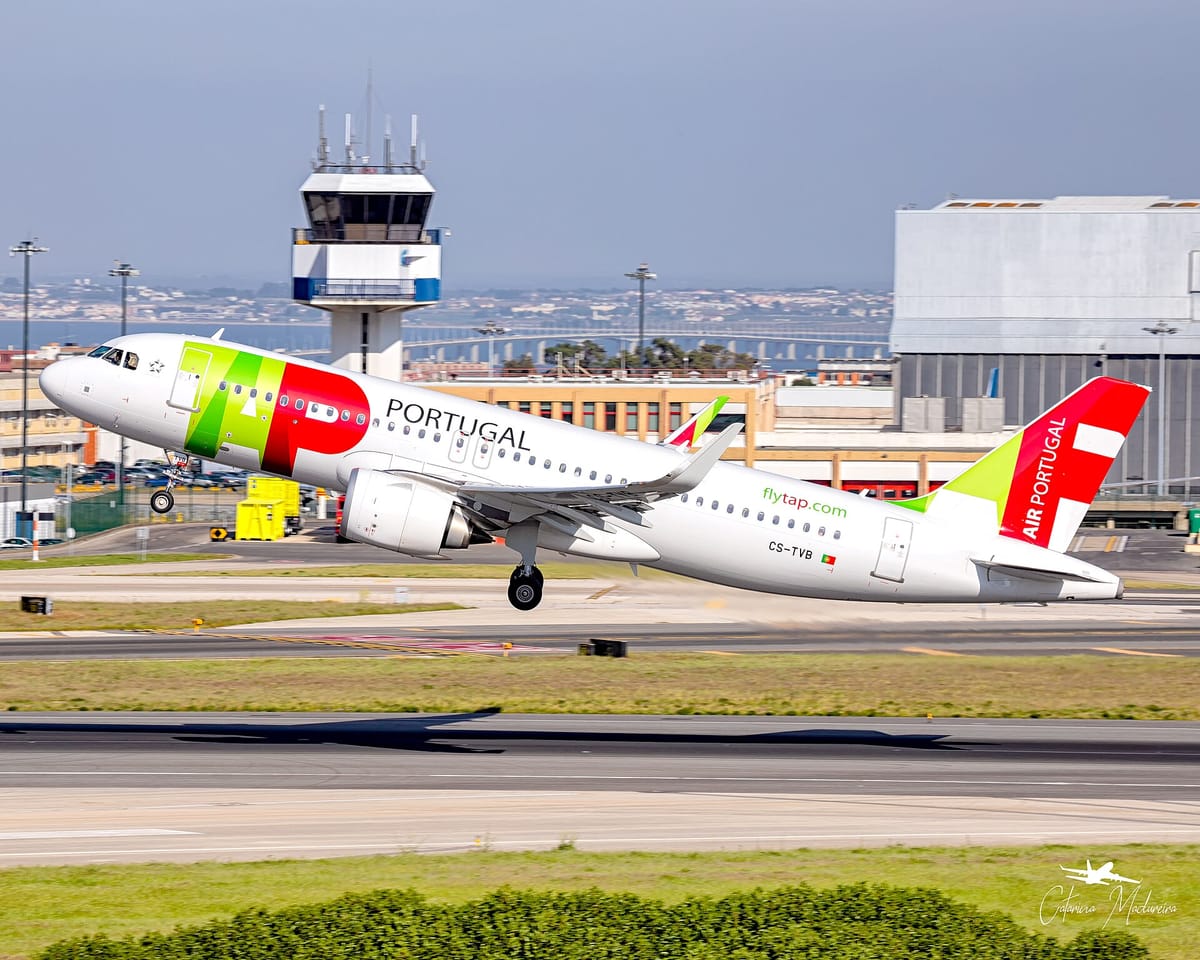
Parpública, the holding company through which the Portuguese state owns its corporate stakes, will hand the government its report on the two binding offers for TAP on Tuesday 1 September, ECO reported on Friday. The document assesses the bids filed by Air France-KLM and Deutsche Lufthansa AG for 44.9 percent of the flag carrier, and it is the step that unlocks the Council of Ministers' choice of a buyer.
Parpública confirmed on 29 July that it had received the two binding proposals, the only invitations issued after the second stage of the process closed. Its announcement that day set the clock: under the Caderno de Encargos (tender specification), the report goes to the ministers responsible for finance and air transport within 30 days, a deadline that suspends if either bidder is asked for clarifications.
What the report has to contain
The rules are not discretionary. Resolução do Conselho de Ministros n.º 141-B/2025 (Council of Ministers Resolution), which approved the tender specification, requires Parpública to produce a reasoned report describing the offers in detail, recording the information-gathering steps taken, and then appraising each proposal to determine its absolute and relative merit. The report may conclude that the two are of equivalent merit, which would leave the political choice entirely with the cabinet.
Eleven selection criteria govern that appraisal, and price is only the first. The list also weighs technical and management experience in aviation, including prior acquisitions of similar scale; the bidder's financial sustainability and the projected profitability of TAP afterwards; and an "ambitious and well-founded" industrial and strategic plan covering fleet and long-haul connectivity from Portuguese airports.
Several criteria are explicitly protective. One requires respect for the existing agreements with third countries, "namely as regards the location of TAP's head office and principal place of business." Another asks for commitments on air links between the mainland, the autonomous regions, the Portuguese diaspora and the Portuguese-speaking world. A further criterion demands that the buyer accept TAP's labour commitments and every collective bargaining instrument in force, and one covers regulatory risk, including merger control and the EU's foreign subsidies rules. The final criterion invites bidders to detail plans for maintenance and engineering, and for sustainable aviation fuel production under Portugal's aviation decarbonisation roadmap.
The shape of the deal
Decreto-Lei n.º 92/2025 of 14 August set the structure: a direct reference sale of up to 44.9 percent of TAP's share capital, plus a separate offer of up to 5 percent reserved for employees of the TAP Group. Any employee shares left unsubscribed go to the reference investor, which is how the headline figure of just under 50 percent is reached. The state injected €3.2 billion into the airline after the 2021 renationalisation, and the European Commission's 2022 decision bars it from investing further, which is the legal reason the sale restarted at all.
Parpública's reports also go to the special monitoring commission chaired by Daniel Traça, former dean of Nova SBE and now head of ESADE in Spain, alongside Luís Cabral of New York University and Rui Albuquerque of Boston College's Carroll School of Management. Once the process closes, the full file goes to the Tribunal de Contas (Court of Auditors) and, where applicable, to the securities regulator CMVM. The cabinet also retains the right to suspend or terminate the whole reprivatisation up to physical settlement, on public interest grounds, with no compensation owed to either bidder.
What this means for foreign residents
- Route network: The criteria push hardest on connectivity to the Azores, Madeira, Brazil and Portuguese-speaking Africa. Whichever group wins, those links are contractually defended in a way that transfer traffic through Lisbon is not.
- Head office: The tender specification requires bidders to respect the location of TAP's headquarters and principal establishment. Lisbon is not up for negotiation.
- Timing: The report lands Tuesday, but no deadline binds the Council of Ministers after that. Montenegro has pointed to September for a decision.
- Booking: Nothing changes for tickets, Miles&Go balances or existing schedules until contracts are signed and regulatory clearance follows, which is a matter of months rather than weeks.
One question the report will not settle is what the winner does with TAP's other businesses. The airline's maintenance division has been positioning itself for European defence work, and the tender specification asks bidders to say what they would invest there. That answer sits inside the sealed proposals, and stays there until the cabinet picks a name.