Only 58 Percent of Lisbon-Area Residents Are Happy With Their City, the Lowest in Portugal, as Noise, Dirt and Traffic Take Their Toll
A Francisco Manuel dos Santos Foundation survey finds 70 percent of Portuguese city dwellers satisfied, against 86 percent in EU cities. Housing and health top residents' priorities.
Only 58 percent of people living in the Lisbon metropolitan area say they are satisfied with their city, the lowest share of any type of city in Portugal, according to a survey for the Fundação Francisco Manuel dos Santos (Francisco Manuel dos Santos Foundation, FFMS). In the Porto metropolitan area the figure is 76 percent, level with the country's small coastal cities.
The "Barómetro das Cidades" (Cities Barometer), a 181-page report published by the foundation in September, is based on 1,247 interviews carried out by the polling firm DOMP between 10 March and 24 May 2026. Across all the cities covered, 70 percent of residents said they were satisfied with the place they live. The authors set that against 86 percent in the European Commission's 2023 survey of quality of life in European cities.
Lisbon pays the price of its size
The report's authors, led by Patrícia Melo of ISEG at the University of Lisbon, describe the capital's metropolitan area as showing "the clearest signs" of the downsides of urban concentration. On almost every measure of the urban environment, residents of the Lisbon area are the least content in the country:
- noise: 35 percent satisfied, against 45 percent nationally;
- air quality: 40 percent satisfied, against 56 percent;
- street cleanliness: 30 percent satisfied, with 43 percent unhappy, against 26 percent unhappy nationally;
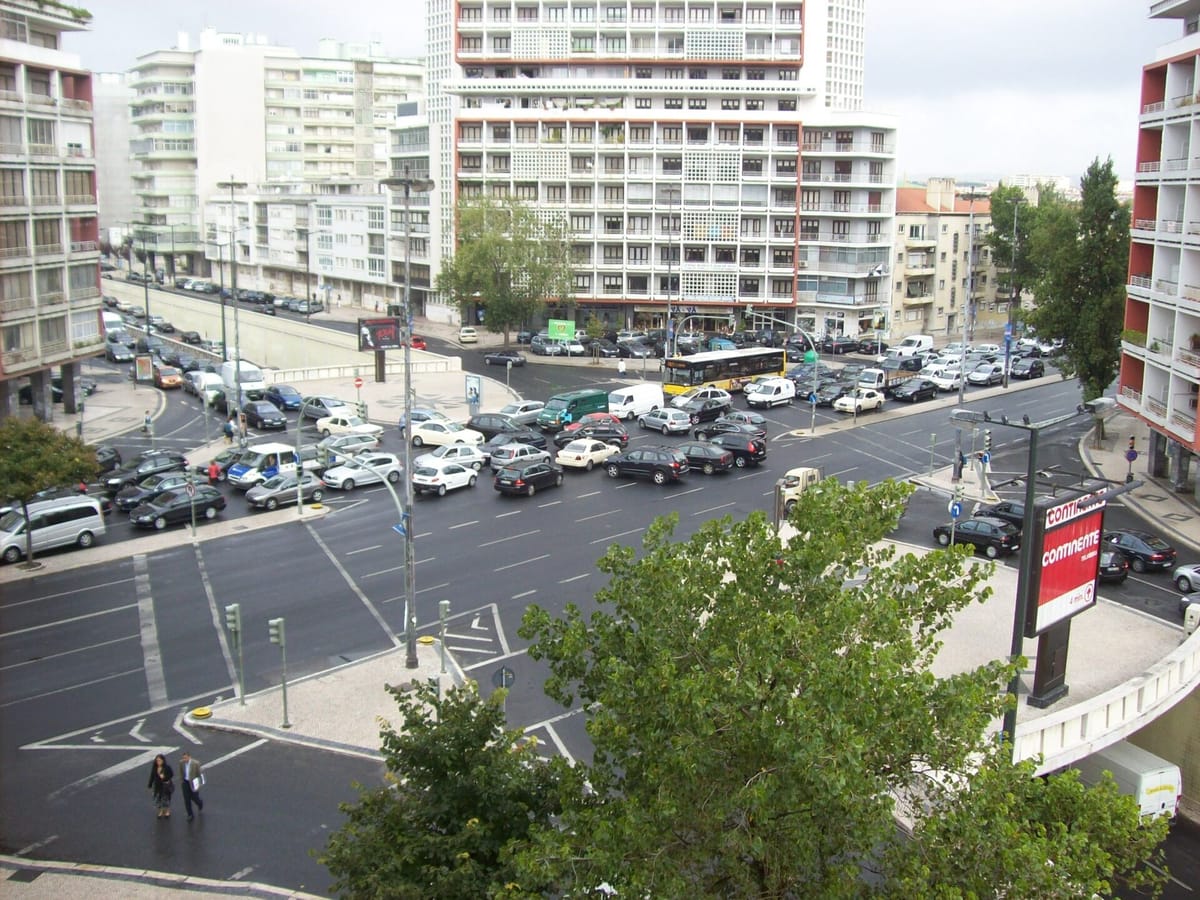
- traffic congestion: 51 percent unhappy, against 39 percent across the country.
Public services show the same pressure. Only 39 percent of Lisbon-area residents are satisfied with primary health care, against 60 percent in the Porto area and 53 percent nationally.
Feelings of safety are lower too. Nationally, 61 percent of residents say they feel safe walking alone in their neighbourhood at night. In the Lisbon area that falls to 49 percent, and 48 percent say there are parts of their city they avoid because they feel unsafe, the highest share in the country. Asked whether immigrants are well integrated into local life, 40 percent of residents nationally agreed, and 32 percent in the Lisbon area.
Housing and the long commute
Housing is the complaint that unites the country. Nationally, 79 percent of residents disagree that it is easy to find suitable housing at a reasonable price, and 54 percent disagree completely. The share rises to 88 percent in the Porto area and 82 percent in the Lisbon area. Half of all respondents (51 percent) say housing costs limit what they can spend on other parts of their lives.
Getting to work takes time. Residents spend an average of 72 minutes a day on their daily commute. In the Lisbon area it is 80 minutes, against 58 minutes in inland cities, and one respondent in five (21 percent) spends two hours or more a day commuting.
Public transport scores poorly against the rest of Europe. Only 45 percent of respondents are satisfied with how often services run, 40 percent with their reliability and 46 percent with the price, against 74, 73 and 70 percent in the European survey. In the Lisbon area, 42 percent are unhappy with reliability and punctuality, against 16 percent in the Porto area. People who do not use public transport mostly blame infrequent services and poor connections between modes. Price comes well down the list: even where it matters most, in medium-sized coastal cities, it is cited by 17 percent.
Perhaps unsurprisingly, 29 percent of Lisbon-area residents see moving to a smaller city as a positive prospect, the highest share in the country.
What residents want, and what they will not accept
Asked to name three priorities for public action, respondents put health and housing far ahead of everything else, both chosen by more than 65 percent, followed by jobs and the local economy (41 percent). Climate change (19 percent) and social protection and inclusion (18 percent) came near the bottom, even though fieldwork followed recent floods and heatwaves.
Support for policies depends on who pays. Two thirds (65 percent) back tax incentives to persuade teachers and health workers to move to smaller cities, and 52 percent agree that councils should be able to increase affordable housing by expropriating empty homes or taxing them more heavily. But 55 percent oppose raising parking charges for residents and visitors to pay for public transport, walking and cycling. Outright opposition was highest in the two metropolitan areas, although the report notes that the regional differences on this question were not statistically significant.
The authors also ran a small experiment with 556 residents of the Lisbon and Porto areas. Half were first shown a short text on the health effects of road pollution. That group was significantly more supportive of urban tolls and low-emission zones than the half that did not read it, which the authors say points to the value of explaining the benefits of such measures.
Who was asked
The survey covered residents aged 18 and over who speak Portuguese and have a landline or internet access, so it does not capture the views of immigrants who do not speak the language. A third of the interviews were by telephone and two thirds online. The results were not weighted, and the maximum sampling error is about 2.8 percentage points. The comparisons with other European cities set this survey against a separate European Commission survey, so they show a broad gap rather than a like-for-like measure.
The findings land as Lisbon debates its shared e-scooters, with 20,000 signatures gathered for a referendum, and as Porto's metro gets 421 million euros for two new lines.
Source: Fundação Francisco Manuel dos Santos, "Barómetro das Cidades" (September 2026), by Patrícia Melo (coordinator), Eduarda Marques da Costa and Alexandra Gomes, survey fieldwork by DOMP.