Lisbon Voters May Get a Say on the City's 6,000 Shared E-Scooters, After the ACP Gathered 20,000 Signatures for a Referendum
Four times the legal minimum. The initiative now goes to the Municipal Assembly, and then to the Constitutional Court, before any vote on whether shared scooters stay on Lisbon's streets.
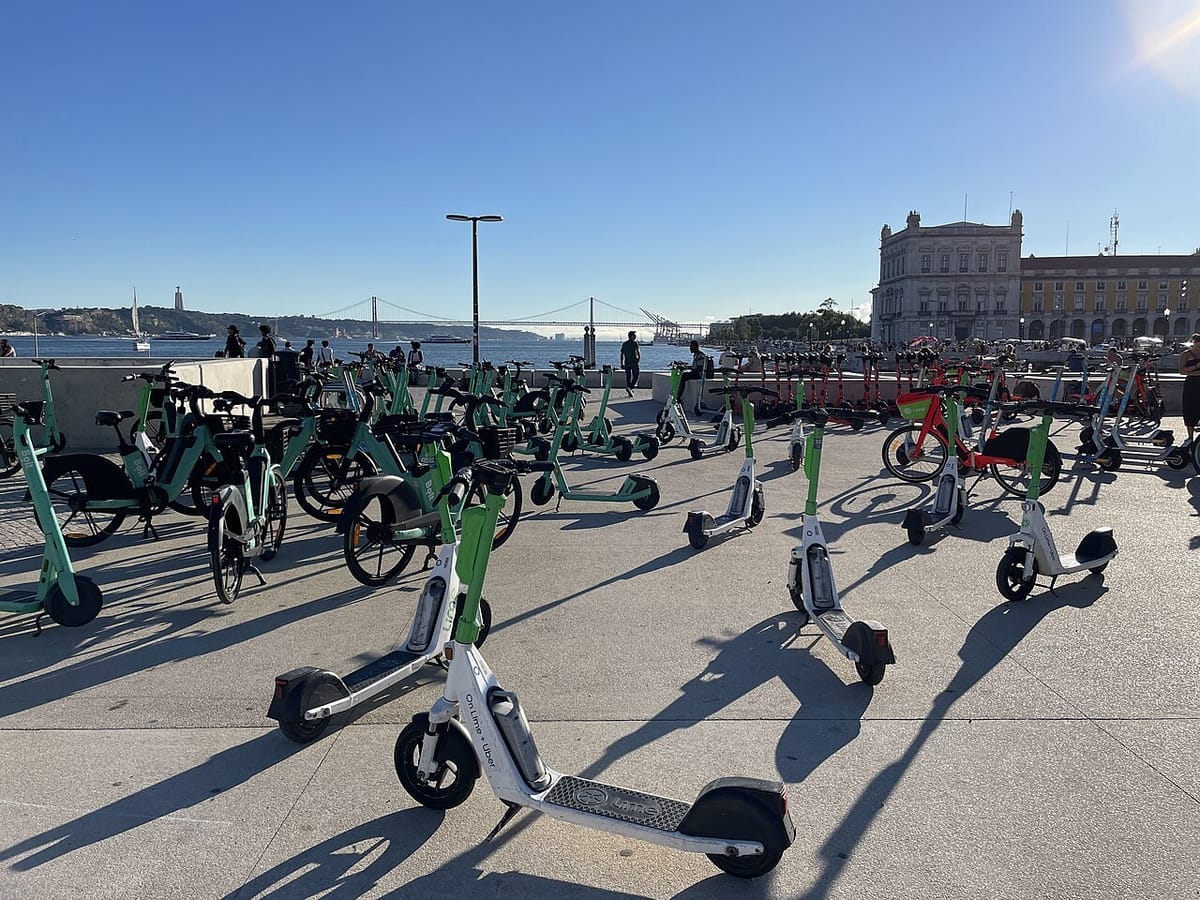
Lisbon's voters may be asked whether the city should keep its shared electric scooters at all. The Automóvel Club de Portugal (ACP) says it has gathered 20,000 validated signatures from Lisbon voters for a municipal referendum on whether shared e-scooter schemes should go on operating in the city's public space. The law requires 5,000.
There are about 6,000 shared scooters on Lisbon's streets, according to the club. The ACP says they raise problems of road and pedestrian safety, accessibility, the occupation of pavements and other public space, and enforcement, and that the issue has moved beyond mobility into urban management and quality of life.
How the signatures were collected
The collection began in early August among ACP members and was later taken onto the streets, with signing points in different parts of the city. Only people aged 18 or over and registered to vote in the municipality of Lisbon could sign, because they are the voters who would take part in any referendum.
From signatures to a vote
The ACP now has to hand the initiative formally to the Lisbon Municipal Assembly. The steps from there, as the club describes them:
- the president of the Municipal Assembly checks that the legal requirements are met;
- an assembly committee then has 15 days to examine the initiative and write a report;
- the proposal goes to a vote of the full assembly, which decides whether the referendum goes ahead; for a citizens' initiative, that vote should in principle happen within 30 days of the initiative being received;
- if the assembly approves it, the decision must be sent to the Constitutional Court, which checks its constitutionality and legality and has, in principle, 25 days to rule.
Only after a favourable ruling can a date be set for Lisbon's voters to decide on the future of the shared scooters.
Why it matters
Shared scooters are unlocked through an app and left on the street after each ride, which is why the ACP puts the occupation of pavements near the top of its list of concerns. The initiative now lands with the Municipal Assembly, whose vote will show whether the parties represented there want the question put to Lisbon's voters at all.
The club, which says it has defended drivers and pedestrians for more than 120 years, presents the referendum as a way to ensure that a decision with a direct effect on the lives of thousands of people is taken by the city's residents themselves.