Narana Coissoro, Born in Goa and Thirteen Years the CDS Leader in Parliament, Has Died at 94
Born in Portuguese India in 1931, he read law at Coimbra, took his doctorate in London, sat in eight legislatures, led the CDS parliamentary group from 1978 to 1991 and was a vice-president of the Assembly from 1999 to 2005.
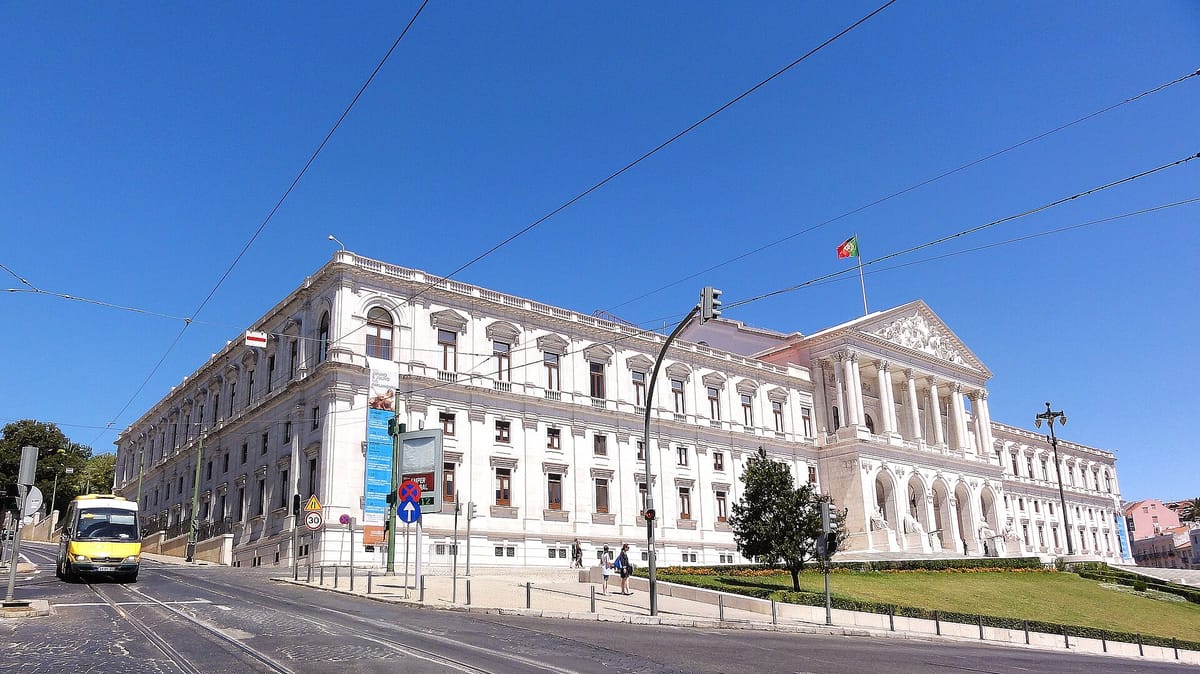
Narana Sinai Coissoro, who led the CDS parliamentary group for thirteen years and served as a vice-president of the Assembleia da Republica, died on Saturday at the age of 94. The party confirmed the death and issued a note of condolence.
He was born in Goa on 3 October 1931, when the territory was still Portuguese India, and his life traced the arc of that connection long after the territory itself was gone. He read law at Coimbra and took his doctorate at the University of London. He practised as a lawyer and held a full professorship, later emeritus, at the Instituto Superior de Ciencias Sociais e Politicas in Lisbon.
Thirteen years leading a parliamentary group
Coissoro sat in the Assembleia da Republica across eight legislatures. He led the CDS parliamentary group from 1978 to 1991, an unusually long tenure by the standards of Portuguese party politics, spanning the turbulence of the late 1970s, the accession negotiations with the European Community, and the Cavaco Silva majorities. Between 1999 and 2005 he was a vice-president of the Assembly, chairing sittings from the seat above the chamber he had spent decades addressing from the benches.
He was not a household name in the way party leaders are. He was something less common: a parliamentarian whose authority came from procedure, doctrine and a lawyer's grasp of what a text actually said. The CDS note picks out the "rigour of thought" and the "force of the word", and describes his life as bound up with some of the most consequential episodes in the party's own history and in the establishment of Christian democracy in Portugal.
Goa, and the Orient
The academic work ran alongside the political career and pointed east. He presided over the Instituto do Oriente and wrote on law and political science. His attachment to Goa and to Goan culture stayed visible to the end: on his ninetieth birthday in 2021 he received the Gra-Cruz da Ordem da Instrucao Publica at a ceremony held at the Casa de Goa in Lisbon. He also held the Gra-Cruz da Ordem do Infante D. Henrique.
That biography is a reminder of how recently Portugal's parliament contained people whose formation began outside Europe under Portuguese administration, and of how thin the surviving cohort now is. His death comes days after a Brazilian university revoked the honorary doctorate it gave Salazar in 1941, a reckoning with the same period from the other side of the Atlantic.
What this means for expats
- Reading the party map: the CDS-PP is the smaller partner in the governing AD coalition. Its Christian-democratic tradition, which Coissoro helped build, still shapes its positions on family taxation and social policy, as in its push to double income-tax relief for larger families.
- Why parliamentary procedure matters: much of what affects foreign residents, from rent law to nationality and immigration rules, is decided by amendment and committee work rather than by headline votes.
- Expect state honours: a figure of this seniority is likely to receive official mourning arrangements; watch the Assembly's own announcements for the funeral and any tribute sitting.
Portugal's political class has been marking a run of departures from the generation that wrote and worked the post-1974 constitution. Each one removes a living memory of how the rules were argued into being, at a moment when the same rules are being reopened on immigration, nationality and welfare. Coissoro spent thirteen years standing up to explain what the text said. That habit is worth remembering.