CDS-PP Presses Parliament to Double Income-Tax Relief for Families With Three or More Children
Portugal's stubbornly low birth rate moved back to the centre of political debate on Thursday, as the conservative CDS-PP (Democratic and Social Centre – People's Party, or Centro Democrático e Social – Partido Popular ) brought a package of...
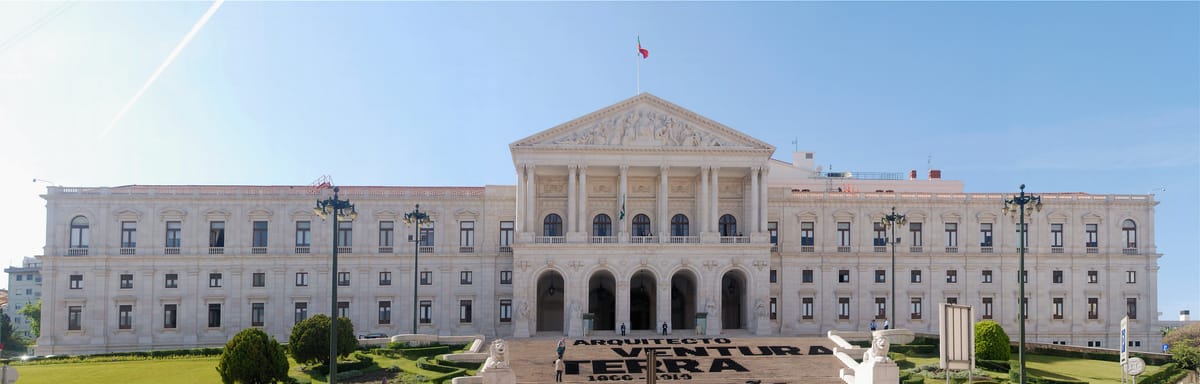
Portugal's stubbornly low birth rate moved back to the centre of political debate on Thursday, as the conservative CDS-PP (Democratic and Social Centre – People's Party, or Centro Democrático e Social – Partido Popular) brought a package of family-focused measures before the Assembleia da República (Assembly of the Republic).
The centrepiece is a bill that would double the personal income-tax (IRS, or Imposto sobre o Rendimento das Pessoas Singulares) deduction available to households raising three or more children. The party paired it with a non-binding resolution urging the Government to draw up a formal national strategy for natality — an attempt to turn a recurring lament about demographic decline into coordinated policy.
Paulo Núncio, the CDS-PP parliamentary leader, framed the proposals as a response to what he called "a very serious demographic crisis." He noted that only about 4% of Portuguese families now have three or more children, and pointed to the persistent gap between the number of children couples say they would like and the number they actually have. Portugal's fertility rate has hovered around 1.4 children per woman in recent years, far below the 2.1 generally needed to keep a population stable without immigration.
Núncio argued that tax relief should reach well beyond income tax. He defended targeted breaks on the municipal property tax (IMI, Imposto Municipal sobre Imóveis), the vehicle purchase tax (ISV, Imposto Sobre Veículos) and the annual road tax (IUC, Imposto Único de Circulação) for larger families, alongside incentives for companies that open crèches, kindergartens and pre-schools for employees' children.
The political arithmetic gives the measures a realistic path. The CDS-PP governs in coalition with the larger PSD (Social Democratic Party, or Partido Social Democrata), which the party says is already aware of the initiative. Rather than taking immediate effect, the doubled deduction is expected to be folded into the State Budget (Orçamento do Estado) for 2027 and phased in across 2027 and 2028, giving the Finance Ministry time to cost it.
Critics across the chamber have long warned that one-off fiscal sweeteners do little to lift birth rates unless paired with affordable housing, stable employment and accessible childcare — the structural pressures that lead many couples to postpone or limit having children. Supporters counter that the tax code sends a signal, and that easing the cost of a third child is a reasonable place to start.
For foreign residents raising families in Portugal, the debate is more than symbolic. Deductions for dependants, childcare expenses and education already shape annual IRS bills, and any expansion aimed at larger households would apply to tax residents regardless of nationality. The proposals also feed into a wider budget conversation — from parental leave to social benefits — that will define how generous the Portuguese state is toward families heading into 2027.