Braga Scientists Are Building a Menstrual Blood Test for Endometriosis, With the First Study in Patients Planned for 2028
An EU-funded team at the INL in Braga is developing a device to find DNA markers of endometriosis in menstrual blood. It has not yet been tested on patient samples; a clinical study is planned for 2028. Here is what the 2025 endometriosis law already provides.
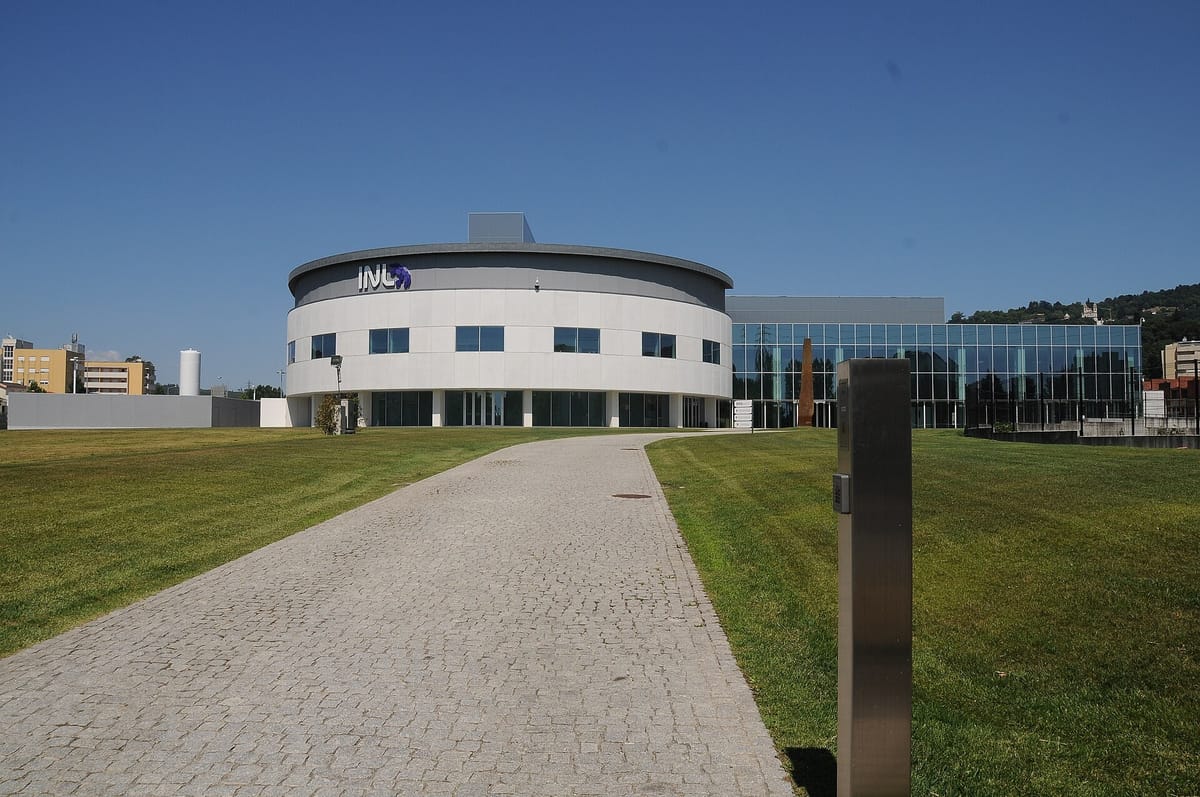
Scientists at the Laboratório Ibérico Internacional de Nanotecnologia (International Iberian Nanotechnology Laboratory, INL) in Braga are building a device that would look for genetic markers of endometriosis in menstrual blood, with the aim of cutting a diagnosis that now takes years down to weeks. It is early work: the device has not yet been tried on real patient samples, and the first full clinical study is planned for 2028.
Endometriosis is a chronic condition in which tissue similar to the lining of the womb grows outside it, causing pain, inflammation and, in some cases, infertility. The project says it affects about one in ten women and that the average wait for a diagnosis is 7.5 years, partly because confirmation often still requires keyhole surgery (laparoscopy).
What the Braga team is building
The INL is one of 14 partners in SENSOPAD, a Horizon Europe research project coordinated by the National Technical University of Athens. According to the European Commission's CORDIS project record, it runs from September 2024 to August 2028 with up to 6.89 million euros in EU money, of which about 606,000 euros go to the INL. The University of Coimbra is the other Portuguese partner, with about 730,000 euros.
The project has two parts. The first is a sanitary pad with built-in sensors that would flag inflammation-related proteins at home. The second, the part being developed in Braga, is a portable clinical device that uses tiny fluid channels and graphene sensors to pick out specific DNA variants linked to endometriosis from menstrual fluid. A worrying pad result would lead to the clinical test.
Where it stands
Researcher Carlos Honrado told Observador that the team has shown separate devices working for each step (taking the blood, cleaning the sample and recovering the DNA), and plans to join them into one automated system next year. Group leader Lorena Diéguez said tests so far have used ordinary blood or samples resembling menstrual blood. The team hopes to sign an agreement in early 2027 with the Centro Clínico Académico (Academic Clinical Centre) at Hospital de Braga to recruit patients and healthy volunteers, calibrate the sensors during 2027 and run the full clinical study in 2028.
Mr Honrado's estimate is that diagnosis could fall from about eight years to one or two months. No accuracy figures exist yet, and we found no published paper on the Braga device; the only peer-reviewed SENSOPAD paper so far, from April 2026, concerns fibres for the pad. Ms Diéguez said surgery would not be dropped at first, until results are shown to match.
What the law already gives patients
Since April 2025, Law 32/2025 has given workers and students with severe, disabling pain from endometriosis or adenomyosis the right to up to three consecutive days of justified absence a month, without loss of pay at work. A doctor's statement handed to the employer or school counts as proof and does not need renewing each month.
The same law told the Direção-Geral da Saúde (Directorate-General of Health, DGS) to issue norms within 90 days on symptoms family doctors should watch for, validated tests and follow-up, to be applied across the Serviço Nacional de Saúde (National Health Service, SNS). The law also created state co-payment for medicines prescribed by an SNS specialist and a right to freeze eggs in the SNS to preserve fertility, both taking effect with the following state budget.
For anyone with symptoms today, the route is still the family doctor, who can refer to hospital gynaecology. Related: the wait for fertility treatment in the SNS and the missed deadline for a national menopause strategy.