Almost One Birth in Twenty in Portugal Now Follows Fertility Treatment, but the Public Donor Bank Has a Four-Year Wait
Assisted reproduction accounted for 4.9 percent of births in 2024, the national council says, 20 years after the law that governs it. Public centres carry out few donor treatments, and about 1,000 IVF cycles a year are for people living abroad.
Almost one in every 20 children born in Portugal in 2024 was conceived through medically assisted reproduction (procriação medicamente assistida, or PMA). The share was 4.9 percent, and more than 43,000 children have now been born in Portugal this way, the Conselho Nacional de Procriação Medicamente Assistida (National Council for Medically Assisted Procreation, CNPMA) said on Tuesday, as reported by the Lusa news agency.
The council, which works from the Assembleia da República (Parliament), released the figures at a session in Parliament's Senate Hall marking 20 years of Lei n.º 32/2006 (Law 32/2006) of 26 July, which regulates fertility treatment in Portugal and created the council. It said the number of treatments grew by about 300 percent between 2009 and 2024, and by 186 percent within the Serviço Nacional de Saúde (National Health Service, SNS) between 2011 and 2024.
A four-year wait for donors
Demand has outrun the public system, the council warned. Requests for sperm and eggs from the Banco Público de Gâmetas (Public Gamete Bank) face a delay of about four years. Only one public centre can carry out genetic testing of embryos before implantation, and the council said the Algarve needs a public centre of its own. Private clinics do not have the same waits, it said, but their costs "may be unaffordable for a significant part of the population".
The gap shows clearly in the council's latest full activity report, which covers 2023. That year 31.4 percent of the main treatment cycles took place in the SNS. But public centres carried out only 6.1 percent of treatments using donated sperm and 3.3 percent of those using donated eggs, figures the report says show that "this social inequity" remains entirely unresolved. Treatment of female couples and of women without a partner in public centres stayed "residual", which the report puts down to the difficulty of obtaining donations for the public bank.
Treatments carried out in 2023 led to the birth of 3,765 children, or 4.4 percent of all births in Portugal that year, up from 2.5 percent in 2013. About 30 percent of them came from treatment in public centres. The share of multiple births, which the report counts among the most important quality indicators, fell to 5.0 percent from 6.8 percent in 2022.
Patients from 99 countries
Portugal also treats people who live elsewhere. The 2023 report counts about 1,000 fresh IVF and ICSI cycles started for people without permanent residence in Portugal, from 99 countries. France, Angola and Switzerland top its list of the ten countries with the most residents treated, followed by the United Kingdom, the Netherlands, Spain, Germany, Ireland, Brazil and Mozambique. Among these non-resident patients, 226 cycles were for women without a partner and 122 for female couples, most of them using donor sperm.
The law has widened over the two decades. In 2016 access was extended to female couples and to women without a partner, and a framework for surrogacy was approved. In 2018 absolute donor anonymity ended, so people conceived with donated gametes or embryos can learn a donor's identity once they turn 18. The surrogacy regime was later amended by Lei n.º 90/2021, but its use still depends on regulations.
The council's priorities are larger public centres with more staff and modern equipment, a reorganised public gamete bank, and a second public centre for embryo genetic testing. Oversight of private clinics has also been tested this year, when a Cascais fertility clinic shut overnight.
Sources: CNPMA, Relatório: Atividade Desenvolvida pelos Centros de PMA em 2023 (activity report, February 2026, in Portuguese); CNPMA, 20 years of Law 32/2006; the 2024 share, the cumulative total, the waiting times and the council's priorities are from the CNPMA's statement of 29 September 2026, as reported by Lusa.
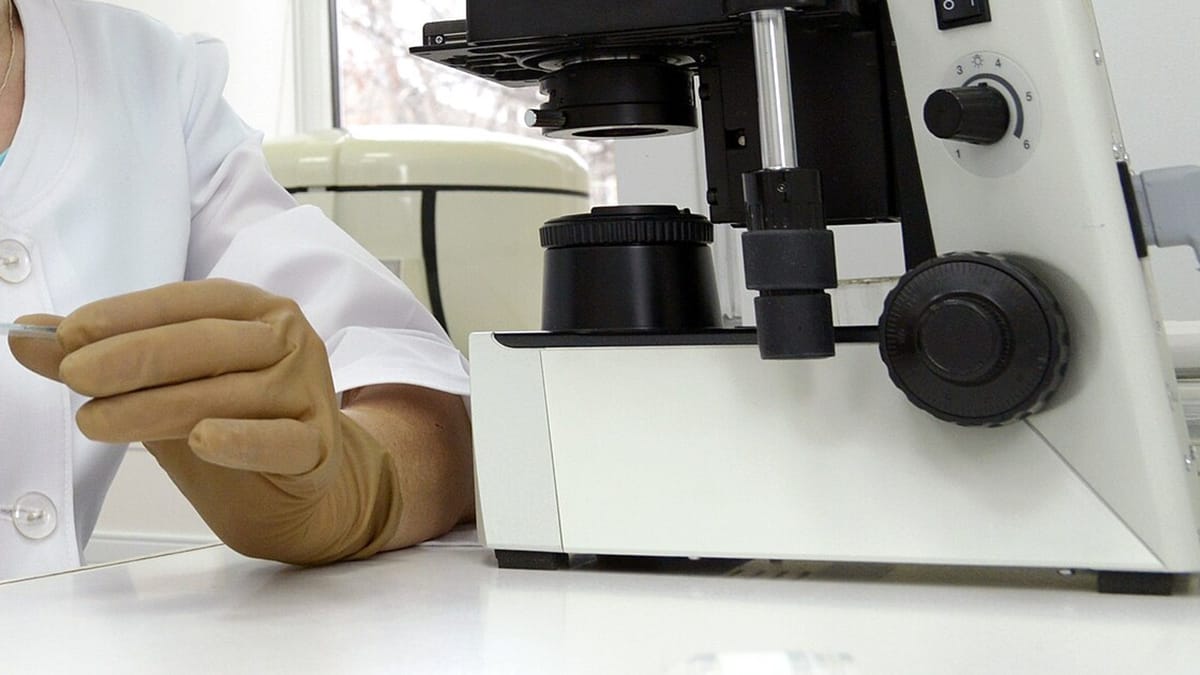
Feature image: an IVF laboratory. Photo by Galina Fomina (CC BY 4.0), via Wikimedia Commons.