A Brazilian University Has Revoked the Doctorate It Gave Salazar in 1941, Citing the Professors His Regime Drove Out of Portugal's Own Universities
The Universidade Federal do Rio de Janeiro withdrew the honour on Thursday, 85 years after the Universidade do Brasil conferred it. The citation names censorship, repression, colonial policy and the academics the Estado Novo forced out. It landed in the same year as a propaganda pact.
On Thursday the university council of the Universidade Federal do Rio de Janeiro voted to take back an honorary doctorate it awarded in 1941. The recipient was António de Oliveira Salazar, and the sharpest line in the case against him concerns what his regime did to universities in Portugal.
The title was granted by the Universidade do Brasil, the institution that later became UFRJ, when Salazar was nine years into governing Portugal and at the height of the Estado Novo's international standing. Eighty-five years later, the rapporteur Gilda Sousa de Alvarenga put the historiography to the council: a regime marked by the concentration of political power, by censorship, repression and the restriction of public liberties. Her opinion also recorded interventions in Portuguese universities, with academics and scientists dismissed and forcibly removed, alongside the maintenance of repressive structures and of colonial policy in the African territories under Portuguese rule.
The revocation rests on Article 207 of Brazil's federal constitution, which guarantees universities autonomy in teaching and research, in administration and in financial and asset management. That is the same footing the council used a fortnight earlier, on 13 August, when it withdrew unanimously and by acclamation the title given in 1968 to Lincoln Gordon, the United States ambassador who backed Brazil's 1964 coup. The rapporteur was the same, and she cited declassified American documents and the findings of Brazil's 2014 National Truth Commission.
Why 1941 is the detail that carries the story
The date is not incidental. Brazil in 1941 was itself under an Estado Novo, Getúlio Vargas's, and the two regimes were then at their closest. On 4 September 1941, in Rio de Janeiro and in Vargas's presence, the two states signed the Acordo Cultural Luso-Brasileiro. Portugal was represented by António Ferro, who ran the Secretariado de Propaganda Nacional, and Brazil by Lourival Fontes, who ran the Departamento de Imprensa e Propaganda. On paper it swapped newsreels, radio programmes and art exhibitions. Historians have generally read it as an exchange of propaganda technique between two governments that both controlled what their citizens were allowed to read.
An honorary doctorate conferred in that year, in that city, was part of the same traffic: a diplomatic instrument dressed as an academic one, which is precisely the ground on which a university can now say it was never an academic judgement to begin with.
The asymmetry
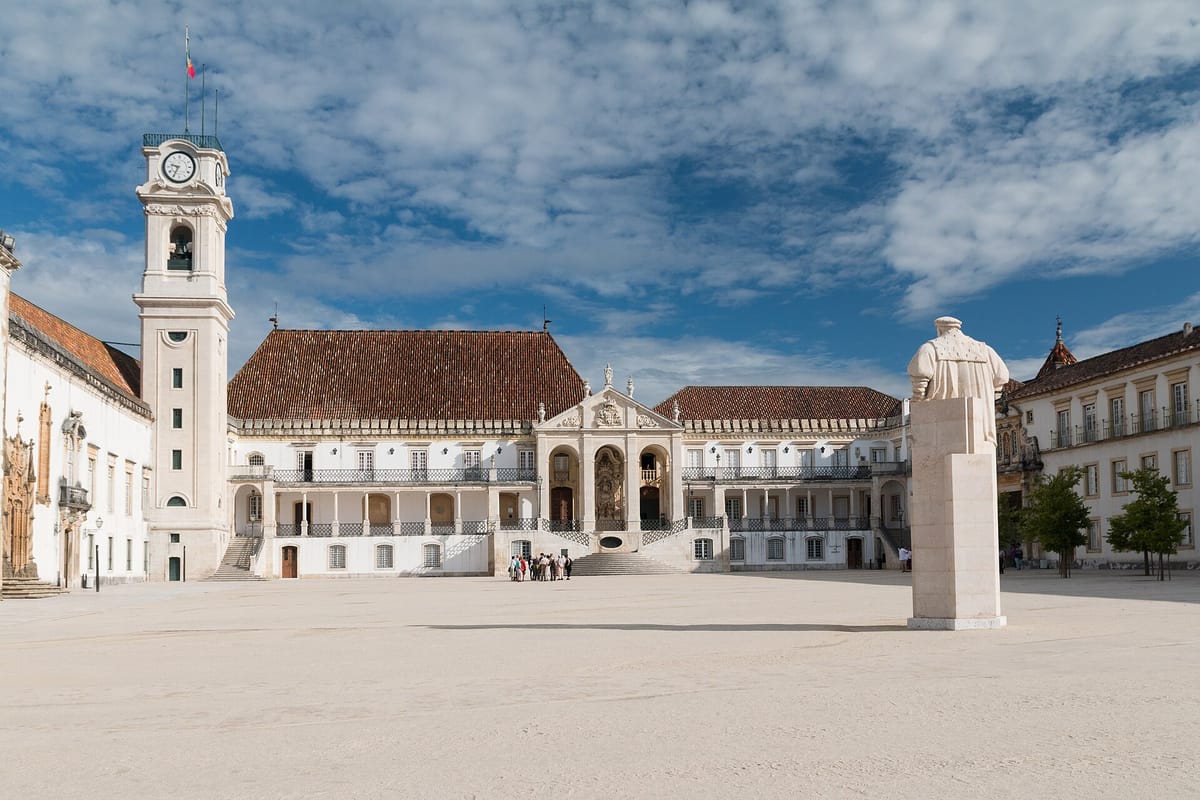
Salazar's own career began inside a university. He taught finance at the law faculty of the Universidade de Coimbra before becoming finance minister in 1928 and head of government in 1932. The institution that has now stripped an honour from him is Brazilian, acting under a Brazilian constitutional provision, in a country working steadily through this question: state prosecutors recommended in 2022 that the federal university in Rio Grande do Sul revoke titles held by dictators, and the federal university in Espírito Santo has revoked its own.
Portugal's reckoning with the Estado Novo has largely run through other channels, through museums, street names and the archive, rather than through the withdrawal of academic distinctions. Nothing about Thursday's vote obliges any Portuguese institution to do anything. It does put a question on the table in unusually plain terms, and it was a Brazilian council that put it there.
What this means for you
- Nothing legal changes in Portugal. The decision binds one Brazilian university's own register of honours.
- It is a pattern, not a one-off. Two revocations in a fortnight from the same council, the other concerning the 1964 coup.
- The reasoning is documentary. Both opinions rest on historiography and official records rather than on sentiment.
Portugal and Brazil have been reopening files together lately, from three men convicted of torture in Brazil who spent years hidden in Portugal to the largest Brazilian electorate abroad voting in Lisbon on 4 October. This one runs in the other direction. A Portuguese dictatorship is being judged on the Brazilian side of the Atlantic, and the citation reads Portuguese universities back to Portugal. There are people who drew that regime while living under it, and who did not need eighty-five years to reach the same conclusion.