Lisbon Will Field 103 Voting Machines on 4 October as the World's Largest Brazilian Electorate Abroad
Portugal now has 134,797 registered Brazilian voters, up 66.6% since 2022, and Lisbon alone holds more than 78,000 of them: the largest Brazilian electorate anywhere outside Brazil. The consulate is fielding 103 voting machines across three university buildings.

On Sunday 4 October, more Brazilians will vote in Lisbon than in any other city outside Brazil. The Portuguese capital has become the largest overseas electoral district in the Brazilian system, and the consulate is scaling up accordingly: 103 electronic ballot machines, up from 58 at the last general election in 2022, spread across three buildings of the Universidade de Lisboa instead of one.
The growth behind those logistics is steep. Portugal now has 134,797 registered Brazilian voters, against 80,896 in 2022, an increase of 66.6% in a single electoral cycle, according to data from Brazil's Tribunal Superior Eleitoral (TSE), the country's supreme electoral court. The Lisbon consular district alone accounts for more than 78,000 of them, up about 74% from 45,300 four years ago. Porto holds roughly 47,600, which makes it the third-largest Brazilian polling jurisdiction anywhere abroad, behind Lisbon and Boston. Faro accounts for the remainder.
Seen globally, the Brazilian electorate outside Brazil has expanded from 697,078 to 918,876 voters since 2022. Portugal holds 14.67% of that total, second only to the United States on 28.89%. For a country of about 10 million people, hosting one in seven Brazilian overseas voters is a demographic fact with visible consequences on a Sunday in October.
Three buildings and a chatbot
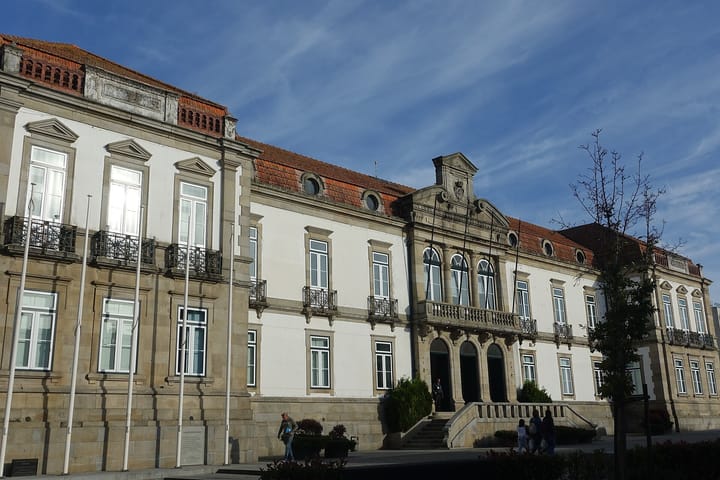
Voting in Lisbon has traditionally taken place at the Faculdade de Direito (Faculty of Law) of the Universidade de Lisboa, on the Cidade Universitária campus. In 2022 the queues there ran long enough that the electoral court extended polling hours. This year the consulate has added sections in the Faculdade de Letras (Faculty of Arts and Humanities) and the Reitoria (the university's rectory building) to spread the flow.
The consulate is also updating the WhatsApp chatbot it already runs for consular services so that it will direct voters not just to the right building but to the right room inside it. "The voter will have the route on their phone," consul-general Alessandro Candeas told DN Brasil, describing turn-by-turn guidance of the "enter the law faculty, turn right, go up the stairs" variety.
Around that, the consulate has asked Lisbon city hall, the PSP police, the fire service and civil protection to coordinate on traffic management and security, and has requested reinforced bus services to the university area for the day. Anyone who lives, works or studies near Cidade Universitária should plan for an unusually busy Sunday.
What is actually on the ballot
This is a point that regularly confuses people, including some voters. Brazilians whose electoral domicile is registered abroad vote only for president and vice-president. Under TSE Resolution 23.759/2026, the governor, senator, federal deputy and state deputy contests that make up the rest of the Brazilian general election are not on the overseas ballot. Polling at consular sections runs from 8 a.m. to 5 p.m. local time. If no presidential candidate wins outright, a second round follows on Sunday 25 October.
Registration for these elections closed on 6 May, the TSE's cut-off for issuing a first voter card, updating details or transferring an electoral domicile, so the 134,797 figure is now essentially fixed. Voting remains compulsory for literate Brazilians aged 18 to 70, including those registered abroad; those who do not attend must file a justification or face a fine.
What this means for residents of Portugal
- Expect disruption around Cidade Universitária on 4 October. Road closures and heavy pedestrian traffic are planned for, not incidental. If you have an appointment in the area, move it.
- This is not a Portuguese election. Nothing on 4 October affects Portuguese public administration, offices or services. It is a Brazilian federal vote that happens to be held on Portuguese soil.
- Registered Brazilian voters cannot simply skip it. Compulsory voting applies abroad, and an unjustified absence creates an administrative problem that tends to surface later, when a document or a certificate is needed.
- Foreign residents have a separate Portuguese vote to think about. Brazilian and other non-Portuguese residents can, under reciprocity rules, register on the Portuguese electoral roll for local elections. That is a different process entirely, and our guide to the recenseamento eleitoral explains who qualifies.
The scale of the Lisbon operation is the clearest available measure of how quickly Brazil's presence in Portugal has grown. The same consulate was the first Brazilian post anywhere in the world to issue the new biometric identity card, a decision driven by the same demographics. Brazilian nationals also make up the largest single group of foreign mortgage borrowers in Portugal, holding 44% of the foreign borrower stack, and Brazilian companies have made the country their doorway into the European market. On 4 October, that community will be counted one vote at a time.