More Crime, Less Violence: Porto's Police Area Counts 10.9 Percent More Offences and 8.4 Percent Fewer Violent Ones
Provisional PSP figures given to Lusa put general crime in the Porto metropolitan command 10.9 percent above the same stretch of last year, with violent and serious crime down 8.4 percent. Offences the police found themselves, rather than ones reported to them, rose 17.5 percent.
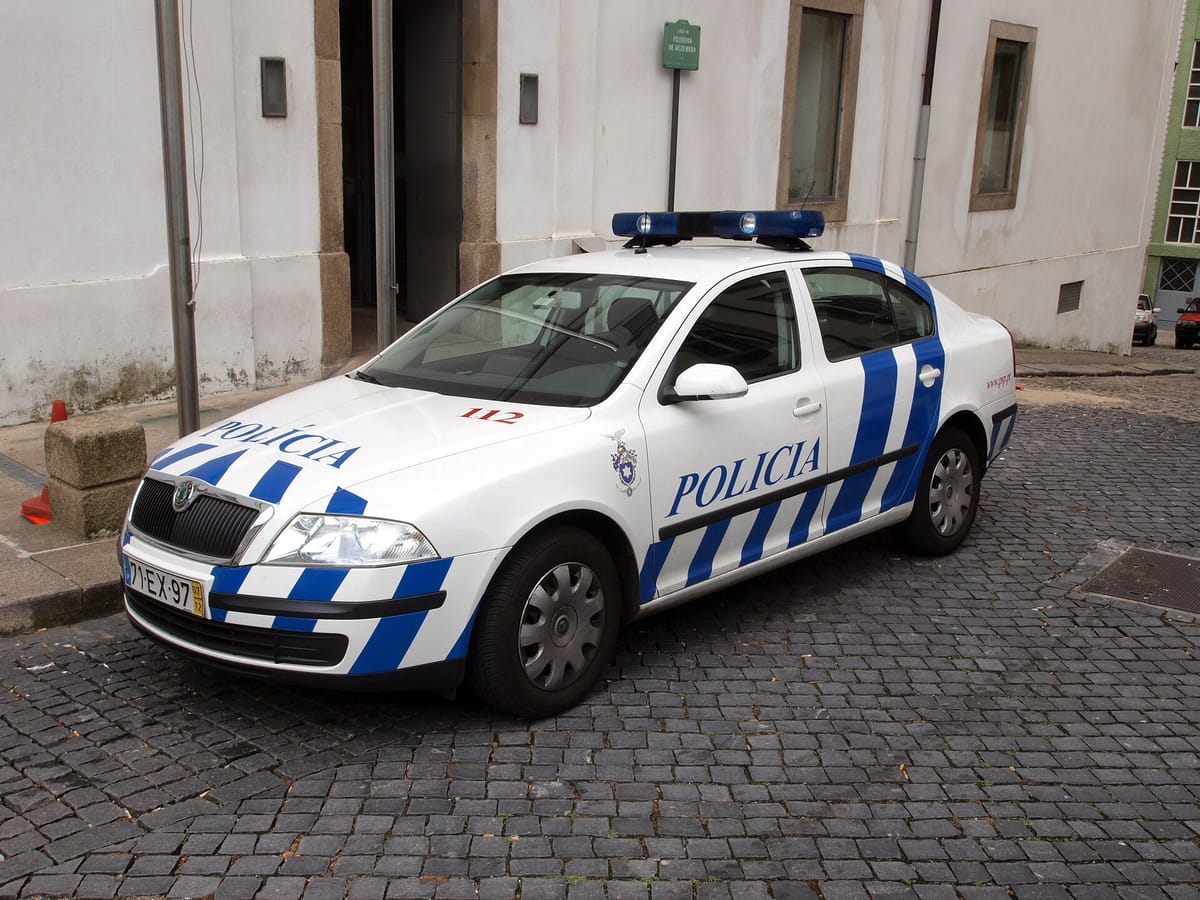
Recorded crime in the area covered by the PSP's Comando Metropolitano do Porto (Porto Metropolitan Command of the Public Security Police) is running 10.9 percent above the same stretch of last year, while the violent and serious category has fallen 8.4 percent. The figures are provisional, come from the PSP's Direção Nacional (National Directorate), and were released in reply to questions from the Lusa news agency.
They are the sharpest increase of the three commands whose numbers were given out. Lisbon's metropolitan area recorded a 2.9 percent rise in general crime, with violent and serious crime essentially flat at minus 0.4 percent. The Setúbal district command went the other way on both counts: general crime down 7.4 percent, violent and serious crime down 13 percent.
The numbers, and what the police did not say
- Porto metropolitan command: general crime up 10.9 percent; violent and serious crime down 8.4 percent; offences detected through police proactivity up 17.5 percent.
- Lisbon metropolitan command: general crime up 2.9 percent; violent and serious crime down 0.4 percent; proactivity offences up 7.2 percent.
- Setúbal district command: general crime down 7.4 percent; violent and serious crime down 13 percent.
- Biggest movements among the offences the PSP describes as causing the greatest public alarm: pickpocketing, other thefts from motor vehicles, and disobedience.
Two things are missing from that list, and they matter. The PSP did not publish absolute counts, only percentages, and it did not state the closing date of the period being compared. "This year against the same period last year" could mean the first half, the first seven months, or the year to the day the question was answered. Nor did the police say in which direction the three headline offence types moved; the wording identifies them only as the largest variations.
The Porto command covers rather more than the city. Its territory takes in the urban core of the Área Metropolitana do Porto (Porto Metropolitan Area), where the PSP polices the cities and the GNR polices the rural parishes, so a single percentage folds together very different places: Baixa nightlife, the Ribeira tourist crush, the residential belt of Matosinhos and Gaia, and the commuter stations in between.
Why "more crime" and "less violence" can both be true
The two headline numbers pull in opposite directions, and the third one explains a good part of why. Offences detected through police proactivity, meaning crimes the police find themselves in the course of ordinary patrolling rather than crimes reported to them by a victim, rose 17.5 percent in Porto. Those offences are counted in general crime. A command that runs more stop-and-search operations, more roadside checks and more special prevention operations mechanically generates more recorded crime, because it is the recording instrument that has been turned up.
Disobedience, one of the three offence types the PSP singled out, is the clearest example. It is very largely a police-generated charge: it arises when somebody refuses a lawful order from an officer, which requires an officer to be present giving orders. A rise in that number is at least as much a statement about policing volume as about public behaviour.
Pickpocketing and thefts from parked cars are a different matter. Both are opportunistic property crimes that track footfall and parked-car density, which in Porto means they track tourism and the summer season. Neither is violent, and both feed the general-crime line while leaving the violent and serious line untouched. That is roughly the shape the Porto data has: more of the acquisitive, low-harm offences, fewer of the ones involving force or the threat of it.
The gap between perception and count is the awkward part. The PSP's own statement acknowledges it, saying the force is tracking the cases that cause the most public alarm both locally and nationally and directing its deployment against "specific phenomena that keep emerging" and against the sense of insecurity in communities. The measures it lists are the standard toolkit: directing preventive patrols, reinforcing reactive policing with support from other units, running special crime prevention operations, and pursuing investigations.
The political backdrop in Porto
The timing is uncomfortable for a city where policing is already a live municipal argument. Porto's mayor spent the last week of August pressing the case for the city to take police officers onto its own payroll, a proposal covered in last Sunday's Porto Brief. A double-digit rise in recorded crime, however it is composed, is the kind of figure that gets quoted in that argument without the composition attached.
It also lands in a month in which Porto has produced more than its share of unusual case files, including an abandoned suitcase holding more counterfeit euros than Portugal seized in the whole of 2025, and in a summer in which a single incident in the Algarve, the car driven into a crowd on Albufeira's Oura strip, has done more to shape the national conversation about street safety than any statistical series.
What this means for residents
- Read the two lines separately. General crime and violent and serious crime are different registers. The Porto figures say the risk of having a wallet lifted or a car window broken has gone up, and the risk of being robbed with force or threat has gone down. Those are not interchangeable.
- Parked cars are the exposure. "Other thefts from motor vehicles" means items taken from a vehicle without stealing the vehicle. Nothing visible in the cabin is the whole of the advice, and it applies with particular force to hire cars, which are easy to spot.
- Insurance follows the category, not the headline. A theft from a car is usually covered only if you carry the specific extension, and household contents policies rarely follow you into the street. Check which of your policies actually covers a stolen bag or laptop before you need to find out.
- Report it even when nothing will come of it. Pickpocketing is heavily under-reported because victims assume the case goes nowhere. It usually does, but the report is what puts the incident into the count that shapes where patrols go, and it is what an insurer will demand.
- Expect the real numbers later. These are provisional command-level percentages given to a news agency, not a published dataset. The authoritative version is the annual Relatório Anual de Segurança Interna (Internal Security Annual Report), which gives absolute counts by offence type and by district, and which is where any serious comparison should be made.
Until then, the honest reading of the Porto figures is a narrow one. Recorded crime is up, the recording effort is up faster, the violent end has moved down, and the police have not yet released enough of the underlying data for anyone outside the force to say how much of the first number is explained by the second. The elderly-victim series covered in July's breakdown of who is actually being targeted is a reminder that the useful questions are almost always about composition rather than totals.