One Abandoned Suitcase in Porto Held More Fake Euros Than Portugal Seized in All of 2025
More than seven thousand counterfeit 200-euro notes, face value 1,470,000 euros, were left beside recycling bins on Rua do Almada. The 2025 Annual Internal Security Report puts the whole year's euro seizures at 952,725 euros across 19,366 notes.
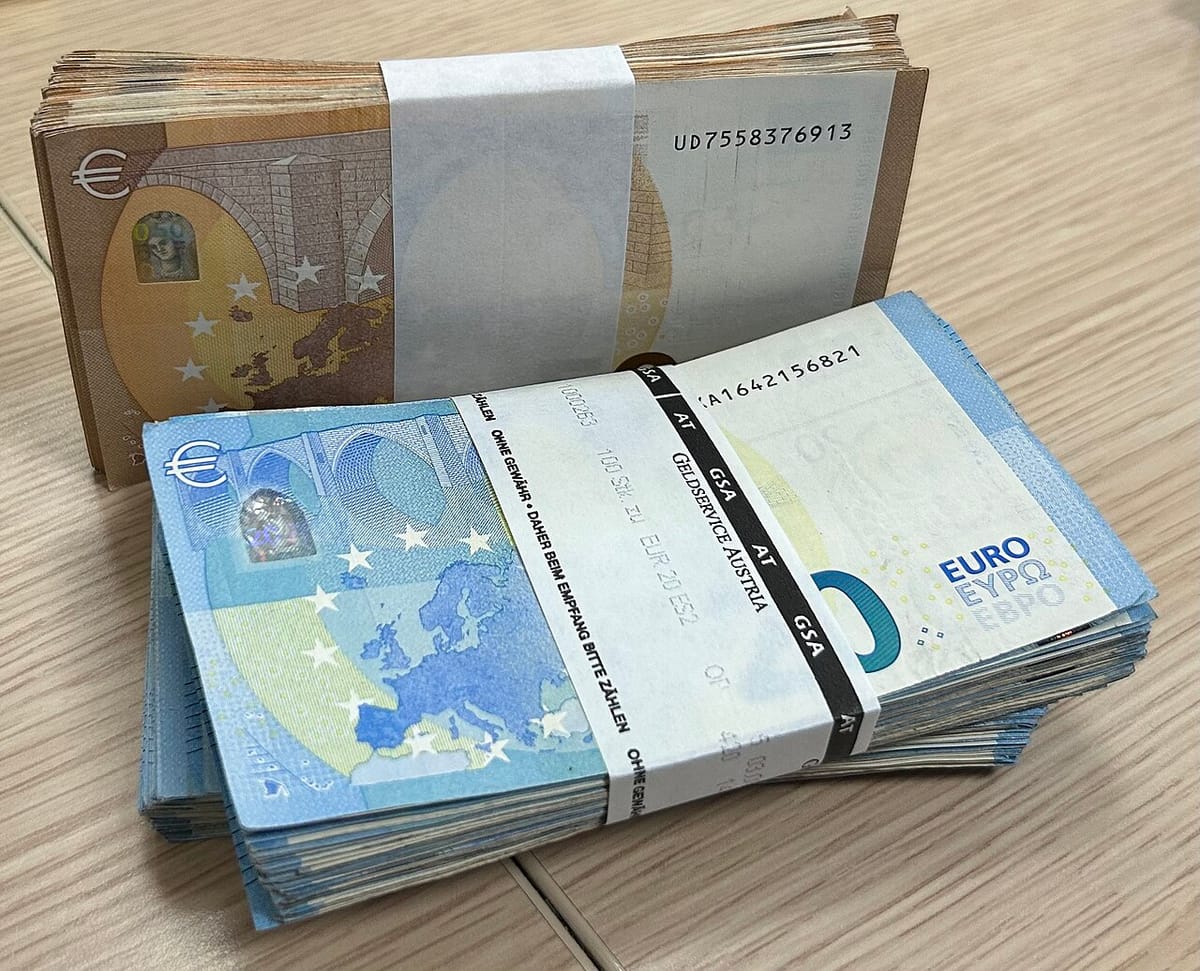
A man searching recycling containers on Rua do Almada in central Porto for bottles to feed into the Volta deposit-return machines found a suitcase on Saturday. Inside were more than seven thousand banknotes, all of them €200, with a face value of €1,470,000. He alerted the Polícia de Segurança Pública (Public Security Police, or PSP), which confirmed on Monday that every one is counterfeit.
That single abandoned bag is worth more than every counterfeit euro note Portuguese authorities seized in the whole of last year.
The national numbers, for scale
The Relatório Anual de Segurança Interna (Annual Internal Security Report, or RASI) for 2025, presented in March, puts the year's euro seizures at €952,725 across 19,366 notes, alongside US$20,489 in 241 dollar notes. The Porto suitcase alone is 1.5 times that euro figure.
The denomination breakdown makes the gap starker. Across all of 2025, Portugal seized 1,313 counterfeit €200 notes, worth €262,600. One suitcase held roughly five and a half times that many. The rest of the year ran to 1,393 fives, 3,916 tens, 5,820 twenties, 3,528 fifties, 3,367 hundreds and just 29 five-hundreds. The €200 was already the fastest-moving line in the report, up 618% on 2024.
Two very different counterfeiting operations
RASI describes two distinct streams reaching Portugal, and the distinction matters for anyone handling cash.
The first is crude. The report classifies these as "altered design" forgeries, offset-printed, presumed to come from China, spanning every denomination and bought online: on the dark web, on commercial platforms, through social media, then posted in. Every note intercepted before it entered circulation in 2025 was of this type, caught at the border by the Autoridade Tributária e Aduaneira (Tax and Customs Authority). That work is why seizures of euro notes rose 10% in a year when the offences themselves fell 31.6%.
The second stream is the dangerous one. These come mainly from Italy, are "reasonably plausible" in their imitation of security features, and are produced by offset, inkjet or laser. None were caught at customs; all were detected only once already circulating, which the report reads as organised transnational distribution rather than mail order. They cluster in the €50, the denomination best combining face value with ease of spending.
What this means if you handle cash here
- Most fakes are caught at the bank, not the till. RASI says the majority of cases still involve passing counterfeit currency detected during deposit operations. By then somebody has already accepted the note.
- If you take a fake note, you lose the money. Counterfeits are withdrawn and not reimbursed, which is why the €50, the note most often handed over in ordinary transactions, is the one worth checking.
- Use the feel, look and tilt check. The Eurosystem's standard test takes three seconds: raised print along the edge, the watermark and security thread held to the light, and the shifting hologram and colour-changing number when tilted.
- Ordering "prop money" online is a criminal offence. The rise in acquisition cases is largely people buying novelty notes over the internet. Customs intercepts them and the buyer becomes an arguido (a formally named suspect).
The Porto suitcase is unusual precisely because it never got that far. Seven thousand high-value notes dumped beside a bin suggests a batch someone decided was too hot to move. What it says about volume is less comforting: one consignment, abandoned rather than sold, outweighed a full year of national enforcement. The same asymmetry runs through the customs figures for counterfeit goods and behind this month's fraud warnings from the tax office and the Bank of Portugal. The ECB, meanwhile, is still choosing designs for the next euro series, whose security features will have to answer exactly this.