Beethoven, Curie and a Kingfisher: the ECB Puts Ten Designs for the Next Euro Banknotes to a Public Vote
The European Central Bank published ten shortlisted designs for the next series of euro banknotes on Thursday and opened a public survey that runs until 21 September. One theme puts six cultural figures on the notes; the other puts six birds and a river. No Portuguese figure made the six.
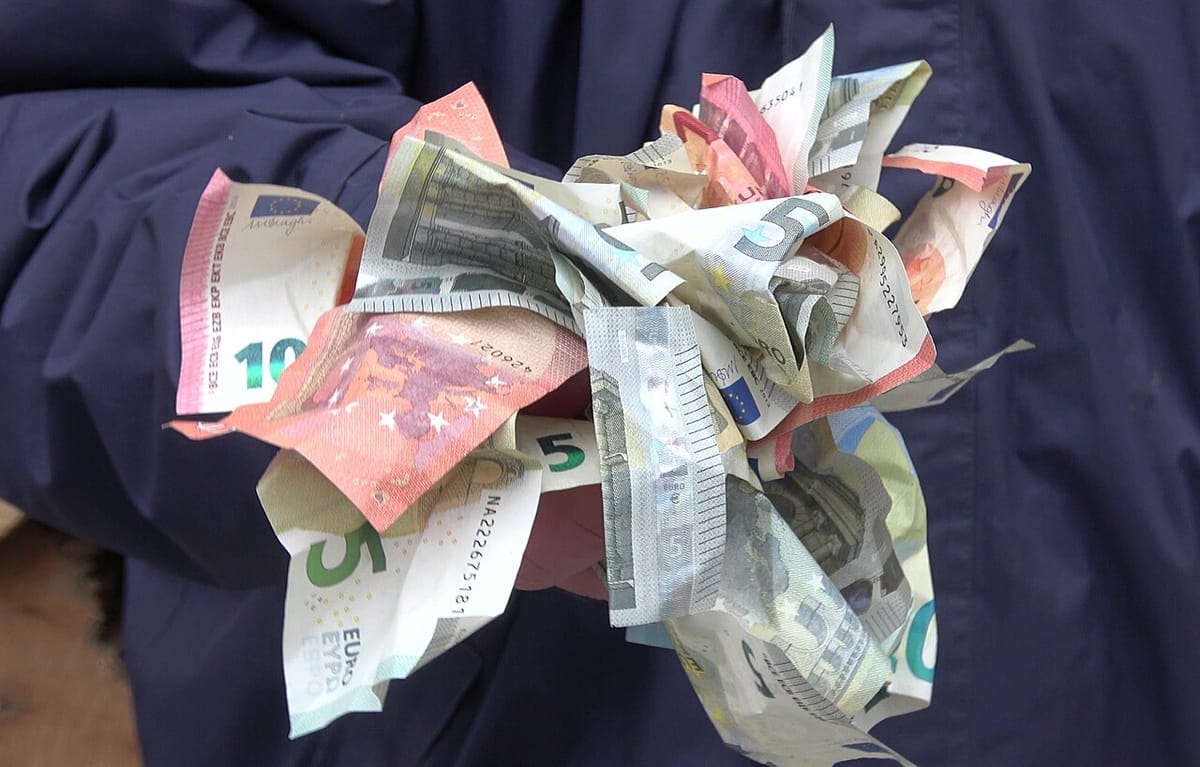
The euro notes in your wallet show windows, gateways and bridges — deliberately generic architecture, invented so that no member state could claim the design as its own. The next series will not. It will show either six people who shaped European culture, or six birds and the rivers they live along. And for the next two months, the European Central Bank is asking anyone in Europe which of ten shortlisted designs they prefer.
The ECB published the shortlist on Thursday 23 July and opened a public online survey at the same time. It closes at 23:59 CET on 21 September 2026. The survey is at surveys.ecb.europa.eu/10b/neweuro, it is open to everyone in Europe rather than to euro-area citizens only, and the answers feed directly into the decision.
How the field narrowed to ten
The two themes — "European culture" and "Rivers and birds" — were chosen by the ECB's Governing Council in November 2023, after an earlier round of public consultation. The specific motifs were fixed in January 2025. A design contest launched in July 2025 drew more than 1,200 applications from graphic designers; 25 were invited to submit proposals, and 39 proposals came back — 23 for "Rivers and birds", 16 for "European culture".
An independent jury of 21 experts, one nominated by each euro-area national central bank and drawn from graphic design, communication, neuroscience and history, scored the pseudonymised submissions individually and then met on 28 and 29 May 2026 to argue it out. They picked five winners per theme.
Scoring ran across 13 criteria. Five compulsory ones — mandatory design elements and security features — carried 40% of the weight. The remaining eight, worth 60%, were led by creativity (25%), visual appeal (20%), thematic consistency (10%) and accessibility (10%), that last criterion mattering because banknotes have to be usable by people with impaired sight.
What is actually on the notes
Both themes run the same six denominations. Under "European culture", each note carries a person on the front and a place where culture happens on the back:
- €5 — Maria Callas, with street performers
- €10 — Ludwig van Beethoven, with a song festival and a choir of children and young adults
- €20 — Marie Curie (born Skłodowska), with a school or university classroom
- €50 — Miguel de Cervantes Saavedra, with a library
- €100 — Leonardo da Vinci, with people looking at street and contemporary art
- €200 — Bertha von Suttner, with a tree-covered square
Under "Rivers and birds", each note pairs a bird with a stage of a river's journey from mountain spring to open sea, and with an EU institution:
- €5 — wallcreeper, mountain spring, European Parliament
- €10 — kingfisher, waterfall and run pool, European Commission
- €20 — bee-eater, confined river valley, European Central Bank
- €50 — white stork, meandering river, Court of Justice of the European Union
- €100 — avocet, river mouth, European Council and Council of the European Union
- €200 — northern gannet, seascape, European Court of Auditors
The ten shortlisted proposals interpret those motifs very differently. One team builds its culture designs from eyes and mouths; another spells out "EURO" in vertical blocks that only resolve when the note is turned; a third traces the river from mountain source to stormy sea across the whole series, with security foils showing successive phases of the water. The studios behind them include Studio Joost Grootens, Neue Gestaltung, Jan Robert Dünnweller, Isabelle Daéron and Ville Tietäväinen, and the designs are set out side by side on the ECB's site.
The Portuguese angle
There is no Portuguese figure among the six cultural personalities. The line-up is a Greek-American soprano, a German composer, a Polish-French physicist and chemist, a Spanish novelist, an Italian polymath and an Austrian peace campaigner — the fields chosen first, the names attached to them second.
Portugal is represented in the process rather than on the paper. Marta de Figueiredo, a graphic designer formerly of the Banco de Portugal (Bank of Portugal), sat on the 21-member contest jury.
The rivers-and-birds theme lands closer to home. The white stork on the €50 is a familiar sight nesting on Alentejo chimneys and Algarve cliffs; the bee-eater on the €20 (abelharuco) is one of the loudest summer arrivals in the Portuguese countryside; and the northern gannet on the €200 (alcatraz) is a regular offshore along the Atlantic coast. None of the six species is uniquely Portuguese — that is precisely the point of the theme — but four of the six would be recognised by anyone who walks the coast or the interior here.
When any of this reaches your wallet
Not soon. The Governing Council is expected to choose a design at the end of 2026, weighing the jury's conclusions, a technical assessment and the results of two surveys — the open public one and a parallel representative study of euro-area citizens. Only then does the winning design go into development, security testing and production, a process the ECB says takes several years before notes reach circulation.
When the new series does arrive, the existing notes will not be cancelled. Every euro banknote issued so far keeps its value and stays legal tender, circulating alongside the new series exactly as the first series and the current Europa series do today.
ECB President Christine Lagarde framed the exercise in terms of what the notes are for beyond payment: "Euro banknotes are more than a means of payment — they are one of the most tangible expressions of Europe."
It is a rare moment when European monetary policy asks for your opinion rather than simply arriving in your mortgage statement. The same institution that held rates at 2.25% this week and whose governors gather in Sintra each summer is, for two months, running a design poll. It takes a few minutes.