Lisbon Redraws Its Urban Rehabilitation Area for 2027, Bringing More Buildings Within Reach of 6 Percent VAT and IMI Breaks if the Municipal Assembly Agrees
Lisbon's council has voted to redraw its urban rehabilitation area from 1 January 2027, adding districts built up since 2012. Livre calls it a blank cheque for 6,450 hectares. What ARU status can mean for owners, and what the municipal assembly still has to do.
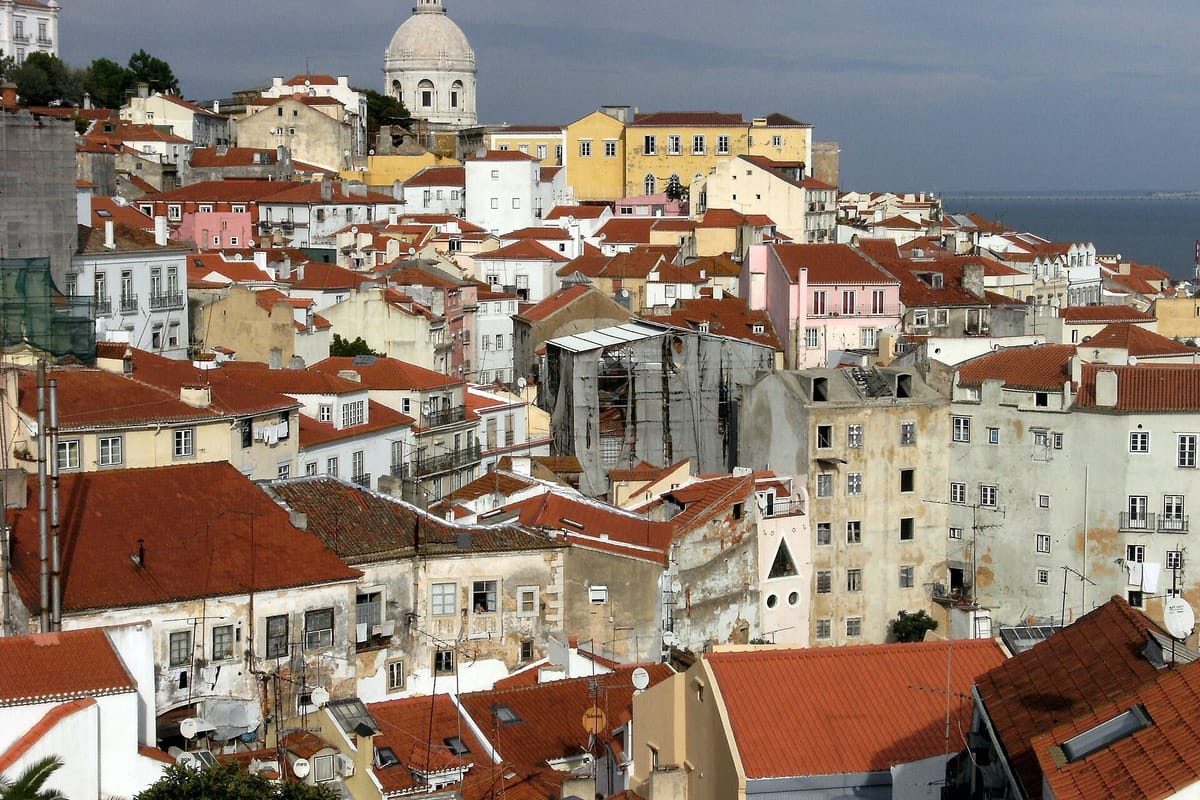
Lisbon City Council (Câmara Municipal de Lisboa) approved on Wednesday a new boundary for the city's área de reabilitação urbana (ARU, urban rehabilitation area), the zone inside which renovation work can qualify for lower taxes. In its own announcement, the council says the change is "in practice" an enlargement that will let more buildings qualify. It is meant to take effect on 1 January 2027.
What changes
Lisbon's current ARU was approved on 20 March 2012 and redrawn in 2015. Its rehabilitation operation was extended to the 15-year maximum, counted from that 2012 date, under a notice published in March 2025, so it runs out in March 2027.
The council says the new map updates the 2012 perimeter to add areas that have since been built up or consolidated, following the model of the Plano Diretor Municipal (PDM, the city's master plan). According to the Lusa report carried by Observador, the planning councillor, Vasco Moreira Rato, said it keeps everything in the current ARU. The city's planning director said 42 proposals are mapped, including Quinta do Lambert and Alta de Lisboa.
The PSD, CDS-PP and IL leadership carried the vote. Livre and BE voted against, and PS, PCP and Chega abstained. Livre's councillor called it a "blank cheque" for 6,450 hectares of the city. Livre questioned the inclusion of newer districts, a stadium and Hospital da Luz, built within the last 30 years. The PCP asked why Quinta dos Alcoutins, a luxury development with a golf course, was included. BE said the plan guarantees no affordable housing. Moreira Rato replied that the ARU is "not a tax benefit scheme by default".
What ARU status can bring owners
The council stresses that being inside the ARU is only one condition and that no benefit is automatic. Under the law:
- VAT: item 2.23 of List I of the VAT Code gives the reduced rate (6 percent, the council's planning director noted) on building rehabilitation contracts in a legally delimited ARU.
- IMI and IMT: under article 45 of the Tax Benefits Statute, works must raise the building's conservation rating by two levels, to at least "good", and meet energy rules. The owner then pays no IMI (the annual property tax) for three years, renewable for five if the home is let or lived in permanently. There is also no IMT (the property transfer tax) on a purchase for rehabilitation, or on the first sale afterwards for a permanent home. Recognition is requested with the planning application.
- IRS: article 71 lets owners deduct 30 percent of certified rehabilitation costs, up to 500 euros.
The 2027 budget bill would extend the IMI and IMT breaks to 2031. If you paid 23 percent VAT on past work inside an ARU, see our guide to claiming the difference back.
What still has to happen
Under the urban rehabilitation law (Decreto-Lei n.º 307/2009), the Assembleia Municipal (municipal assembly) decides the boundary, which is then published in the Diário da República. Moreira Rato said publication must happen by December. The council is approving the map ahead of a new rehabilitation strategy, which will come with the master plan review. The same law says an ARU approved without its rehabilitation operation lapses if none is approved within three years, although owners already granted benefits keep them.