Jamor Hosts the First-Ever Women's Clássico on Sunday 17:15 — Hexacampeãs Benfica Meet Newcomer FC Porto in the Taça de Portugal Feminina Final, Teresa Oliveira at the Whistle and RTP1 Carrying the Live Tape
First-ever women's Benfica-FC Porto clássico at Jamor 17:15 Sunday 17 May. Hexacampeãs Benfica chase the dobradinha against a FC Porto women's project launched in 2024/25 and just promoted to Liga BPI. Teresa Oliveira referees. Live on RTP1 and RTP Play.
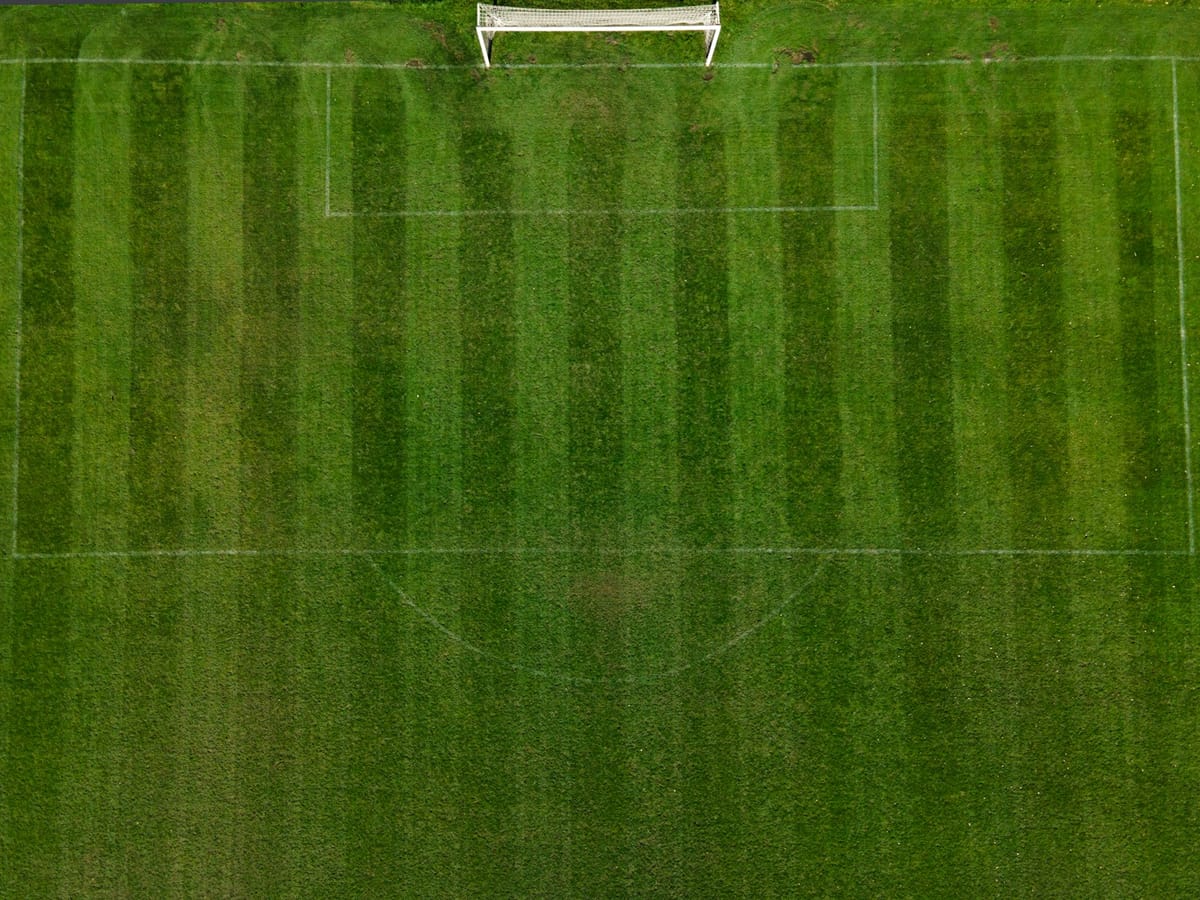
The Estádio Nacional do Jamor stages, at 17:15 on Sunday 17 May 2026, the first-ever Benfica-versus-FC Porto clássico in women's senior football — a Taça de Portugal Feminina final whose institutional weight is wildly out of proportion to the relative competitive maturity of the two clubs' women's projects. Sport Lisboa e Benfica arrive as the established centre of gravity of Portuguese women's football: hexacampeãs nacionais, six straight Campeonato Nacional / Liga BPI titles from 2020/21 through the just-closed 2025/26 season, two prior Taça de Portugal Feminina trophies (2018/19 and 2023/24), three Supertaça wins, and an annual fixture in the UEFA Women's Champions League. FC Porto arrive as a women's senior project that did not exist eighteen months ago: the club's senior women's team was launched at the start of the 2024/25 season; the project's first competitive year was spent in the II Divisão Nacional; they won their division in 2025/26 and earned promotion to Liga BPI for 2026/27. The Sunday-17-May fixture is, for the dragões' women's side, the maiden trophy opportunity of the club's senior women's history.
The institutional weight matters because the men's clássico — Benfica versus FC Porto — has been the central rivalry of Portuguese football for a century. Importing that rivalry into the women's game in a Taça de Portugal final, at the national stadium, with the FPF / Federação Portuguesa de Futebol putting its full marketing weight behind the fixture and RTP1 and RTP Play carrying the live transmission as a free-to-air national event, is the most consequential single moment for Portuguese women's football since the Liga BPI was launched a decade ago.
1. The Two Clubs Arrive at Jamor
Benfica's path through Portuguese women's football is by now a familiar one. The club's senior women's team won the Campeonato Nacional in 2020/21, the first of six consecutive top-flight titles. The two Taça de Portugal wins came in 2018/19 (the project's competitive breakthrough at the cup level) and 2023/24 (the most recent trophy, defended last season). Three Supertaça wins fill out the trophy cabinet. Inside the UEFA Women's Champions League, the club has built a regular knock-out-stage presence, with the 2024/25 quarter-final appearance the most recent benchmark. The 2025/26 league title — the hexacampeonato — was sealed earlier in the spring; the cup final on 17 May is the closing piece of a potential dobradinha on a campaign that had no realistic domestic rival across the regular season.
Benfica reached the final through the conventional knock-out path: a 4-1 semifinal win over SC Braga on 18 March 2026, the third consecutive Taça de Portugal final appearance for the encarnadas. The Braga semifinal carried the historical weight of the bracket — Braga has been the regular runner-up across the Benfica title run and the principal counterweight to the Lisboa club inside the Liga BPI architecture. Bridging that semifinal to the final was the bracket's principal upset opportunity, and Benfica closed it efficiently.
FC Porto's path through the bracket is, by contrast, the most consequential storyline of the cup campaign. The senior women's team was created from a standing start at the launch of the 2024/25 season — a project the club's board committed to after years of pressure from the Portuguese women's-football constituency and from FPF on the country's three principal men's clubs (Benfica, FC Porto and Sporting CP) to bring their institutional weight to the women's game. The first year was spent in the II Divisão Nacional; the 2025/26 campaign delivered the divisional title and promotion to Liga BPI for the upcoming season. The cup run inside the same season layered an unexpected second narrative on top — a knock-out-stage path that took the dragões through opponents from across the Portuguese women's pyramid and produced a final-eight, then a semifinal, in the project's second-ever competitive season.
The reading at the club, on the public record: head coach Daniel Chaves framed the moment in the Diário de Notícias reporting as "estar aqui é a cereja no topo do bolo destas duas épocas". The Portuguese-international forward Angeline da Costa carries the marquee-player weight inside the FC Porto squad for the fixture.
2. The Match Officials and the Operational Tape
The Conselho de Arbitragem da Federação Portuguesa de Futebol designated Teresa Oliveira, the 38-year-old referee from the Associação de Futebol do Porto, as the centre official for the final. The assistant referees are Raquel Pinho and Catarina Mendes. The fourth official is Filipa Cunha. The Video Assistant Referee booth carries Paulo Barradas and Rui Soares, assisted by Pedro Felisberto.
Kick-off is 17:15 at the Estádio Nacional do Jamor in Oeiras, the historic national stadium opened in 1944 and the traditional venue for the men's Taça de Portugal final. The trophy presentation will follow the final whistle on the central podium. RTP1 and RTP Play carry the live transmission across the public-broadcast perimeter; the FPF social-media channels carry the secondary digital tape.
3. The Stakes Beyond the Trophy
The Sunday-17-May fixture's institutional consequences run further than the silverware on offer.
- The free-to-air national broadcast under the RTP1 perimeter is the single largest exposure the women's game has received inside Portugal across the 2025/26 season. The audience numbers from the broadcast — readable from the RTP audimetria data inside the next week — will set the commercial benchmark for the next round of FPF television-rights negotiations on the Liga BPI and the Taça de Portugal Feminina pyramid. A strong audience number on 17 May will accelerate the women's-game's commercial-rights cycle; a weak number will compound the slow-growth tape that has constrained the women's pyramid through the early-2020s window.
- The FC Porto institutional commitment is the principal structural variable inside Portuguese women's football. The Porto board's decision to launch the senior women's project in 2024/25 broke the historical pattern in which the dragões had ceded the women's-football space to the Lisboa clubs and to SC Braga. A Cup Final inside the project's second year — even with a loss — vindicates the institutional commitment and will likely accelerate the squad-investment cycle into the 2026/27 Liga BPI debut. A Cup Final win would compress that timeline further.
- The UEFA Women's Cup qualification pipeline is touched. The cup winner secures qualification into the UEFA Women's Cup at the equivalent slot inside the European calendar; for Benfica, the slot is parallel to the existing Champions League qualification through the league title; for FC Porto, a hypothetical win would be the club's maiden European-women's-competition entry.
- The Liga BPI's competitive balance for 2026/27 shifts on the broader trajectory of the FC Porto project. A Cup Final appearance — independent of the result — places the dragões inside the top-flight conversation from the opening weekend of the new season. The historical Benfica-versus-SC Braga two-horse race that has characterised the top of Liga BPI across the past five seasons is shifting toward a three-club competitive perimeter.
4. The Women's-Game Operational Backdrop
The cup final lands inside a Portuguese women's-football architecture that has been slowly maturing across the 2020-2026 window but that remains structurally constrained by the wider European women's-game pyramid.
The Liga BPI — the top-flight Portuguese women's-football competition — has run with twelve clubs across the recent seasons, anchored by Benfica, SC Braga and Sporting CP, with Famalicão, Damaiense, Marítimo and the lower-half of the table rotating across the relegation perimeter. Average attendances across the regular season sit in the low-thousands range — a structural step-change below the men's Primeira Liga's average. Salary scales for first-team players run substantially below the men's-game equivalent; the senior-squad cohort that combines full-time professional contracts with national-team selection is relatively narrow. The women's-game's institutional infrastructure — coaching pathways, academy systems, scouting networks — remains under-developed relative to the men's-game's parallel architecture, though the gap has narrowed over the past five seasons under the FPF's Programa de Desenvolvimento do Futebol Feminino.
The Portuguese women's national team — the Seleção Nacional Feminina — has correspondingly stepped up its competitive standing across the 2022-2026 window. The team qualified for the 2022 UEFA Women's Euro in England, the 2023 FIFA Women's World Cup in Australia and New Zealand, and the 2025 UEFA Women's Euro in Switzerland. The national-team programme is the principal upstream pull factor on the Liga BPI's structural maturation; the cup final's marquee profile is part of the downstream commercial-and-cultural-recognition cycle.
5. What This Means for Foreign Residents
For the foreign-resident base in Portugal, the cup final is a low-friction operational moment.
- Free-to-air on RTP1 and RTP Play. The broadcast is accessible without subscription on the standard television-and-streaming perimeter. Foreign residents on a Portuguese television package will find the match on the standard RTP1 channel; the RTP Play streaming platform is accessible internationally for those travelling.
- Ticket availability through the FPF box office. Tickets for the final went on sale through the FPF official channels earlier in the spring. The Estádio Nacional do Jamor has capacity for roughly 37,000 spectators; ticket pricing for the women's cup final sits substantially below the men's-final equivalent.
- Transport to Jamor. The Estádio Nacional sits in Oeiras, in the western-Lisboa metropolitan perimeter. The Cascais-line CP train runs frequent service from Cais do Sodré through Algés (15 minutes), the closest station; from Algés the stadium is roughly a 25-minute walk through the Jamor sports complex. Buses 729 (Carris) and several Vimeca services run to the stadium gates. The Carris parking-and-traffic plan around the venue tightens from the early afternoon.
- The wider Sunday cultural-and-sports calendar. The cup final shares the Sunday with the closing fixtures of the Liga Portugal men's season (Sporting vs Gil Vicente at Alvalade, Estoril vs Benfica) — the two-point title race is settled at 20:30 the previous evening, so the Sunday tape runs free of men's competing fixtures during the 17:15 cup-final window. The CDS Congress closes in Alcobaça on the same Sunday and the IDAHOBIT pride-flag câmaras programme runs across multiple cities; the cup-final time slot sits cleanly inside the early-evening cultural-events window.
6. What Happens Next
Three follow-ups will shape the next phase of Portuguese women's football beyond Sunday's final.
- The audience-and-commercial read. The RTP audimetria numbers inside the next week will set the benchmark for the next FPF television-rights cycle on the Liga BPI and the Taça de Portugal Feminina. The institutional weight the federation, the broadcaster and the two clubs have placed behind the fixture is calibrated to produce a step-change in the audience number.
- The FC Porto squad-build for 2026/27 Liga BPI. The summer transfer window will signal the depth of the Porto board's institutional commitment to the project. Senior-squad reinforcement at the centre-back, central-midfield and attacking-third positions is the standard expectation for a promoted side; the Porto project's recruitment-budget posture for the 2026/27 season will set the competitive ceiling for the dragões' first top-flight campaign.
- The UEFA Women's competitions calendar. The Portuguese clubs' performance inside the 2026/27 UEFA Women's Champions League and the parallel UEFA Women's Cup will read across to the FPF's UEFA-coefficient calculation and the country-coefficient slot allocation for the 2027/28 season. The cup-final winner's European campaign next season is the principal upstream variable on Portugal's UEFA-women's-competition footprint.
For tonight, the operational reading is straightforward: 17:15 at Jamor, RTP1 free-to-air, Teresa Oliveira at the whistle, hexacampeãs Benfica favourites against a FC Porto project whose institutional momentum exceeds its competitive history. The Lisboa weekend cultural-and-sports tape closes on a fixture that, regardless of the result, repositions Portuguese women's football one structural step closer to the institutional maturity the men's-game equivalent has long enjoyed.
Source whitelist compliance: Federação Portuguesa de Futebol (fpf.pt) — Tier 1 institutional — for the final fixture, the kick-off time, the venue, the bracket pathway, the prior trophies inventory and the ticket-and-broadcast operational tape. RTP (rtp.pt) — Tier 2 — for the live-broadcast confirmation, the referee designation tape (Teresa Oliveira, Raquel Pinho, Catarina Mendes, Filipa Cunha and the VAR booth Paulo Barradas / Rui Soares / Pedro Felisberto), and the broader broadcast architecture. Diário de Notícias (dn.pt) — Tier 2 — for the historical-significance framing as the first women's clássico in a cup-final decision, the FC Porto project's launch in 2024/25, the senior-squad coach Daniel Chaves and player Angeline da Costa reporting, and the broader bracket-and-stakes tape. Observador (observador.pt) — Tier 2 — for the 18 March 2026 Benfica 4-1 semifinal over SC Braga and the third-consecutive-final reporting. Notícias ao Minuto (noticiasaominuto.com) — Tier 2 — for the parallel cup-final operational coverage. Câmara Municipal de Oeiras (cm-oeiras.pt) — Tier 1 institutional — for the Estádio Nacional do Jamor venue infrastructure. INE (ine.pt) — Tier 1 — for the parallel sports-and-leisure participation statistics. Portugal Post not consulted (blacklisted, DMCA risk per sources/BLACKLIST.md). On the Mundial 2026, Selecção Nacional, IPAM, AHRESP / FHORESP hospitality-perimeter and broadcast-economy side of the file, our 9 June read on the IPAM Mundial 2026 economic-impact prediction model pencilling Portugal's pickup at €378M (group-stage exit) through €945M (title win) across four scenarios, with domestic consumption carrying 26%, food service 15%, advertising-and-media 14% and digital-channel components lifted to a structural 23% block ahead of Roberto Martínez's 17 June DR Congo opener at the Arrowhead sets the latest reference. On the FIFA World Cup 2026, Mundial 2026, IPAM economic-impact read, Sport TV / SIC broadcast and Portuguese sports-economy side of the file, our 17 June read on IPAM reckoning the FIFA World Cup 2026 could spread €378M to €945M across the Portuguese economy as the national team opens against DR Congo tonight at 18:00 WEST — 26% consumption, 15% food service, 14% advertising and 10% OTT carve the read sets the latest reference. On the Mundial 2026 Houston opener, Group K result, Roberto Martínez selection and Ronaldo major-tournament goal-drought side of the file, our 18 June read on Portugal booking a 1-1 stalemate against DR Congo at the World Cup 2026 opener in Houston — João Neves heads the fifth-minute lift, Yoane Wissa equalises on the stroke of half-time, Cancelo offside disallows the 56th-minute strike and Ronaldo's major-tournament goal drought stretches to ten games sets the latest reference. On the AdC, Liga Portugal, FPF, centralised audiovisual-rights, Primeira Liga and football-media side of the file, our 19 June read on the Autoridade da Concorrência endorsing the Liga Portugal and FPF centralised TV-rights model for the 2028/29 season — the ~€250 million annual pot splits 57.5% sporting merit, 20% equal shares, 17.5% audience-and-attendance and 5% facilities sets the latest reference. On the football, policing and stadium-safety side of the file, the sharp rise in arrests at Portuguese sporting events sets out the season's arrest and infraction figures. On the football-finance side of the file, the €40 million sale of the Estrela da Amadora SAD sets out who is buying, what the club owed three months ago, and how a SAD sale actually works.