IPAM Reckons the FIFA World Cup 2026 Could Spread €378M to €945M Across the Portuguese Economy as the National Team Opens Against DR Congo Tonight at 18:00 WEST — 26% Consumption, 15% Food Service, 14% Advertising and 10% OTT Carve the Read
IPAM's Sports Marketing Office puts Portugal's FIFA World Cup 2026 economic impact at a €378M group-stage floor, €561M round-of-16 mid-band and €945M trophy ceiling — eclipsing the €440M Euro 2004 home-tournament print — as the national team kicks off Group K against DR Congo at 18:00 WEST today.
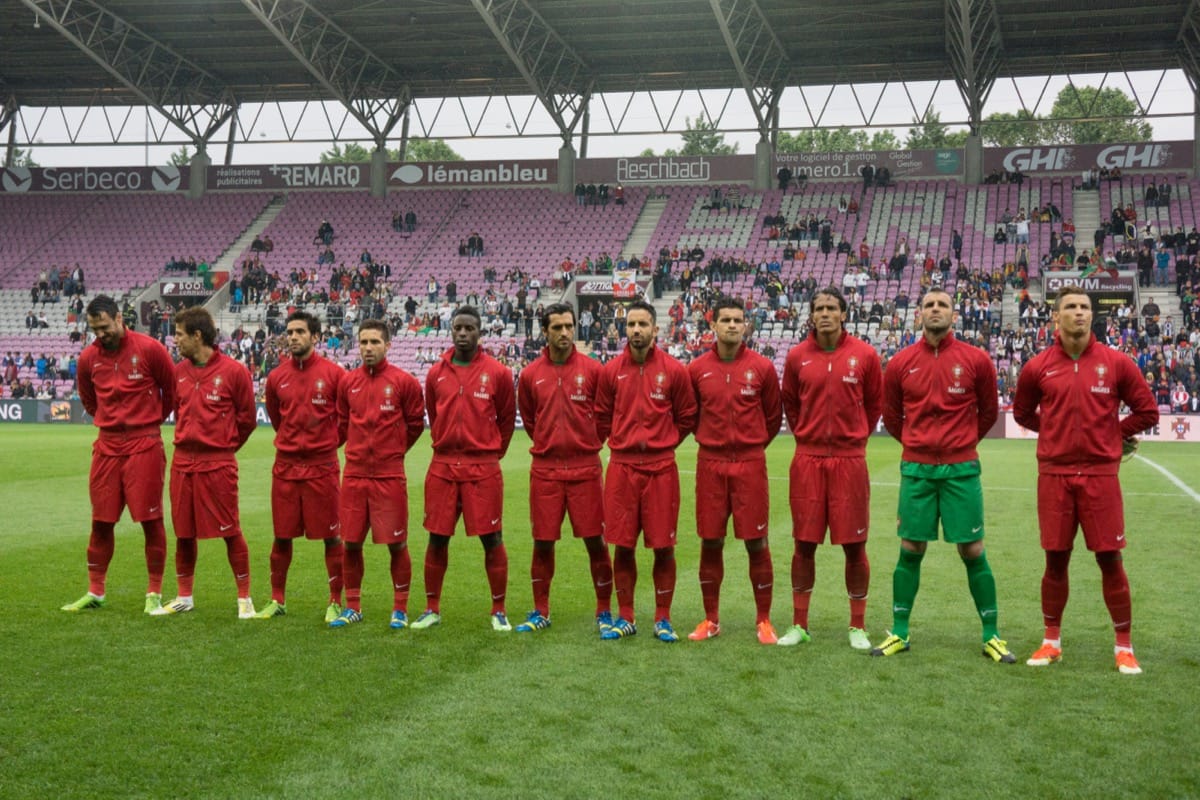
Portugal opens its FIFA World Cup 2026 campaign tonight against the Democratic Republic of Congo at 18:00 WEST, with kick-off carried in continental Portugal by Sport TV, SIC and the LiveModeTV streaming overlay — and the macroeconomic side of the tournament is starting to read as the largest non-host football competition Portugal has ever monetised.
The benchmark study underpinning that read comes from the Gabinete de Estudos de Marketing para Desporto (Sports Marketing Research Office) at IPAM — the Instituto Português de Administração de Marketing — under the direction of Daniel Sá. The model, originally developed by UK Sport and adapted to Portuguese consumption structures since 2012, breaks the tournament's domestic spillover into four sequential moments: staging, group phase, knockout phase and victory scenario. Each moment unlocks a discrete consumption layer.
The €378M to €945M ladder
Three headline figures anchor the IPAM read:
- €378 million — the group-stage floor, locked in regardless of Portugal's on-pitch performance. The figure assumes a minimum three-match domestic engagement window and the associated baseline lift on consumer spending, restauração (food service), advertising flow and digital-platform usage.
- €561 million — the cumulative impact if the Seleção reaches the round of 16 (oitavos de final). This is the IPAM mid-band, anchored on probability-weighted expectations from Group K seeding.
- €945 million — the ceiling under a tournament-winning trajectory through the 19 July 2026 final. Daniel Sá frames the ceiling as evidence of how distributed the value chain has become: O valor do futebol deixou de estar concentrado no estádio ou no país anfitrião (Football's value is no longer concentrated in the stadium or the host country).
For context, IPAM's reference comparator is Euro 2004 — the European Championship Portugal hosted twenty-two years ago — which landed a €440 million economic-impact print. The 2026 ceiling therefore more than doubles the home-tournament benchmark, even though Portugal is not staging a single match.
The sector mix
The IPAM sector decomposition makes clear why a non-host edition can outsize a host edition: the value chain has moved off the stadium turnstile and onto the digital and consumption rails. The full IPAM split:
- Domestic consumption — 26%
- Food service (restauração) — 15%
- Advertising and media — 14%
- OTT and streaming platforms — 10%
- Social-media engagement — 7%
- Content economy — 6%
- Betting — 6%
- Trading cards and collectibles — 5%
- Merchandise — 4%
At the individual-consumer layer, IPAM tracks a €40-70 outlay band for casual fans across the tournament window, with intensive digital fans spending materially more on multi-platform engagement, fantasy-football products and ancillary subscriptions.
Tonight's match — the Group K opener
The Seleção kicks off the tournament tonight at 18:00 WEST against the Democratic Republic of Congo, the lowest-seeded side in Group K. The DR Congo squad arrives with a Premier-League-laden defensive and attacking spine — Aaron Wan-Bissaka, Yoane Wissa, Chancel Mbemba, Cédric Bakambu and Axel Tuanzebe — giving the side a physical-and-counter-attacking profile that has unsettled higher-ranked opponents through the African qualifying cycle. Group K rounds out with Uzbekistan and Colombia, with the Colombians the principal threat for top-of-group placement.
The 16-city North American host map (United States, Canada and Mexico) and the 11 June to 19 July tournament arc mean Portugal's domestic consumption window concentrates into a narrow late-evening / early-night WEST broadcast slot — the structural reason the IPAM read assigns 15% of the total impact to food service and a further 26% to broader domestic consumption.
What this means for expats and residents
- Business hours and bar tape: The 18:00 WEST kick-off catches the post-work commercial window. Expect heavier restauração trade across Lisbon, Porto and the Algarve coastal strip, with the sector reading group-stage match days as a structurally stronger Wednesday-to-Sunday pull than the pre-tournament June baseline.
- Broadcasting access: Sport TV holds the principal pay-TV rights; SIC carries the free-to-air feed for the headline Portugal matches; LiveModeTV's app-based overlay sits as the mobile-native option. Expats without Sport TV but with a SIC-carrying linear-TV bundle (MEO, NOS, Vodafone, NOWO) will get the Portugal-DR Congo opener on the SIC channel.
- Tourism arc: Unlike Euro 2004, Portugal sees no incoming-fan tourism uplift — the host map is North American. The benefit lands on outbound betting, OTT subscriptions, restauração and content-economy rails, which favours digital-native and hospitality-exposed sectors over hotel inventory.
- Consumer-card and subscription economy: The 6% betting share and the 10% OTT share will read through visible monthly spend on Portuguese debit-card statements through mid-July. Sports-betting operators (Betclic Apostas, Solverde.pt, Placard) are running tournament-skewed liquidity programmes; OTT subscription cycles align with the 19 July final window.
- Office productivity: The Portuguese Labour Code treats the Seleção's principal matches as a regular working window — there is no statutory holiday or formal early-release. Employers across the financial and tech-services tertiary sector typically grant informal early-departure or in-office viewing arrangements for the headline matches.
Tonight's whistle starts the IPAM-tracked engagement window. Each subsequent Portugal match converts the €378 million group-stage floor into a higher band on the IPAM ladder. The tournament's 19 July 2026 final closes the calendar; the consumption arc — broadcast, restauração, betting, OTT and content — runs the whole way.