Investors Bought €600 Million of Iberian Farmland Last Year, and Portugal's Alqueva Belt Is the Big Draw
A CBRE report puts institutional buying of Iberian farmland at €600 million in 2025, up about 50%, and names Portugal — above all the irrigated Alentejo around Alqueva — as a prime target for the funds chasing land, water and food.
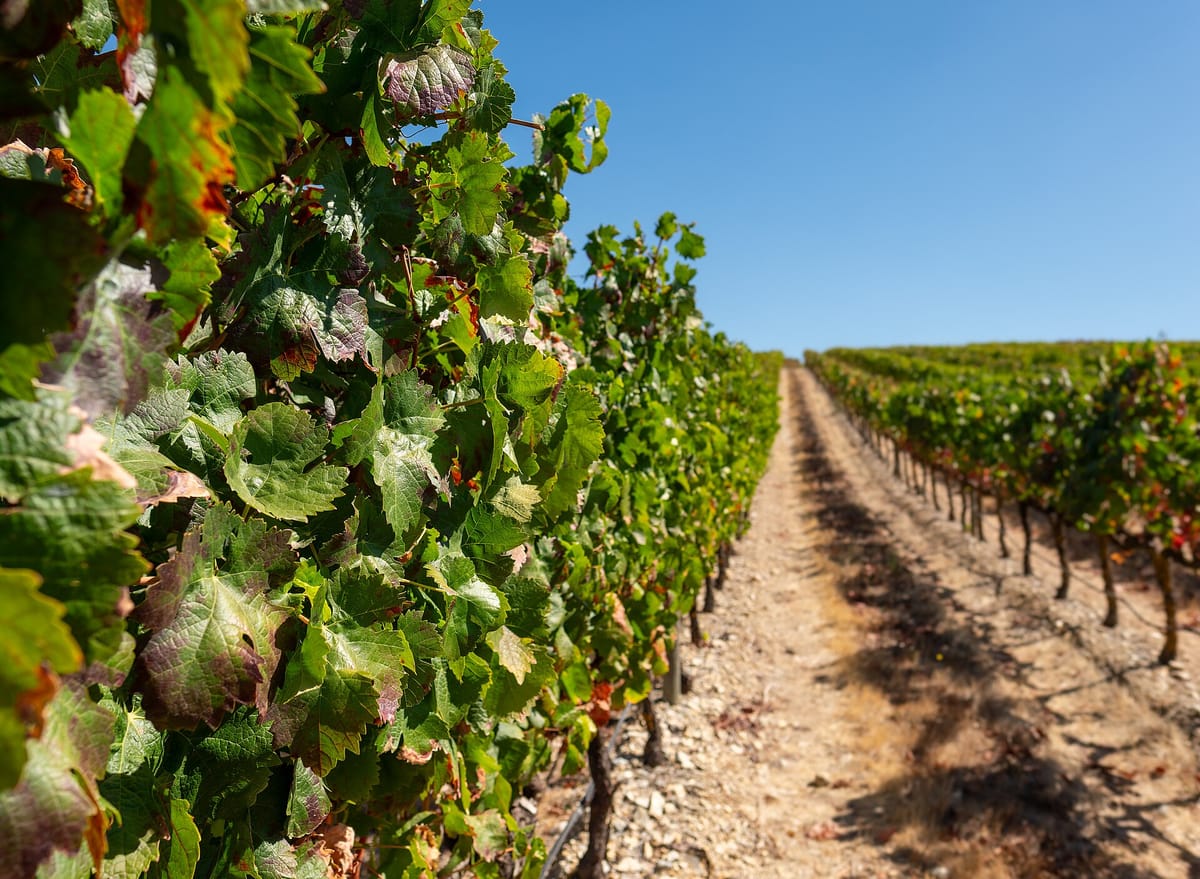
The money chasing Portugal's countryside is no longer just after a farmhouse with a view. Institutional investors — pension funds, specialist agriculture managers and natural-capital vehicles — poured a record sum into Iberian farmland last year, and Portugal, above all its irrigated Alentejo, has become one of the peninsula's prime targets. A new industry report puts hard numbers on a trend that has been quietly reshaping who owns rural Portugal.
€1.2 billion into Iberian agribusiness, half of it into land
According to the Iberian Agribusiness Report 2026 from the property consultancy CBRE, reported by Expresso on 13 August, institutional investment in agribusiness across Spain and Portugal reached €1.2 billion in 2025 — up around 50% on the previous year. Of that total, roughly €600 million was the outright purchase and sale of agricultural land, a segment that rebounded from a slowdown in 2024 and also grew by about half.
These figures are for the Iberian Peninsula as a whole, not Portugal alone. But CBRE describes Portugal as one of the principal poles of attraction for institutional capital, with the largest deals — those above €20 million — concentrated in the Alqueva irrigation zone in the Alentejo, the vast area fed by Europe's biggest artificial reservoir. Taken over a longer horizon, agribusiness investment across Iberia has topped €5.3 billion since 2022, with industrial and processing operators accounting for roughly 40% of the volume and financial investors the rest.
What is driving it: water, food and 'natural capital'
The buyers are not, for the most part, families looking for a smallholding. They are specialised investors in agricultural assets and natural capital — a catch-all for land whose value is tied to water, food production and environmental sustainability. Farmland has become an asset class in its own right: it offers an inflation hedge, steady operating yields that CBRE and earlier analyses have placed in the region of 6% to 10%, and exposure to long-run pressure on global food and water supply.
That logic explains the pull of the Alentejo in particular. Access to irrigation from Alqueva has turned dry cereal country into high-value permanent cropland — olive groves, almonds and vineyards — and irrigated land is exactly what the funds want. It is a very different picture from the one drawn by Portugal's farm output figures, where the country grows only a fraction of the cereals it consumes but produces well over its own needs in olive oil.
What the land costs
After five years of rising prices, CBRE reports that the value of irrigated land in Portugal stabilised in 2025. The report's per-hectare ranges give a sense of how much these assets now command, and how widely they vary by region:
- Alqueva: roughly €28,000 to €40,000 per hectare;
- Sado: €20,000 to €42,000;
- Santarém: €20,000 to €28,000;
- Castelo Branco: €26,000 to €35,000;
- the Algarve: €50,000 to €90,000, the priciest band in the country.
At the top end, Portuguese irrigated land is now approaching the per-hectare prices commanded by prime farmland in California and Australia (€70,000 to €90,000) — a striking benchmark for a market that a decade ago barely registered on international investors' radar.
Where the capital comes from
The capital is heavily international. Earlier CBRE work on the same market has traced buyers to the United States, Canada, Spain, France, the United Kingdom and the Gulf states, drawn by the yields and by Portugal's climate, water infrastructure and comparatively low entry prices. For foreign residents used to thinking of Portugal through the lens of city apartments and the rules around buying a home, the farmland boom is a reminder that the fastest-moving money is increasingly rural — and increasingly institutional.
It also sharpens a debate already under way in the Alentejo and the northwest, where the arrival of outside capital has reshaped landscapes from the olive plantations of the Baixo Alentejo to the Alvarinho vineyards of Monção and Melgaço. Concentrated, water-hungry, export-oriented agriculture brings jobs and investment, but also competition for scarce water and questions about who ultimately owns Portugal's most productive land. On the evidence of the latest figures, that question is only going to grow louder. On the rules that govern access across a neighbour's land, our guide to rights of way in Portugal, covering the servidão de passagem, the landlocked plot that can force one under article 1550, and the twenty years of non-use that ends it sets the latest reference.