Health Ministry Sets End of November to Name Portugal's First Wave of Regional Emergency Departments
The current network of more than 160 emergency services rests on an architecture defined over a decade ago. A working group under anaesthetist Antonio Marques da Silva is assessing which specialties should be concentrated regionally, with orthopaedics in Lisbon and Vale do Tejo named as a candidate.
Portugal's Health Ministry has put a date on the redrawing of its emergency network. By the end of November it expects to have identified which hospital emergency departments will become regional rather than local, and which medical and surgical specialties will be concentrated in them. Orthopaedics in Lisbon and Vale do Tejo is one of the candidates it named on Monday.
"The urgent orthopaedics response in the Lisbon and Vale do Tejo region will be one of the matters to consider in the process of defining the centralised emergency departments," the ministry told Lusa.
Why the network is being rebuilt
The ministry's own explanation is a statement about age. The Rede Nacional de Urgência e Emergência rests on an architecture defined more than a decade ago, with the classification of emergency services consolidated in 2015. Since then, it says, the health service, the country's demographics, the distribution of professionals and the reality of care have all changed profoundly.
The review was ordered in a despacho published in June by health minister Ana Paula Martins. It covers the existing network of more than 160 emergency services and provides for creating centralised emergency departments wherever that is justified, by concentrating and coordinating the local and regional response in particular specialties. It also takes in how the hospital network connects to the Sistema Integrado de Emergência Médica, and reorganises referral circuits, including the Vias Verdes fast-track pathways for stroke and heart attack.
"It is not a matter of responding case by case to each constraint, but of using these challenges to build a more integrated, differentiated and sustainable network," the ministry said, so that each hospital "knows what its role is", with the specialties that demand greater differentiation organised on a regional logic.
Who decides, and on what
The identification will come out of a technical assessment being carried out by a working group of experts coordinated by the anaesthetist António Marques da Silva. Its criteria are installed capacity, available human resources, the level of differentiation of each unit, accessibility, and referral circuits.
There is a template already running. At the start of this year the country's first two regional emergency departments opened, at Loures and on the Setúbal Peninsula, created to contain the disruption in obstetrics and gynaecology caused by too few doctors to fill the rosters. The ministry says the orthopaedics exercise will follow a similar path.
The pressure that made this current
Público reported on Monday that a shortage of orthopaedic surgeons is delaying patients in the Lisbon region, and that Amadora-Sintra had 19 patients admitted in its emergency department on Sunday waiting for orthopaedic surgery, 14 of them with fractures of the neck of the femur. Guidance is for such fractures to reach surgery within 48 hours.
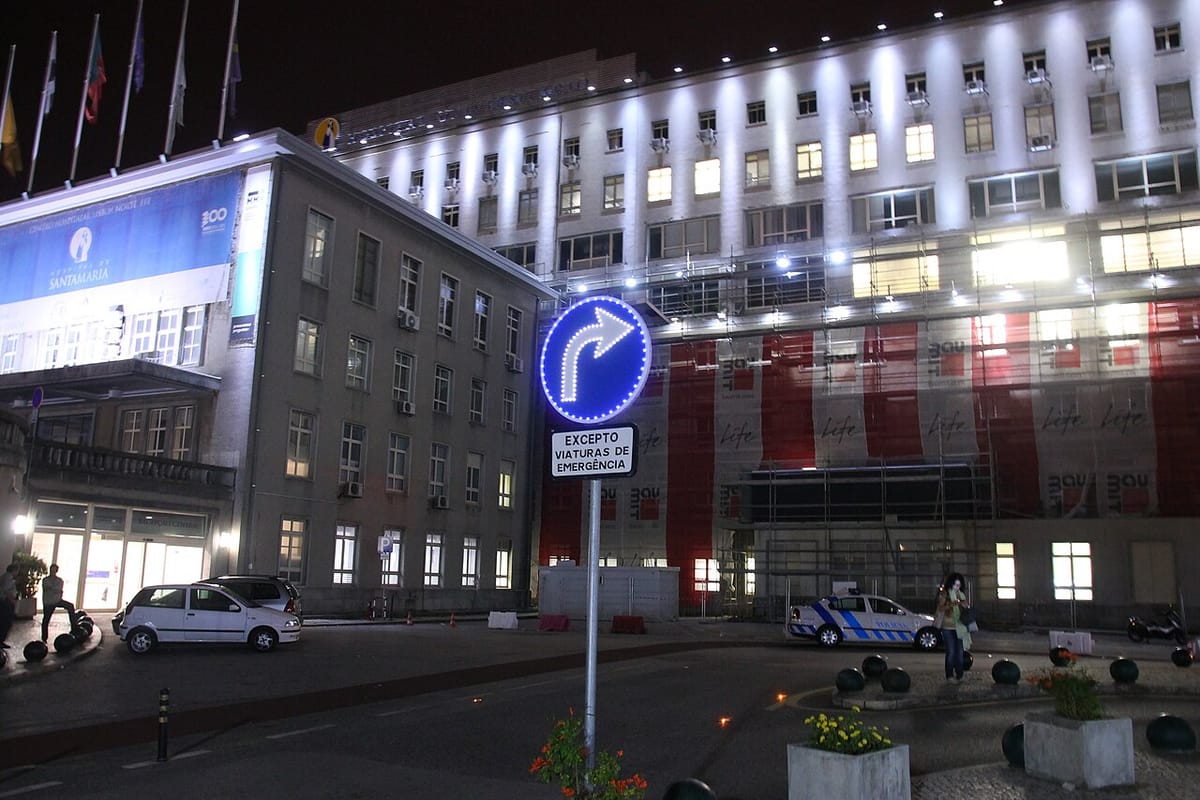
The ministry's answer was to place that case inside the review rather than treat it as isolated: the situation at Amadora-Sintra, like others that may occur elsewhere in the health service, "should be framed within the work the government has already begun". The same hospital has been in the news repeatedly this month, with more than 100 of its nurses keeping a responsibility waiver in place and its emergency department missing from the SNS portal for over a month.
What This Means for Expats
- Your nearest emergency department may stop treating your condition. Centralisation means some specialties move to a regional unit. The hospital stays open; the specialty may not be there.
- End of November is the naming date, not the switch date. The ministry expects to have identified the units and specialties by then. Implementation follows separately.
- Orthopaedics in Lisbon and Vale do Tejo is the first flag. If you live in the capital region and break a hip, this is the specialty most likely to move first.
- Obstetrics is the precedent worth studying. Loures and the Setúbal Peninsula show what a regional emergency department looks like in practice: fewer doors, longer journeys, fuller rosters behind them.