Flying a Drone in Portugal
How to register with ANAC, pass the free pilot exam, insure a drone over 900 grams, get AAN filming permission, and check no-fly zones before you fly.
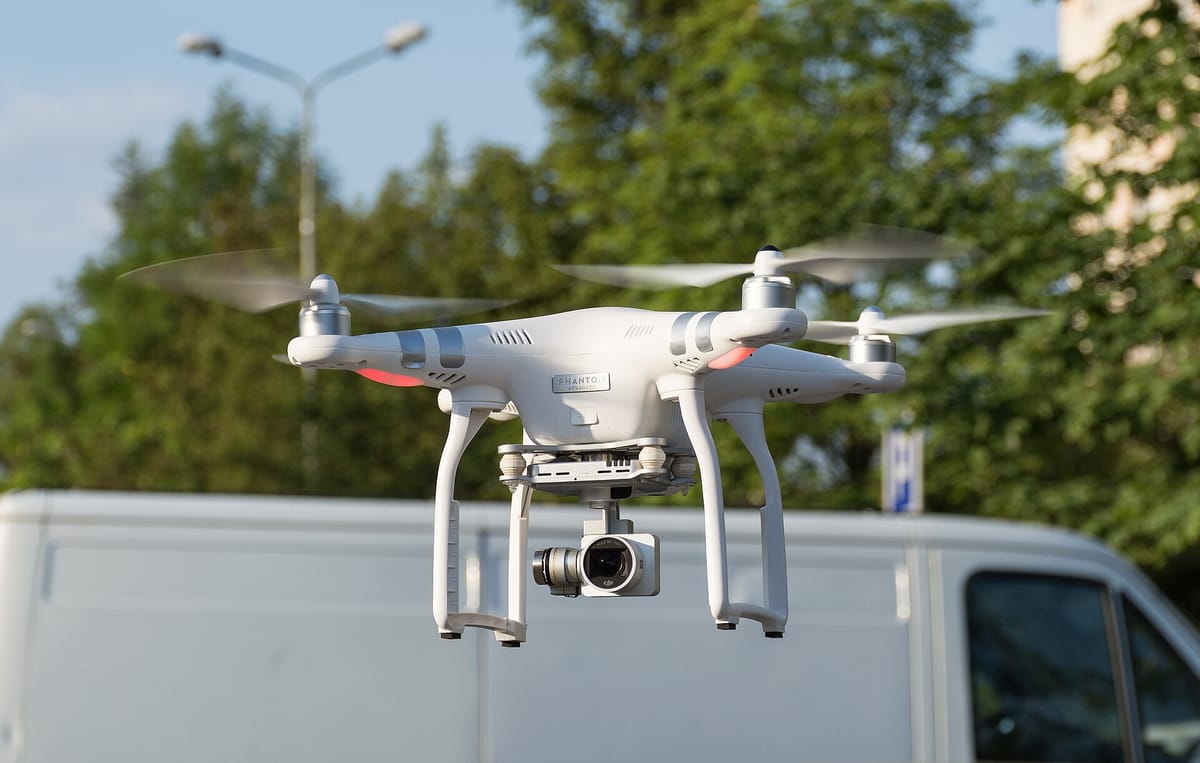
Last verified: September 2026.
Who this is for
- Residents of Portugal, EU or non-EU, who own or plan to buy a drone for hobby, property, or content use.
- Visitors bringing a drone from another EU country or from outside the EU.
- Anyone with a camera drone who wants to film and publish footage taken in Portugal.
Not for you if: you fly for a business under the Specific category (heavier drones, beyond line of sight, or over crowds), which needs an ANAC operational authorisation this guide does not cover. If you want to film a beach or coast from the ground instead, read "Going to the Beach in Portugal".
Flying a drone in Portugal means satisfying two authorities. ANAC, the civil aviation authority, decides whether you may fly. The AAN, the national aeronautical authority, decides whether you may film from the air and publish the result. Most people sort out the first and never hear of the second. Registration, the pilot exam, and the filming permit are all free. Registration takes minutes once you have a Digital Mobile Key, the exam takes an evening, and the filming permit needs ten days' notice. Insurance is compulsory only for drones over 900 grams.
Who has to register as a drone operator
You register as an operator, meaning the person responsible, not as the owner of a particular drone. One registration covers every drone you fly.
You must register with ANAC if any of these is true of your drone:
- It weighs 250 grams or more at take-off.
- It can transfer more than 80 joules of energy on impact.
- It carries a camera, microphone, or any other sensor that can capture personal data.
The third condition catches almost everyone. A sub-250-gram drone with a camera still needs a registered operator. A drone under 250 grams that is sold as a toy is the only common exception.
Where you register depends on where you live:
- You live in Portugal: register with ANAC.
- You live in another EU or EEA country: register at home. ANAC cannot issue a Portuguese number to a resident of another EU country, and your home registration is valid here.
- You live outside the EU: register in the first EU country where you will fly. If that is Portugal, you register with ANAC as an individual. If you already hold a registration from another EU country, you do not register again.
- Your company is based outside the EU: it must be commercially established in Portugal first, with a Portuguese address, a NIF, and an active Digital Mobile Key.
How to register with ANAC
Registration is free and done online.
- Get a Chave Móvel Digital (Digital Mobile Key) if you do not have one. You request it in person at a Loja do Cidadão or Espaço Cidadão. ANAC uses this login and no other, so a visitor without one cannot skip this step. Our guide to activating the Chave Móvel Digital explains the process.
- Go to uas.anac.pt and log in with the Digital Mobile Key.
- Complete the operator form. Choose Portugal as your country of origin. Give your contact details and confirm you understand the rules.
- Wait for ANAC to validate the application. The platform then generates your operator number in the format PRT-ABC0123456789 and shows it on your dashboard.
- Write or stick the number on every drone you fly, where it can be read. Enter it in the drone's remote identification system if the drone has one.
Revalidate every three years. You must log in and update your details at least once in every three-year window. If you do not, ANAC revokes the number and it cannot be recovered. You then start again from scratch. Flying on an expired registration is a separate offence from flying unregistered, and both carry fines.
Which pilot certificate you need
Registration says who is responsible. Flying competence is separate, and it is also free. The minimum age to fly as a remote pilot is 16.
If your drone is under 250 grams or carries a C0 class mark, you do not need a pilot certificate at all. You may still need the operator registration because of the camera.
A1/A3 certificate (the one most people need). Training and exam are both online, on ANAC's remote pilot platform at rp.anac.pt. ANAC is the only body that can issue this certificate in Portugal; private preparation courses are not recognised.
- Log in with your Digital Mobile Key. If you do not have one, ANAC can create an account for you when you send its registration form and identity documents.
- Read all of the course material. The platform locks the exam until you have opened every page, and each page has a minimum reading time.
- Sit the exam: 40 questions, 75 percent to pass, and only one attempt.
- Your enrolment lasts one month from sign-up, so do not leave the exam to the last day.
A2 certificate (only if you want to fly closer to people). The training is online but the exam is in person at ANAC's offices. It has 30 questions and the same 75 percent pass mark. You need a valid A1/A3 certificate first, and you must upload a signed self-training declaration before ANAC will book you in. Enrolment lasts six months.
Validity. Both certificates last five years from issue. The platform warns you six months before expiry, and a repeat button restarts the course and exam for another five years.
Where and how you may fly
Almost all private flying falls into the Open category, for drones under 25 kilograms. You need no operational authorisation from ANAC, but the standard European rules apply:
- Keep the drone in visual line of sight at all times.
- Stay no higher than 120 metres above the ground. You may go 15 metres above an obstacle taller than 105 metres, if you stay within 50 metres of it and the owner has asked you to.
- Never fly over crowds or gatherings of people.
- Never fly where a rescue or emergency operation is under way, including wildfires, unless the emergency services have given permission. Drones ground firefighting aircraft.
- Night flying is allowed without special permission.
The three subcategories then set how close to people you may fly:
- A1: drones under 250 grams, or class C0 or C1. You may occasionally overfly uninvolved people, but never crowds.
- A2: class C2 drones only. Keep 30 metres from uninvolved people, or 5 metres if the drone is in low-speed mode. Needs the A2 certificate.
- A3: any drone up to C4 and under 25 kilograms. Keep 150 metres from uninvolved people and from residential, commercial, industrial, and recreational areas.
Class marks. Drones sold in the EU since 2024 carry a class mark from C0 to C4 that shows which subcategory they belong to. Under the EU rule, an older drone with no class mark and a weight of 250 grams or more may only be flown in A3, far from people. An older drone under 250 grams may fly in A1. Classes C5 and C6 belong to the Specific category, not the Open category.
Remote identification. In the Open category, remote ID is required only where a geographic zone demands it, and then only for C1, C2, and C3 drones.
Whether you need insurance
Portugal goes further than the EU baseline here. If your drone's maximum operational mass is over 900 grams, third-party liability insurance is compulsory. Most mid-range consumer camera drones are over this line. Sub-900-gram drones need no policy, though cover is still sensible.
The minimum insured amount is set in Special Drawing Rights (SDR), the IMF's currency unit, per year and regardless of the number of claims:
- Over 900 grams to 1.5 kilograms: 0.26 million SDR, roughly €310,000.
- Over 1.5 kilograms to 4 kilograms: 0.38 million SDR, roughly €450,000.
- Over 4 kilograms to 20 kilograms: 0.56 million SDR, roughly €665,000.
- Over 20 kilograms: 0.75 million SDR, roughly €890,000.
The euro figures move with the exchange rate. The policy must cover accidents in flight and on the ground anywhere in Portugal, and claims made up to one year after the policy ends. It may exclude damage to you, your household, and your family. It always excludes fines and legal costs. A deductible is allowed, but the insurer pays the injured person in full and recovers the deductible from you afterwards. If you already hold liability cover through a sports club policy, you are exempt from buying a separate one.
Dedicated drone policies are sold by Portuguese insurers and some household policies can be extended. Ask for the SDR band in writing before you buy.
Getting permission to film from the air
This is the step that trips up residents and visitors alike. Under a law from 1958 that is still in force, capturing images, sound, or other data from the air over Portugal, and publishing it, needs authorisation from the AAN. ANAC's own guidance sends every camera-drone owner to the AAN.
How it works:
- Register on the e-AAN platform at imagensaereas.aan.pt. Sign and upload the declaration of commitment on honour. Registration is free.
- Enter your drone, pilot, and insurance details.
- Submit a request for each period of filming, giving the location and dates. Email, post, and fax are no longer accepted.
- Wait for the decision. AAN technical advisers review each request and, where the airspace is under military control, ask the Air Force for an opinion. You do not apply to the Air Force separately.
Plan around ten days. The AAN only guarantees a decision in time if your request arrives ten days before you want to fly. A request filed after 17:00 for the next morning will not be processed in time.
Each authorisation lasts up to 30 consecutive days. Since 24 March 2025 the AAN no longer issues longer permits, so regular flyers treat it as a rolling monthly application. The permit is free.
Where you cannot fly
Check the geographic zones before every flight. ANAC publishes them at uas.anac.pt/explore and in the VOANABOA app for iOS and Android. Zones change, and some are temporary.
The main restrictions in the Open category:
- International airports: flying is prohibited in the inner protection zone. In the surrounding areas the height limit is 30 metres in Area 1, 60 metres in Area 2, and 80 metres in Area 3. Your drone must have a height-above-ground function there. Lisbon's airport sits inside the city, so much of central Lisbon is off limits. Porto and Faro have large zones too.
- Emergency medical helipads: no Open-category flying within 1 kilometre.
- Civil heliports, small aerodromes, and ultralight strips: flying within 2.5 kilometres needs the facility director's permission.
- Aerodromes with a traffic zone or flight information service: permission from the aerodrome director or the information service.
- Military danger, restricted, and prohibited areas: permission from the AAN.
- Parks, nature reserves, and protected areas: permission from the ICNF on the mainland, the IFCN in Madeira, and the Regional Environment Directorate in the Azores. A large share of Portugal's most photogenic coast and interior is protected, so check before you travel.
Prisons, events, and sovereign buildings may also be restricted. Confirm on the map rather than assuming.
Filming people and privacy
Aviation permission is only half the picture. A drone camera over a beach, a street, or a neighbour's garden engages data-protection law on its own. Filming identifiable people or private property without a lawful basis can breach GDPR, and complaints go to the CNPD, Portugal's data protection authority. Keep cameras off crowds, gardens, and windows. Our guide to your data rights in Portugal explains how the CNPD handles complaints. Noise rules, coastal management plans, and environmental protection also still apply.
If you are visiting from outside the EU
Visitors from outside the EU face one real friction point: the Digital Mobile Key.
- If you already hold an operator registration from another EU country, you use it here and skip ANAC entirely.
- If Portugal is your first EU stop, you need an ANAC registration, and that needs a Digital Mobile Key issued in person at a Loja do Cidadão. The desk may ask for a NIF if it suspects a commercial purpose, such as selling footage.
- If your drone is under 250 grams, you need no pilot certificate. Under 900 grams, you need no insurance.
- You still need the AAN filming permit, and that wants ten days' notice. Apply from home before you travel.
If you plan to shoot commercially, set up the company and get the NIF before you book anything.
What it costs
- ANAC operator registration: free.
- A1/A3 course and exam: free.
- A2 course and exam: free.
- AAN registration and filming authorisation: free.
- Digital Mobile Key: free.
- Insurance over 900 grams: the premium is set by the insurer and depends on the weight band and cover you choose.
What the fines are
The law sets three bands of fines, with higher figures for companies:
- Very serious offences: €2,000 to €3,500 for individuals, €5,000 to €7,500 for companies. This covers flying unregistered, missing or illegible operator marks, a non-resident operator without identification, missing remote ID where required, failing to declare a sale, and flying without compulsory insurance.
- Serious offences: €1,000 to €2,500 for individuals, €3,000 to €5,000 for companies. This covers flying on an expired registration and failing to notify a transfer of the drone.
- Minor offences: €300 to €600 for individuals, €800 to €1,200 for companies, for notifying a transfer late.
ANAC can also ban you from flying for up to two years, or declare the drone forfeit to the state. Filming without AAN permission and breaching data-protection law are dealt with separately. The GNR and PSP can ask to see your operator number and certificate on the spot.
Pre-flight checklist
- Get a Chave Móvel Digital at a Loja do Cidadão.
- Register as an operator at uas.anac.pt and put the PRT number on every drone. Diarise the three-year revalidation.
- Take the free A1/A3 course and exam at rp.anac.pt: 40 questions, 75 percent, one attempt, valid five years.
- If the drone is over 900 grams, buy liability insurance in the right SDR band.
- If the drone has a camera, register on e-AAN and apply at least ten days before you fly. The permit lasts 30 days.
- Check uas.anac.pt/explore or VOANABOA before every flight, and get any ICNF, aerodrome, or AAN clearance the map calls for.
- Fly in line of sight, under 120 metres, never over crowds, and never near an active emergency.
Portugal is not hostile to drone flyers. The Open-category rules are the ordinary European ones, night flying is allowed, and nothing ANAC or the AAN asks for costs money. What Portugal adds is the filming permit and an insurance line that starts lower than most people expect. Get those two right and the rest is a checklist.
Sources
- ANAC, Registo de Operador de Aeronaves Não Tripuladas: https://www.anac.pt/vPT/Generico/drones/registo_uas/Paginas/OperadoresdeUAS.aspx (registration triggers, portal, Digital Mobile Key, three-year revalidation, rules for EU residents and third-country operators)
- ANAC UAS registry: https://uas.anac.pt (registration portal and geographic zone map at uas.anac.pt/explore)
- ANAC remote pilot platform, FAQ: https://rp.anac.pt/local/staticpage/view.php?page=faq-anac-dronecourse (40 and 30 questions, 75 percent, one attempt, enrolment validity, in-person A2 exam, five-year validity, minimum age 16, no fees)
- ANAC, Formação, Exames e Certificados: https://www.anac.pt/vPT/Generico/drones/categoria_aberta/formacao_exames_certificados/Paginas/Formacao_ExameseCertificados.aspx (ANAC as sole training provider, certificate validity)
- ANAC, Open category guide (English): https://www.anac.pt/sitecollectiondocuments/UAS_DRONES/guia-cat-aberta-en.pdf (subcategory distances, 120 metres, geozone limits, remote ID, 900-gram insurance line, AAN referral)
- ANAC, Geographic zones tutorial: https://www.anac.pt/SiteCollectionDocuments/UAS_DRONES/20243112%20Tutorial%20ZG%20GZ%20UAS_ANAC%20v2%2012.03.2024.pdf (airport areas, HEMS, 2.5 km aerodrome rule, military areas, ICNF, IFCN, Azores)
- AAN, Aeronaves Não Tripuladas (Drones): https://www.aan.pt/subPagina-AAN-001.005.005-aeronaves-nao-tripuladas-drones (e-AAN platform, declaration of commitment, free, 30-day validity from 24 March 2025, ten-day lead time, Air Force coordination)
- e-AAN platform: https://imagensaereas.aan.pt (filming authorisation applications)
- Decreto-Lei n.º 58/2018, de 23 de julho, via ANACOM: https://www.anacom.pt/render.jsp?contentId=1457553 (article 10 compulsory insurance over 900 grams, articles 12 and 13 fines and accessory sanctions)
- Decreto-Lei n.º 58/2018 on Diário da República: https://diariodarepublica.pt/dr/detalhe/decreto-lei/58-2018-115740753 (primary text)
- Portaria n.º 2/2021, de 4 de janeiro, Diário da República mirror: https://dre.tretas.org/dre/4372632/portaria-2-2021-de-4-de-janeiro (minimum insured capital in SDR by weight band, in force since 3 February 2021)
- Decreto-Lei n.º 42071 of 30 December 1958, Portaria n.º 17568 of 2 February 1960, and Portaria n.º 358/2000 of 20 June (legal basis for AAN aerial-survey authorisation, as cited by the AAN)
- Regulation (EU) 2019/947 and Delegated Regulation (EU) 2019/945, EASA Open category FAQ: https://www.easa.europa.eu/the-agency/faqs/drones-uas (subcategories, class marks C0 to C4, legacy drones from 1 January 2024, cross-border validity of registration)
- Regulation (EC) No 785/2004 (insurance minimum for the top weight band)
Last verified September 2026. Rules and fees change; check the official source before acting.