Brussels Opens Two New Cases Against Portugal Over Pension Fund Taxes and Motorway Tolls, and Sends a Second Warning on Whistleblower Rules
The European Commission's November infringement round sends Portugal letters of formal notice over the taxation of foreign pension funds and life insurers and the Eurovignette toll rules, and a reasoned opinion over bank and whistleblower amendments. Portugal has two months to reply.
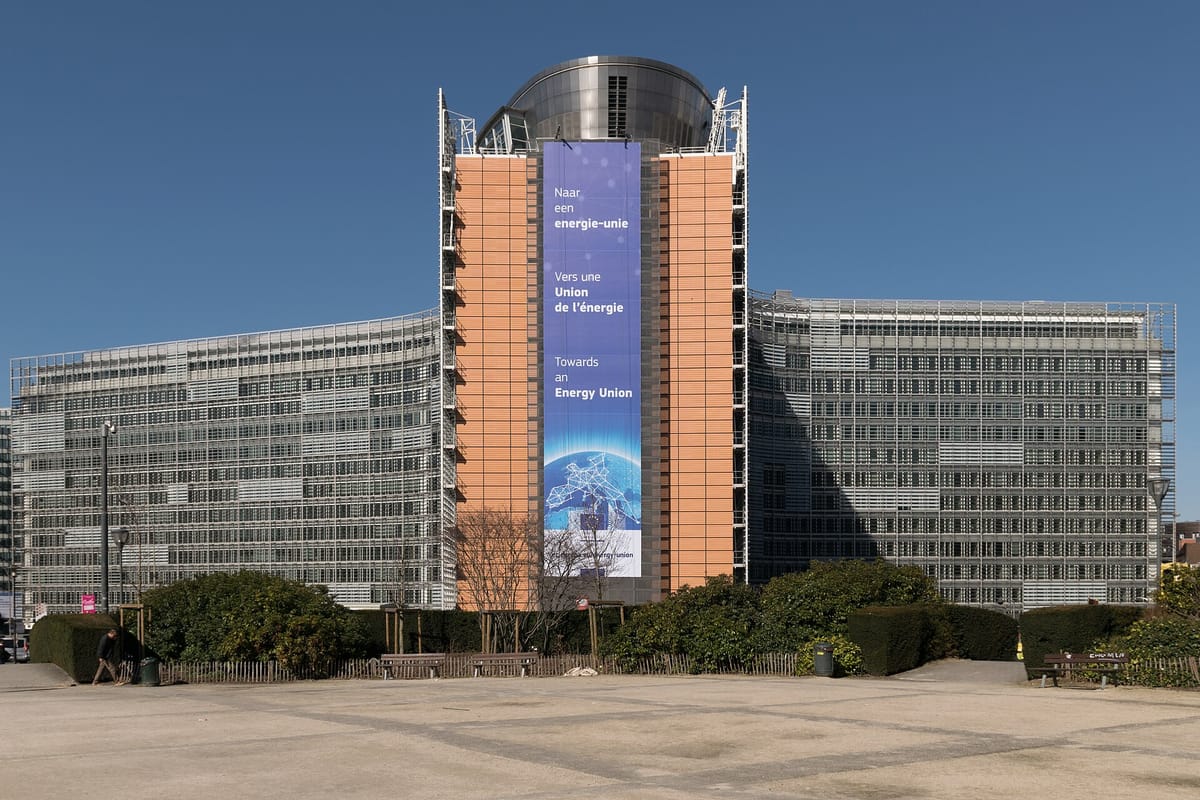
The European Commission took three decisions against Portugal on Thursday in its November round of infringement cases. Two open new cases: one over how Portugal taxes foreign pension funds and life insurers, and one over its rules on motorway tolls. The third moves an older case on bank supervision and whistleblower protection one step closer to the Court of Justice of the European Union.
None of the three is a referral to the Court. An infringement case runs in three stages: a letter of formal notice, then a reasoned opinion, then, if the country still does not comply, a referral to the Court, which can lead to fines. In each case Portugal now has two months to reply.
Foreign pension funds and life insurers
Portugal is one of seven countries, with Germany, Spain, Italy, Austria, Poland and Romania, to receive a letter of formal notice (case INFR(2026)4018) over the tax treatment of pension funds and life insurance companies. Belgium received an additional letter in a case opened in 2020.
The Commission says these countries do not tax domestic pension funds or life insurers on income from their investments but do tax comparable funds and insurers from other EU or European Economic Area states that invest there. Foreign funds and insurers also cannot deduct the technical reserves they set aside for future payouts to clients, while domestic ones can. The Commission says this breaches the free movement of capital (Article 63 of the Treaty on the Functioning of the EU) and puts up tax barriers to cross-border investment by these funds and insurers, which it calls critical to the good functioning of capital markets.
Tolls and vignettes
The second letter of formal notice (INFR(2026)2184) concerns the Eurovignette Directive, as revised in 2022 (Directive (EU) 2022/362). The directive sets common rules for charging vehicles with four or more wheels to use roads, through distance-based tolls or time-based vignettes, on the principle that users and polluters pay. Portugal is among eight countries that the Commission says have not transposed or applied it correctly. The others are Czechia, Estonia, Croatia, Lithuania, Romania, Slovenia and Slovakia.
The Commission gives examples of the problems across the group:
- no common method for calculating the infrastructure charge for lorries;
- no short vignettes for cars, down to a single day, priced in proportion to the time a road is used;
- lorry tolls that do not vary with the vehicle's CO2 emissions.
It does not say which of these points applies to Portugal.
Whistleblowers and bank supervision: the second warning
The third decision is a reasoned opinion (INFR(2025)2039), the last step before a possible referral to the Court. The EU's crypto-asset rulebook, the MiCA Regulation (Regulation (EU) 2023/1114), amended two directives: the fifth Capital Requirements Directive, which sets prudential rules for banks on governance, supervision, capital and risk, and the Whistleblower Directive, which protects people who report breaches of EU law at work. Member states had until 30 December 2024 to bring those amendments into national law.
The Commission says Portugal has not told it that it has done so. It sent Portugal a letter of formal notice in May 2025. If the reply to Thursday's reasoned opinion falls short, the Commission may take the case to the Court.
Portugal is also up against a separate Brussels deadline to put its dolphin bycatch plan into force. The full list of decisions is in the Commission's November infringements package.