Family Doctors in Porto, Maia and Valongo Can Prescribe Pilates or a Cooking Class From 1 October
ULS São João's community prescribing pilot starts in three family health units. Doctors refer stable adult patients to local exercise, cooking, culture and social activities through the same system used for medicines and tests, with council teams finding the programmes.
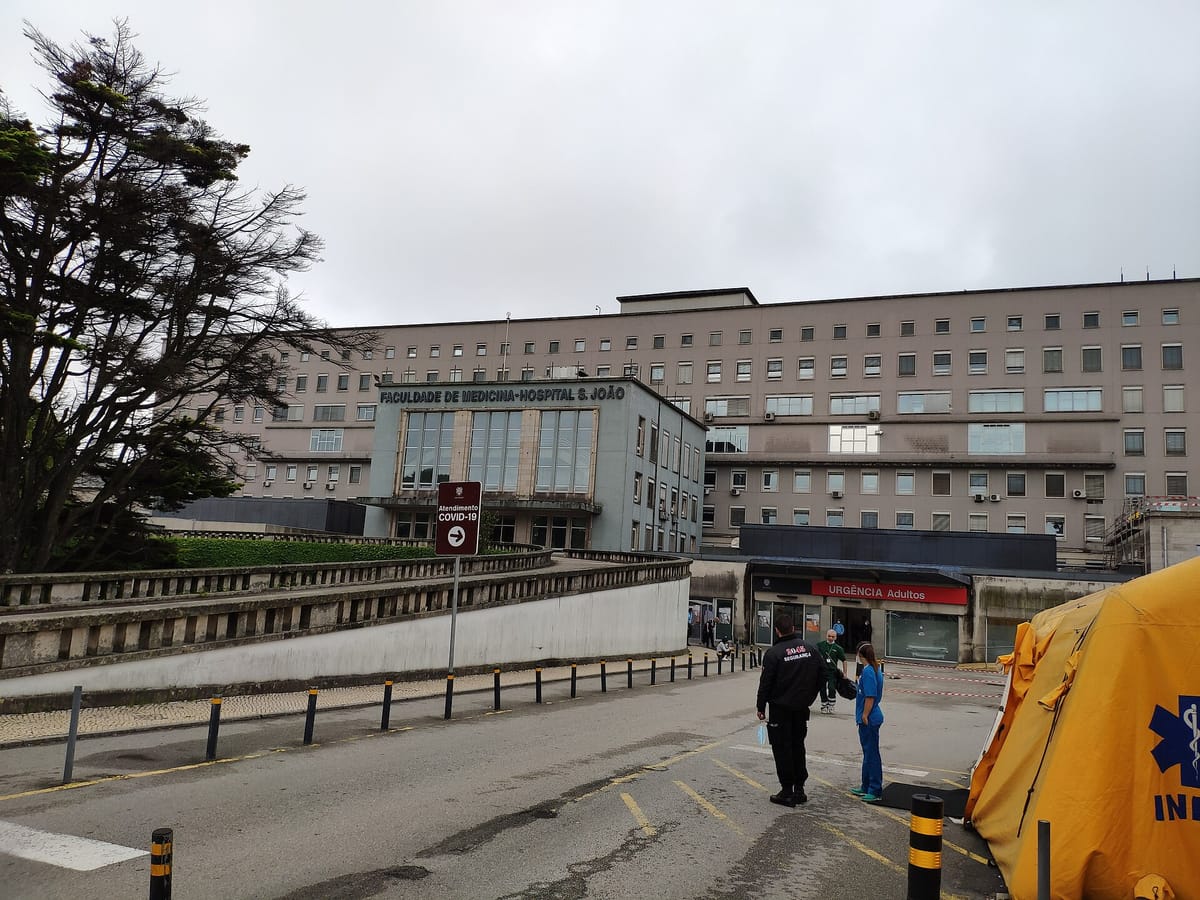
From 1 October, a family doctor in three Porto-area health centres will be able to send a patient to a Pilates class, a cooking workshop or a walking group through the same computer screen used to prescribe a medicine or order a blood test. The Unidade Local de Saúde (ULS) de São João, the public health body that runs Porto's Hospital de São João and the family health centres around it, announced on Wednesday that its prescrição comunitária (community prescribing) pilot goes live next week.
Where and for whom
The first phase covers three Unidades de Saúde Familiar (USF, family health units), one in each partner municipality: USF Valongo in Valongo, USF Barão Nova Sintra in Porto and USF Alto da Maia in Maia. It is aimed at adults over 18 whose conditions are stable and for whom, in the ULS's words, "a community intervention may be an adequate complement to the clinical approach".
The areas listed for this first phase are physical activity, healthy eating, culture, loneliness, the prevention of cognitive decline, mental health and integration into the community, according to the ULS statement reported by Lusa.
How a prescription works
Until now, a doctor telling a patient to exercise more or learn to cook was giving advice. Under the pilot, the doctor can refer the patient to a dedicated team that sets out the options already running locally, from Pilates to a cookery course to handicraft workshops. The ULS stresses that the referral is built to look like a conventional prescription: it goes through a platform inside the patient's clinical record, with the same structure as a prescription for medicines or tests.
The municipalities of Porto, Maia and Valongo do much of the work. Under the pilot's design, municipal teams identify and mobilise the local programmes, and follow up and monitor the model. "Community prescribing starts from an integrated vision of health," said Maria João Baptista, who chairs the ULS board, "recognising that the promotion of well-being and the prevention of disease go beyond the limits of the health services."
When the partnership was launched in March, Miguel Cabral, the deputy clinical director for primary care at the ULS, gave an example to Lusa: a recently widowed man, independent, whose wife had always cooked. Besides his grief, he has a practical problem, and he may slide into fast food that is worse for his health and more expensive. A cooking workshop "prescribed" by his doctor tackles the risk directly. "We want to increase adherence to prescriptions that, in this context, are not pharmacological," Cabral said.
Culture on prescription is next
São João's pilot is not the only one in the north. The Universidade do Porto leads a consortium called Prescrição Cultural (Cultural Prescription) with the universities of Minho and Trás-os-Montes e Alto Douro, six museums, the Direção-Geral da Saúde (DGS, Directorate-General of Health), the Ordem dos Médicos (Medical Association) and the northern regional development commission, CCDR-N. Its model, described to Lusa in June, would let a doctor or psychologist refer a patient with anxiety, mild depression or stress to ten weeks of creative group activities in museums, run by artists or cultural mediators who have taken a 52-hour training course. The university hoped to start in 2027, subject to CCDR-N funding.
The need is not in doubt. In a European Commission Eurobarometer survey reported here on Tuesday, 68 percent of Portuguese said they never exercise, the highest share in the EU. The ULS has not yet said how many patients the three units expect to refer, or how it will measure whether the prescriptions are taken up and do any good. For patients registered at the three units, the practical change is simple: from next week, it is worth asking your family doctor what is available.