Sixty-Eight Percent of Portuguese Say They Never Exercise, the Highest Share in the EU, and the Reason They Give Most Often Is Motivation
The European Commission's sixth Eurobarometer on sport puts Portugal last on almost every measure of movement, including the share who never walk for ten minutes at a time. Cost and missing facilities are named less often here than across the EU.
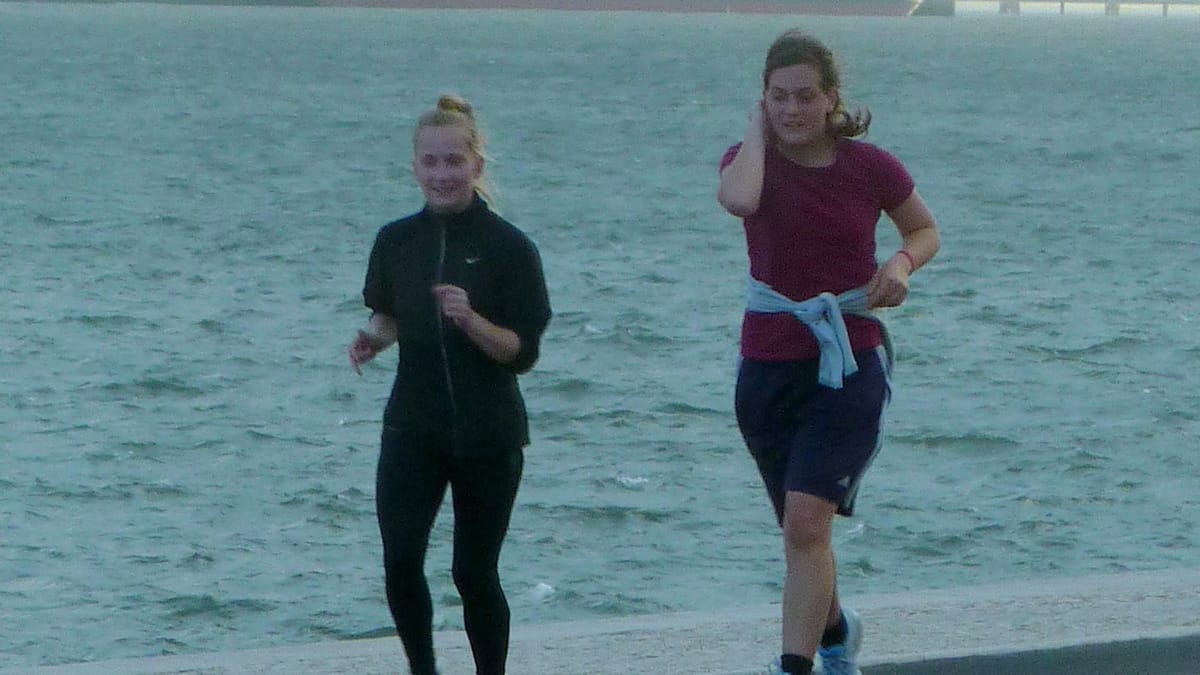
The European Commission published the sixth Special Eurobarometer on Sport and Physical Activity on Tuesday, on the eve of the European Week of Sport. Across the European Union the news is good: the share of people who never exercise fell from 45 percent in 2022 to 39 percent this year. In Portugal the figure is 68 percent, the highest of any member state, and 29 points above the EU average.
The survey, reference SP574, interviewed 26,421 people across the EU between 9 April and 4 May 2026, including 1,031 in Portugal. The usual explanations for the Portuguese result do not survive contact with the data.
The numbers
Four percent of Portuguese respondents said they exercise almost daily, the joint lowest reading in the EU alongside Bulgaria, Italy and Poland, against an EU average of 9 percent. Twenty-four percent exercise several times a week, against 38 percent across the EU.
Portugal did improve. The share who never exercise fell five points from the 73 percent recorded in 2022, and the share exercising several times a week rose six points. The problem is that the rest of Europe improved at the same rate or faster, so the gap has not closed.
The starker finding sits in the question about ordinary movement outside sport, such as cycling to work, gardening or dancing. Fifty-one percent of Portuguese respondents said they never do any, against an EU average of 18 percent. That is a fall of 21 points since 2022, the largest improvement of any country, and Portugal is still last.
The walking figure is the one to sit with
Respondents were asked how many days a week they walk for at least ten minutes at a time. Across the EU, 72 percent said four to seven days, up twelve points since 2022. In Portugal the figure is 39 percent, and it fell ten points.
Portugal and the Netherlands were the only two countries where that share went down at all, and Portugal's fall was more than twice the Dutch one. Meanwhile 30 percent of Portuguese respondents said they never walk for ten minutes at a stretch. The EU average for that answer is 4 percent.
This lands two days after the government published a ten-year plan to get the country walking and cycling with no budget attached to it. The survey is the demand side of that plan, and it suggests the plan is aimed at the right habit.
It is not money, and it is not the gym being far away
Asked what stops them exercising more often, 39 percent of Portuguese respondents named a lack of motivation or interest. That is the highest figure in the EU, against an average of 26 percent. Thirty-one percent cited a lack of time, down thirteen points.
Cost came in at 10 percent, below the EU's 12 percent. Only 6 percent said there was no suitable or accessible sports facility near where they live, against 7 percent across the bloc. Among Portuguese who do exercise, 74 percent spend less than 50 euros a month on it.
Portuguese respondents are also more convinced than most Europeans that exercise is worth doing: 98 percent agreed that it improves mental health, against 93 percent across the EU.
Sixty-three percent of Portuguese respondents also agreed that their local authority does not do enough on physical activity, up nine points since 2022 and well above the EU's 47 percent. Yet almost nobody names missing facilities as their own reason for not exercising. The belief, the blame and the behaviour do not line up, and the survey does not try to reconcile them.