The Government's Ten-Year Plan to Get Portugal Walking and Cycling Arrives Without a Euro Attached to It
A draft Council of Ministers resolution would approve a National Strategy for Active Mobility running to 2036, with targets of 20 percent of commutes on foot and 2 percent by bicycle. It allocates no money and no staff, and revokes the two strategies it replaces.
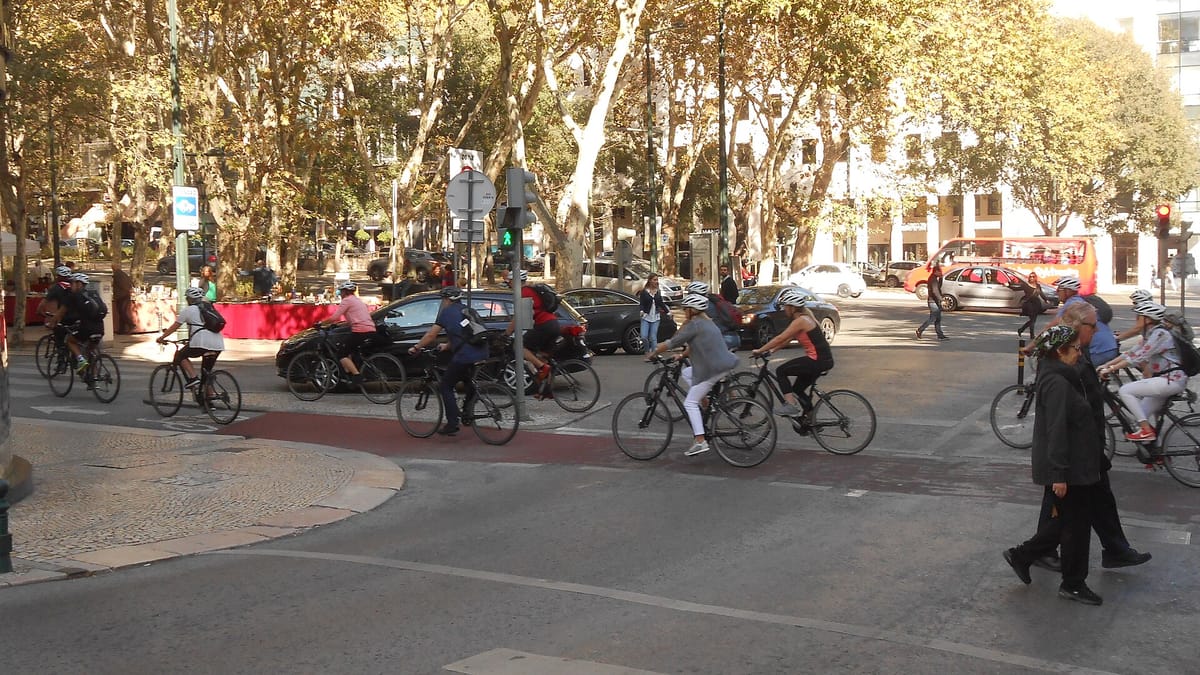
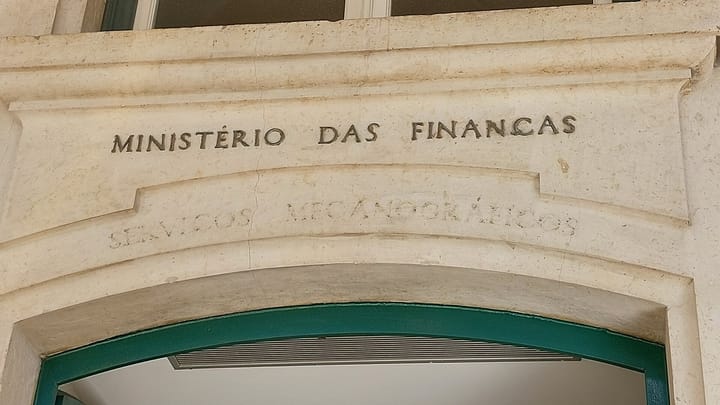
The government is preparing to sign off a ten-year plan to get more of Portugal walking and cycling to work, and the draft that has been circulating among interested bodies arrives with no money and no staff attached to it. A proposed Resolução do Conselho de Ministros (Council of Ministers Resolution), seen by Público and expected to be approved shortly, would give effect to the Estratégia Nacional para a Mobilidade Ativa 2026-2036 (National Strategy for Active Mobility), setting targets for 2036 and leaving their execution to whichever public bodies can find room for it in budgets they already have.
The headline numbers are modest. By 2036 the government wants 20 percent of commuting trips made on foot, against 15.7 percent recorded in the 2021 census, and 2 percent by bicycle, against 0.6 percent. It wants the average number of daily trips by active modes to rise by more than 25 percent, more than 80 percent of journeys under one kilometre to be made walking or cycling, and the cycling share of trips under five kilometres to reach 3 percent in towns and 5 percent in the Lisbon and Porto metropolitan areas. That last figure starts from 0.18 percent.
What the document actually commits to
Coordination goes to the Instituto da Mobilidade e dos Transportes (Institute for Mobility and Transport, IMT), which is to work through municipalities, intermunicipal bodies and the regional coordination commissions. Technical monitoring falls to a committee chaired by the IMT president. An action plan is to be drawn up and approved by a later resolution, though the draft sets no deadline for producing it. An interim evaluation is due as a report published on 31 January 2032, and a final assessment of results and impacts on 31 January 2037.
On resources, the text is explicit in the way these documents usually are: the commitments and charges for carrying out the measures "depend on the availability of appropriations from the competent public entities". In plain terms, no new money and no new people. The strategy sets out four strategic axes: promoting active mobility, including among schoolchildren and older people; creating the conditions for it, such as upgrading pedestrian and cycling infrastructure; improving safety for pedestrians and cyclists, including adjusting urban speed limits; and driving adoption through community involvement.
The new strategy would also clear away what came before it. Portugal has had a cycling strategy since 2019 and a pedestrian one since 2020; the two were formally merged in 2023 and a project group was set up to assess how they had performed. All of that is to be revoked. So, according to the draft, are the Interministerial Commission for Active Mobility and the project group, with nothing named to replace them.
Measured against what it replaces
The instrument being repealed is Resolução do Conselho de Ministros n.º 131/2019, published on 2 August 2019, which approved the Estratégia Nacional para a Mobilidade Ativa Ciclável 2020-2030 (National Strategy for Cyclable Active Mobility) and set out 51 measures. Its targets for 2030 were a 7.5 percent modal share for bicycle trips nationally, 10 percent in cities, 10,000 km of cycle lanes and a halving of cyclist road casualties. It also set 2025 checkpoints of 3 percent nationally and 4 percent in cities. The same resolution created an interministerial commission, a focal-point network chaired by the IMT, and an advisory council whose members included the Federação Portuguesa de Ciclismo, the Laboratório Nacional de Engenharia Civil and MUBi, the urban cycling association. It instructed the government to produce a pedestrian strategy by the middle of 2020.
Set 7.5 percent by 2030 against 2 percent by 2036 and the drop in ambition is obvious, though the two figures are not measuring quite the same thing: the 2019 target covered bicycle trips generally, while the new one counts commuting journeys. Rui Igreja of MUBi, which filed a formal opinion on the draft with the Ministério das Infraestruturas e Habitação (Ministry of Infrastructure and Housing) last week, told Público the targets had been "substantially reduced" and fall "extremely short of what is in the European directives and of what Portugal could do". He called it "a substantial reduction in political ambition for active mobility in Portugal".
His sharper objection is about delivery. "The bodies responsible for carrying out the measures will not receive a budget or other resources. They will have to do it with their own means," he said, describing the exercise as "trying to make omelettes without eggs". He also wants a transparent diagnosis of why the previous strategies were not executed, better data behind the targets, and periodic progress reports rather than two reports a decade apart.
The record the new plan is built on
There is a reason the execution question dominates. The final report of the group that reviewed the merged strategies found that of 72 measures, 15 had been completed, 33 were under way, and 24 were flagged as needing to be dropped or reworked. Fernando Nunes da Silva, a professor of transport and urbanism and a former Lisbon councillor for mobility, told Público that record showed measures "deeply mismatched with reality". He rates the new document a "good theoretical synthesis" and most of its targets realistic, with one exception: moving the cycling share of short trips from 0.18 percent to 3 and 5 percent in ten years he calls unrealistic. He notes that the 2022 state budget allocated one million euros to the 2020-2030 cycling strategy, a figure then considered inadequate, and that the new plan allocates nothing at all. He also finds no methodology for how interventions should be phased, and no role for universities or research groups.
The justification offered in the draft is a public health one rather than a transport one: in a country where 46.4 percent of the population takes no regular physical exercise, walking and cycling are described as a particularly effective way of building activity into daily life. That framing explains why the targets attach to commuting, the one journey most people make whether they want to or not.
What this means for you
- Do not expect new infrastructure from this: the strategy sets national targets but funds nothing. Whether a cycle lane or a pavement appears near you will continue to depend on your câmara municipal and on separate funding lines, not on this document. Porto's recent 2.4 million euro tender for a cycle route to Matosinhos is the shape those projects actually take.
- Speed limits are the measure most likely to reach you: "adjusting speed limits in urban areas" sits inside the safety axis. If it is carried into the action plan, it would show up as 30 km/h zones in residential streets, which is a change drivers notice long before cyclists do.
- Watch for the action plan, not the strategy: the resolution approves objectives. The measures, the bodies responsible and any timetable come in a separate plan approved later, and the draft does not say when. That later document is the one worth reading.
- Existing municipal schemes are unaffected: Lisbon's Gira, Porto's bike lanes and the councils' own cycling investments run on their own budgets and continue regardless, as does the national network of ecopistas and long-distance routes.
- Consultation is still open in practice: the draft went out to entities for contributions and at least one association has filed an opinion. Local cycling and pedestrian groups are the realistic route for anyone wanting to comment before it reaches the Council of Ministers.
Portugal has now written three national active mobility strategies in seven years and executed roughly a fifth of the measures in the first two. The 2036 version asks the same institutions to do more with the same resources, and sets its first formal checkpoint six years out. The honest test will arrive much sooner than that, when the action plan either names who pays for what, or does not.