Portugal Keeps Every Proposed New EU Tax on the Table, and Objects Instead to Touching Russia's Frozen Assets
At the informal Ecofin in Dublin, Joaquim Miranda Sarmento said Portugal has no absolute red lines on the own resources meant to fund the 2028 to 2034 EU budget. On the 200 billion euros of frozen Russian assets, he said there is a line the euro cannot survive crossing.
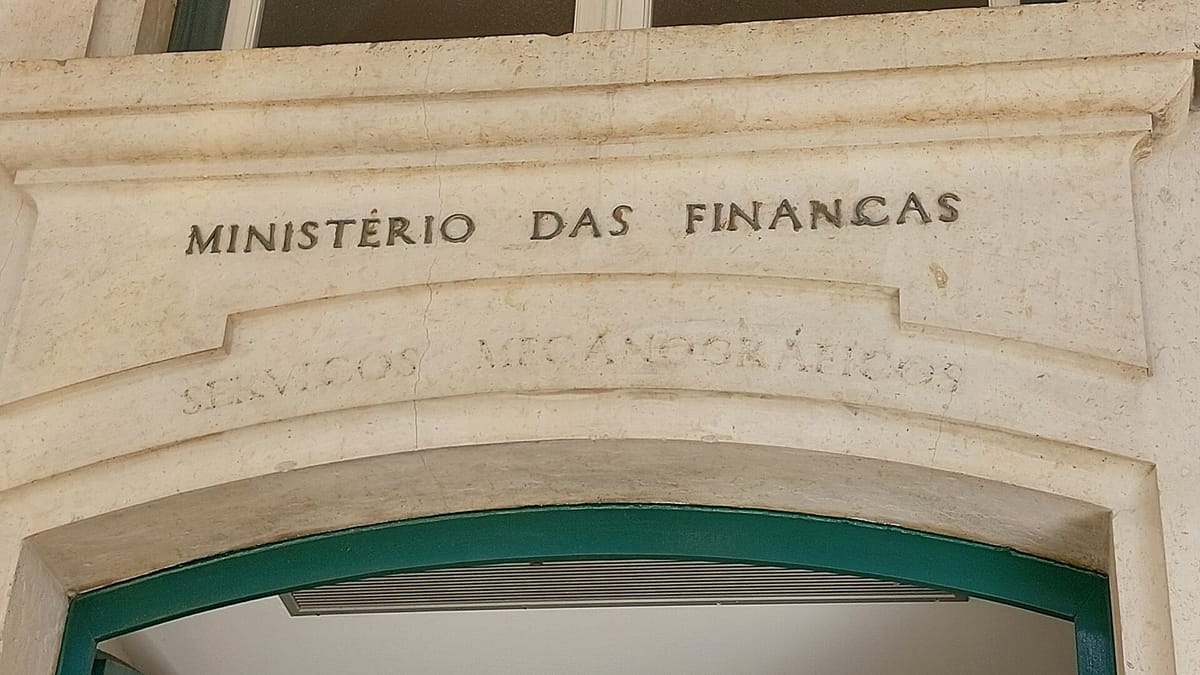
Portugal has told Brussels it will not rule out any of the new taxes being proposed to help fund the European Union's next long-term budget, while drawing a firm line somewhere else entirely: on what Europe may do with Russia's frozen assets. Finance minister Joaquim Miranda Sarmento set out both positions in an interview with the Lusa news agency on the margins of the informal Ecofin meeting of EU economic and financial affairs ministers in Dublin.
"We have no absolute red lines," he said of the new own resources under discussion. "We have reservations on some own resources, but natural reservations which, in negotiation, could even be mitigated or resolved." Portugal, he added, "does not reject any own resource from the outset" in the Quadro Financeiro Plurianual (Multiannual Financial Framework) for 2028 to 2034.
What Brussels wants to tax
The next EU budget was proposed by the European Commission at roughly two trillion euros across those seven years, and the argument over how to pay for it is running through this half of the year, with member states aiming for a political agreement by December. Alongside the national contributions that dominate the current system, the Commission has put forward a basket of new own resources: a slice of tobacco excise duty, revenue tied to emissions trading and to the carbon border adjustment mechanism, a levy on uncollected electronic waste, and an annual contribution from large companies.
Miranda Sarmento described Portugal's objections as narrow. "The reservations we have are not specific to one own resource," he said. "We have mostly technical questions and matters of detail." Tobacco is the exception with a history: Portugal has already registered reservations in the separate review of how the sector is taxed, and the proposal on the table would send part of the excise receipts to Brussels rather than to Lisbon.
Two other ideas get a warmer reception. The government is "quite favourable" to taxing large digital platforms, and wants the long-dormant discussion of a financial transactions tax revived.
Two demands that sit alongside the taxes
The minister's framing of the wider negotiation is that new revenue is not enough on its own. He argued for postponing repayment of the loans the EU took on to finance the post-pandemic recovery fund, the instrument that paid for Portugal's Plano de Recuperação e Resiliência (Recovery and Resilience Plan), and for joint debt issuance to finance large European projects in competitiveness and defence. On the spending side he set out the familiar Portuguese priorities: keep agriculture and cohesion support intact, strengthen competitiveness, and maintain support for Ukraine.
Those priorities are not new. In April, when the Commission's proposal implied a cut of around four billion euros in Portugal's envelope, Lisbon promised what it called firm and well-founded opposition to a settlement that reduced cohesion funding. What has changed since is the negotiating posture: the government is now signalling flexibility on how the money is raised, while holding its ground on where it goes.
The line over Russian assets
The sharper disagreement is over a question that has crept up the EU agenda this autumn. More than 200 billion euros of Russian assets sit frozen in Europe, and the argument over whether they can be used to fund Ukraine has divided member states on both legal and economic grounds. Portugal, Miranda Sarmento said, rejects any solution amounting to confiscation or its equivalent.
"There is a line we cannot cross, on pain of destroying the credibility of the euro among successive investors," he told Lusa. "More than the legal fears, there are above all economic fears, because currencies function for as long as they have credibility." He wants a mechanism that puts the assets to work for Ukraine without extinguishing their owners' future rights, and acknowledged that the EU "has not yet been able" to design one.
That is a smaller country's argument about reserve currencies rather than a lawyer's argument about property. If holding euro-denominated reserves can end in expropriation, the reasoning runs, the euro becomes a less attractive place to hold them, and the cost of that falls on every member state's borrowing.
What this means for you
- Nothing changes on your tax return yet: own resources are financing arrangements between member states and the EU budget. Where they touch consumers, as with tobacco excise, it is the existing national tax whose proceeds get redirected, not a new charge appearing on a receipt.
- Tobacco prices are the one to watch: the parallel revision of EU tobacco taxation, on which Portugal has already objected, is the file that would move shelf prices. The budget question is about who keeps the money.
- Cohesion and agriculture money matters locally: EU funds underwrite a great deal of Portuguese public investment, from transport to water systems. The size of the national envelope after 2028 is decided in this negotiation.
- The timetable is tight: ministers want political agreement by the end of this year, legislation through in 2027, and the framework in force from January 2028. Expect the file to dominate EU coverage through the autumn.
- A levy on large companies is still live: an annual contribution from big firms is in the basket and Portugal has not ruled it out. Anyone running a substantial business here should follow how it is defined.
Portugal has spent this year arguing about the size of the next EU budget. The Dublin interview marks the point where the argument moves to how it is paid for, and where the government has decided it can afford to be accommodating. On the frozen assets, it has decided it cannot.