Cycling in Portugal in 2026 — A Practical Guide to the EuroVelo 1 Atlantic Coast Route, the Algarve Ecovia do Litoral, the Ecopistas Network, the Lisbon Gira and Porto Bike-Share Schemes, and the Comboios de Portugal Cycle-on-Train Rules
Portugal sits at the southwestern end of EuroVelo 1, and the practical cycling stack — Ecovia do Litoral, Ecopistas, Lisbon Gira, Porto bike-share, CP cycle-on-train — has matured fast. A 2026 guide for foreign residents to the routes, urban schemes, gear and train logistics.
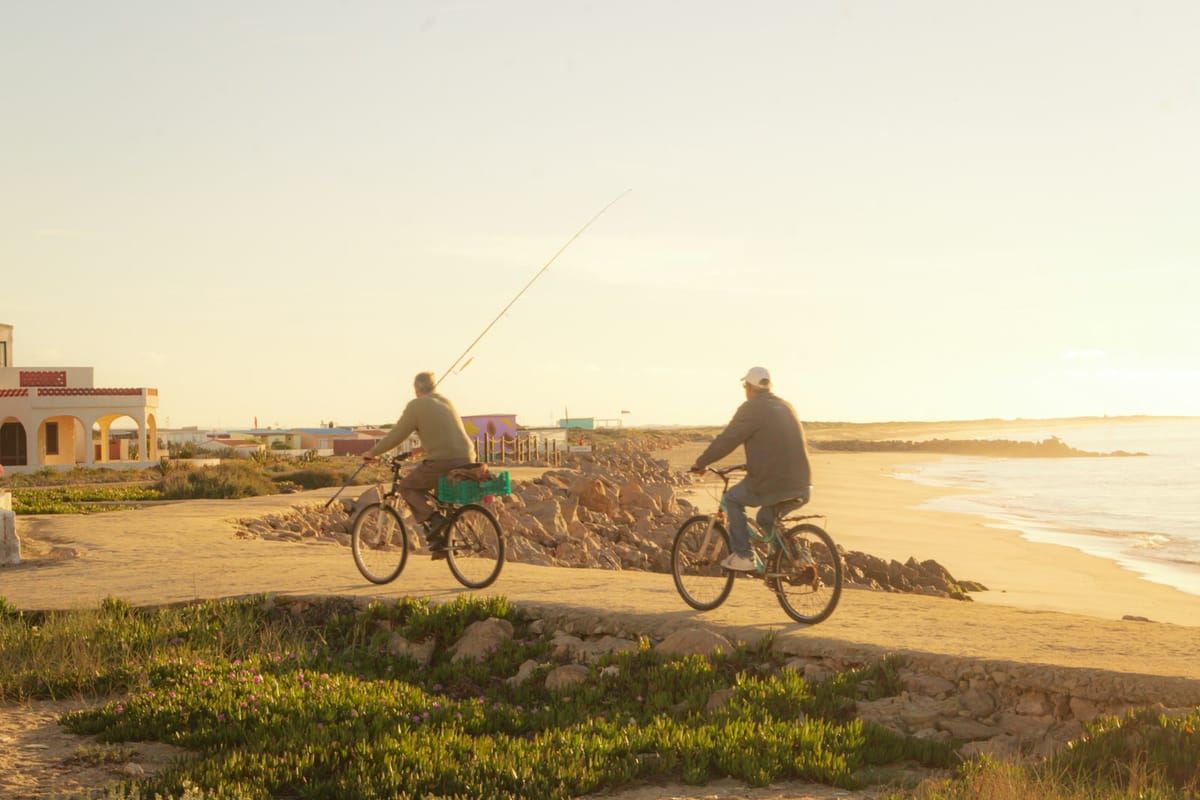
Portugal is the southwestern terminus of the EuroVelo 1 Atlantic Coast Route — the 11,000-kilometre European cycling spine that starts at Norway's North Cape and runs down through Scotland, Ireland, France and Spain before crossing the Minho into northwestern Portugal and tracking the Atlantic coast all the way to Sagres. For foreign residents thinking about cycling — for commuting, for weekend touring, for serious multi-day expeditions — the practical infrastructure stack has matured noticeably across the 2024-2026 cycle: Lisbon's Gira system has gone free for residents, Porto's bike-share rolled out alongside the city's free-public-transport scheme, the Ecovia do Litoral in the Algarve is signed and integrated with the EuroVelo 1 mapping, and the Comboios de Portugal cycle-on-train rules now cover the Linha do Norte / Beira Alta / Beira Baixa / Alentejo Intercidades services.
This 2026 guide walks the route layer (long-distance and regional), the urban-scheme layer (Lisbon Gira and Porto bike-share), the cycle-on-train layer (CP and the Lisbon-region operators), the gear / kit / lanes layer for the new urban cyclist, and the safety and weather calendar.
The Long-Distance Layer — EuroVelo 1, the Ecovia do Litoral and the Ecopistas
The dominant long-distance route is EuroVelo 1 (Atlantic Coast Route), which enters Portugal at Caminha on the Spanish border, threads down the Minho-Litoral and the Costa Verde via Viana do Castelo, Esposende and Vila do Conde, crosses Porto at the Douro estuary, runs the Costa de Prata via Aveiro, Figueira da Foz, Nazaré and Peniche, joins Lisbon via the Linha de Cascais corridor, crosses the Tagus to Setúbal and the Alentejo coast, then finishes at Sagres after the Costa Vicentina and the Algarve western flank. Total Portuguese length: approximately 1,100 kilometres of signed and partially signed itinerary, with the cyclable surface a mix of dedicated cycling infrastructure (the Ecovia do Litoral and the Ecopistas), shared coastal roads (EN125 in the Algarve, EN242 on the Costa Vicentina) and quiet rural lanes.
The Ecovia do Litoral is the Algarve's regional spine — 214 kilometres from Cabo de São Vicente at the western end to Vila Real de Santo António on the Spanish-border Guadiana, threaded as a green corridor that connects the principal Algarve coastal towns: Sagres, Lagos, Portimão, Albufeira, Faro, Olhão, Tavira and the Vila Real de Santo António terminus. Surface mix: dedicated cycle paths in the well-developed sections (around Lagos, Portimão, Faro and Tavira), tracks parallel to the EN125 in others, and rural lanes elsewhere.
The Ecopistas — Portugal's old-railway-bed cycling network — are the calmer, mostly-flat companion routes for foreign residents who want the cycling-without-car-traffic experience without the long-distance commitment. Best-known are the Ecopista do Dão (Santa Comba Dão–Viseu, 49 km), the Ecopista do Vouga (Espinho–Sernada do Vouga, ~58 km), the Ecopista do Minho (Monção–Caminha, ~47 km), the Ecopista do Tâmega (Arco de Baúlhe–Cavez, ~38 km), the Ecopista do Mondego (around Coimbra, partial), and the Ecopista do Guadiana (Mértola, partial). The Ecopistas are typically packed-gravel or asphalted railway-bed surface, gentle gradients (3% maximum on the steepest), suitable for hybrid bikes, gravel bikes and e-bikes — and well-suited to family riding.
Mountain-bike and gravel cyclists also have the Via Algarviana (300 kilometres east-west across the Algarve interior, 14 stages, MTB-suitable), the Rota Vicentina (Costa Vicentina coastal trails, mostly walking but with cyclable sections), and the Grande Rota do Guadiana (cross-border with Spain, mixed-surface).
The Urban Layer — Lisbon Gira, Porto Bike-Share, the Cascais and Loures Schemes
Lisbon's Gira system, operated by EMEL, is the foundational urban-cycling kit for Lisbon residents in 2026: roughly 1,600 bicycles in the network — the great majority electric — across the city's main commuter geography. The headline change is that Gira is now free for Lisboa residents who hold a Navegante (the Lisbon-region transport pass) and link it to the Gira app: zero per-trip charge, zero subscription. Non-residents and visitors pay through the Gira app — single trip, daily pass and monthly subscription options. Battery range on the e-bikes is well above the typical Lisbon commute distance, and the dock-network density in the Avenida da Liberdade / Marquês de Pombal / Saldanha / Alameda corridor is the densest in the city.
Porto's bike-share scheme rolled out alongside the city's free-public-transport vote in spring 2026, with the Cartão Porto integration as the access channel for residents. The Câmara do Porto's bike-network expansion has run in parallel — Porto's ciclovia coverage in the centre and the Marginal do Douro corridor has been the focus area, with the Porto-Matosinhos coastal cycle-path corridor as the standout long-distance option for Porto residents.
Cascais runs the BiCas community-share scheme, focused on the coastal corridor from Cascais to Estoril. Loures and other Lisbon-metro municipalities have rolled out smaller schemes since 2023 with varying coverage depth.
The Cycle-on-Train Layer — CP, Fertagus, the Lisbon Metro and Porto Metro
Bicycle transport on Comboios de Portugal trains is free in 2026, but the operational rules vary by service type. On Intercidades trains on the Linhas do Norte / Beira Alta / Beira Baixa / Alentejo, dedicated bike supports take two bicycles per carriage — seats 15 and 17 in second class on the Linha do Norte Intercidades, seats 12 and 18 on the Beira Alta / Beira Baixa / Alentejo Intercidades. Each customer carries one bicycle. The cycle-on-train channel is conditioned on space availability — at peak weekend periods (May to October Atlantic-coast traffic) reservations are recommended.
On the Alfa Pendular high-speed services, bicycle transport is conditional on dismantling and stowing the bicycle as luggage — folded bikes are easier and recommended. On urbano (commuter) services around Lisbon, Porto and Coimbra, bicycles travel free in the designated areas and at off-peak hours; rush-hour windows often restrict bicycle access on commuter lines. Fertagus (the Lisbon-Setúbal line crossing the 25 de Abril Bridge) takes bicycles outside rush-hour windows.
Lisbon Metro takes bicycles outside the morning and evening peak windows, in the last car. Porto Metro takes bicycles in the designated areas at off-peak times. The Lisbon-region ferries (Transtejo / Soflusa) take bicycles all day, free.
The Gear Layer — What to Buy First, What to Save For
For a foreign resident in Portugal who wants to start cycling, the entry-level kit ladder runs roughly: a robust commuter or hybrid bike (€350-€700 new, €150-€350 used through OLX or Standvirtual), a helmet (€30-€80 — required by Portuguese road code for under-16 cyclists, strongly recommended for adults), front and rear lights (€20-€50 — required for night riding under the Código da Estrada), a U-lock or chain lock (€30-€80 for a decent lock — bike theft is a real urban problem in Lisbon and Porto centres), a high-visibility vest (mandatory under specific road conditions), and the Cidades Ciclávies app or Strava for route-planning.
For commuters: panniers and a rack are the gear-ladder step that turns a bike into a car-replacement. For long-distance touring on the Ecovia do Litoral or EuroVelo 1: a hybrid or gravel bike with 35-42mm tyres handles the Algarve mixed surfaces; a dedicated touring bike is overkill on the well-developed sections. For the Algarve summer: water-bottle cages and a hydration plan are non-negotiable — the EN125 corridor in July and August reaches 35-40°C in the afternoons.
The Lanes Layer — What the Ciclovias Look Like in Lisbon, Porto and Smaller Towns
Lisbon's ciclovia network has grown materially since 2017, with the Avenida da República / Avenida da Liberdade / Marginal Lisbon-Belém / Parque das Nações spine forming the main commuter axis. The Câmara de Lisboa is targeting roughly 200 kilometres of ciclovia by 2030. Porto's network is denser in the historic centre and along the Marginal do Douro (Ribeira to Foz), with the Porto-Matosinhos coastal corridor as the longer-distance offering. Cascais, Aveiro, Coimbra and Braga have well-developed ciclovias in their respective historic cores. Faro and Lagos in the Algarve are the standout smaller-city networks, threaded into the Ecovia do Litoral coastal spine.
The Safety and Weather Calendar
Portugal's road-safety record for cyclists is mid-pack within the EU — the country has invested in segregated cycling infrastructure since the 2018 Plano Nacional para a Promoção da Bicicleta but the on-road experience in many places still mixes cyclists with cars on the EN-numbered national roads. The Código da Estrada gives cyclists rights but the practical conventions — overtaking distance, intersection priority — vary by region. Lisbon and Porto centres are improving fast; the Algarve coastal corridor in summer is high-traffic and high-risk; the rural Alentejo and Minho roads are the calmest and safest.
The cycling weather calendar reads roughly: April-June is the best window — long days, mild temperatures, low rainfall. July and August are too hot for sustained cycling on the Algarve and southern Alentejo coast, but fine on the Costa Verde and the Minho. September and October are the second peak window — September is the local cyclist's secret. November to February is rain-and-wind season on the Atlantic coast; the Algarve interior remains rideable. Wind direction is the structural factor — north-to-south is the dominant Atlantic wind, so for EuroVelo 1 long-distance riders, the routing convention is north-to-south.
The Spectator and Event Calendar
The Volta a Portugal Santander — Portugal's Tour-de-France-equivalent stage race — runs in early August across roughly 10 stages, with a route that varies year-to-year but typically threads the Minho, Trás-os-Montes, the Centro and the Alentejo. The Volta ao Algarve runs in February as the season-opener for the European cycling calendar (won at various points by Tour de France winners using it as Tour-prep). The Granfondo / cicloturismo calendar — including the Granfondo Bombarral, the Granfondo Algarve and the Granfondo Lisboa — runs from spring through autumn and is the main amateur-rider entry point.
The Read for Foreign Residents
For a foreign resident considering whether to integrate cycling into the practical Portugal stack: the answer is yes, with regional caveats. Lisbon and Porto are increasingly bike-friendly cities; the Algarve is set up for medium-distance touring along the Ecovia do Litoral; the Minho and the Centro have the calmest rural lanes; the Ecopistas network gives the family-cyclist an entire parallel infrastructure off the road network. The €4,000-cap Fundo Ambiental EV-incentive programme covers e-bikes at the €1,500 cap, opening in May or June 2026 — for foreign residents thinking about an e-bike purchase, the timing reads as right. Cycle-on-train logistics are workable on the Intercidades, restricted but functional on the urbano services, and well-managed on the Lisbon-region ferries. The summary is that 2026 is a materially better year for cycling in Portugal than 2024 was; the practical stack is the most mature it has been to date.