Eight Days' Notice Instead of a Month: a Lisbon Court Annuls the Second Election of the Universidade Nova de Lisboa's Rector
The Tribunal Administrativo de Circulo de Lisboa has annulled the 13 May election of Paulo Pereira as rector, the second Nova vote it has struck down in five months. The grounds are procedural: eight days' notice where the rules require a month, and a General Council past its mandate.
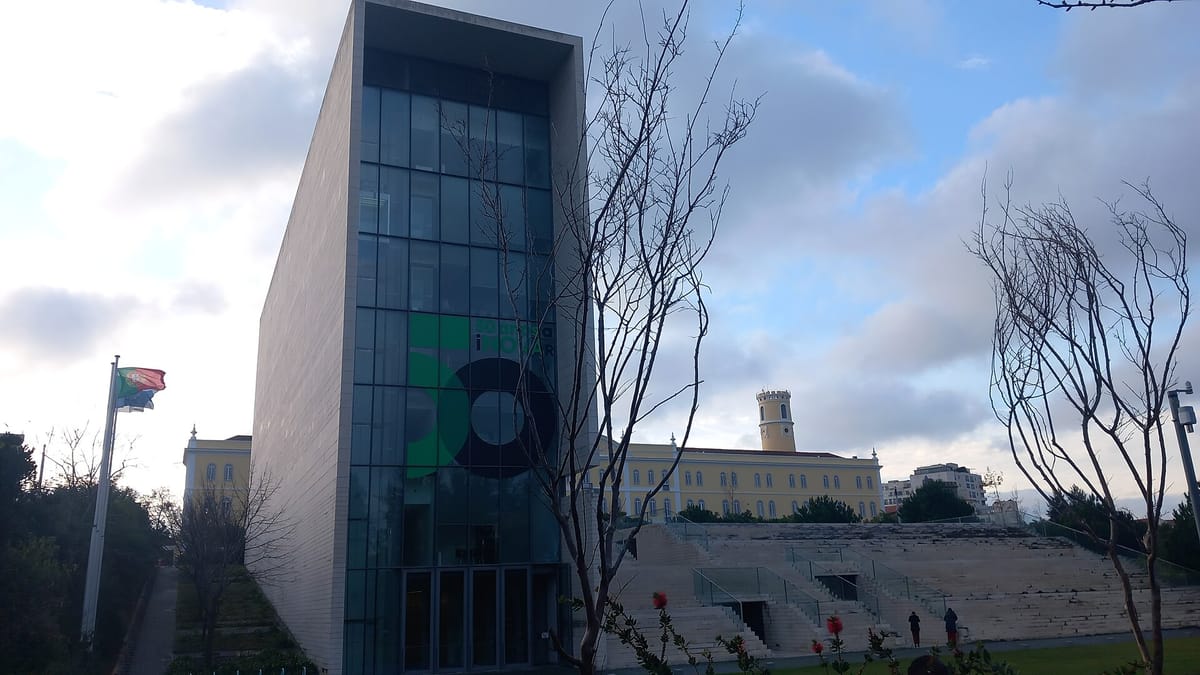
The Universidade Nova de Lisboa has now had two rectoral elections annulled by the same court in five months. On Tuesday the Tribunal Administrativo de Círculo de Lisboa (Lisbon Administrative Circuit Court) struck down the 13 May vote that returned Paulo Pereira to the rectorship, and the university said within hours that it will appeal.
The reasoning is narrower than the scale of the fight suggests. The court did not find that anyone rigged anything. It found that the meeting which set the date was itself unlawful, and that everything built on it falls with it.
Two findings, both procedural
The sentence, dated 25 July and reported by the economic daily ECO, which obtained a copy, turns on the Conselho Geral (General Council), the body that elects the rector.
First, the timing. The Council met on 5 May and fixed the public hearing and the election for 13 May, eight days later. Nova's own electoral regulation requires election dates to be set at least a month in advance. The university argued that the month had already been observed for the earlier, since-annulled election, so it did not need to be observed again. The court rejected that, holding that rules in force cannot be set aside according to circumstance.
Second, the mandate. The four-year term of the Council's elected members had expired in March, before the 5 May deliberation. Nova argued the body could continue in office on a transitional basis until successors took their seats. The court disagreed, and that finding is the more damaging of the two, because it reaches every decision the Council took after March.
Two allegations from the other side failed. The court found no proof that the Council breached the principle of impartiality or engineered the timetable so the vote would happen under the outgoing body's supervision, and it rejected the claim that the election had been manipulated. The annulment is about form, not about the result.
Paulo Pereira won that 13 May vote with 15 of the 20 members present. The action was brought by a rival candidate, João Amaro de Matos.
How the university got here
The dispute runs back to October 2025, when Paulo Pereira took office after winning 52 percent of the General Council's votes. In March 2026 the same Lisbon court annulled that first election, on entirely different grounds: the Council had refused to admit the candidacy of Pedro Maló, a professor at the Faculdade de Ciências e Tecnologia (Faculty of Science and Technology), and the court held that the internal statute used to reject him went beyond what the law allows.
A rerun was therefore required. The Council tried to meet on 24 and 30 April to set a date and failed both times for lack of quorum. It finally met on 5 May, and set the vote for 13 May. That is the deliberation the court has now voided.
We reported earlier this month that ten lawsuits and a blocked confirmation had left Nova without a settled rector. Tuesday's decision is the first of those cases to produce a judgment that undoes the May vote outright.
A change in the law that arrived a week too late
There is a complication that may decide the appeal. The Regime Jurídico das Instituições de Ensino Superior (Legal Regime for Higher Education Institutions) was amended at article 86, the provision governing direct election of rectors. That amendment entered into force on 1 August 2026, a week after the sentence was written, and its transitional regime states that the new model does not apply to electoral processes already under way.
So the court ruled under the old rules; the new rules exclude this process from the new model; and the process itself has now been sent back to a starting point that no longer exists in the same form. ECO reports that this is one of the grounds Nova may use on appeal.
The university's own statement points in that direction. A spokesperson said Nova will appeal because it considers there are legal grounds for the decision to be reviewed, specifically as regards the prompt compliance with the sentence that caused the electoral process to be repeated in the first place. In other words: we were told to rerun the election quickly, we did, and we are now being penalised for the speed.
Until a final ruling, the university says it will continue to operate normally and to meet its academic, scientific and institutional mission, invoking the principle of administrative continuity.
What this means for you
- If you or your children study at Nova: nothing changes in practice for the new academic year, which begins with the first placement round already settled. Degrees, enrolment, timetables and diplomas are administrative acts of the university, not of the rector personally, and the continuity principle exists precisely to keep them valid while governance is contested.
- If you are an international applicant weighing offers: this is a governance dispute, not an accreditation problem. Nova's faculties, including its business school, which has its own long-running institutional quarrel, retain their accreditation and rankings. But a university without a confirmed rector cannot easily sign long-term commitments, and that can slow new programmes and international agreements.
- If you work there: the finding that the General Council was acting beyond its mandate from March onward is the one to watch. If it stands on appeal, it puts a question mark over other decisions taken in that window, not only the election.
- If you are following Portuguese higher education generally: the case is now the clearest test of how far the administrative courts will police universities' internal statutes against the national framework law. The March ruling already found one Nova statute exceeded the law. This one finds the Council exceeded its own regulation.
Nova has said it will file the appeal, and no timetable for a decision has been published. The university therefore starts the academic year with a rector in office, a court saying the vote that put him there was void, and a statute book that changed underneath the whole dispute.