Ten Lawsuits and a Blocked Confirmation Leave the Universidade Nova de Lisboa Without a Rector
Nearly a year after the Universidade Nova de Lisboa first elected Paulo Pereira as rector, its board of trustees is preparing to refuse to ratify the vote, citing four grounds. With ten lawsuits and a criminal complaint in play, one of Portugal's top universities still has no confirmed leader.
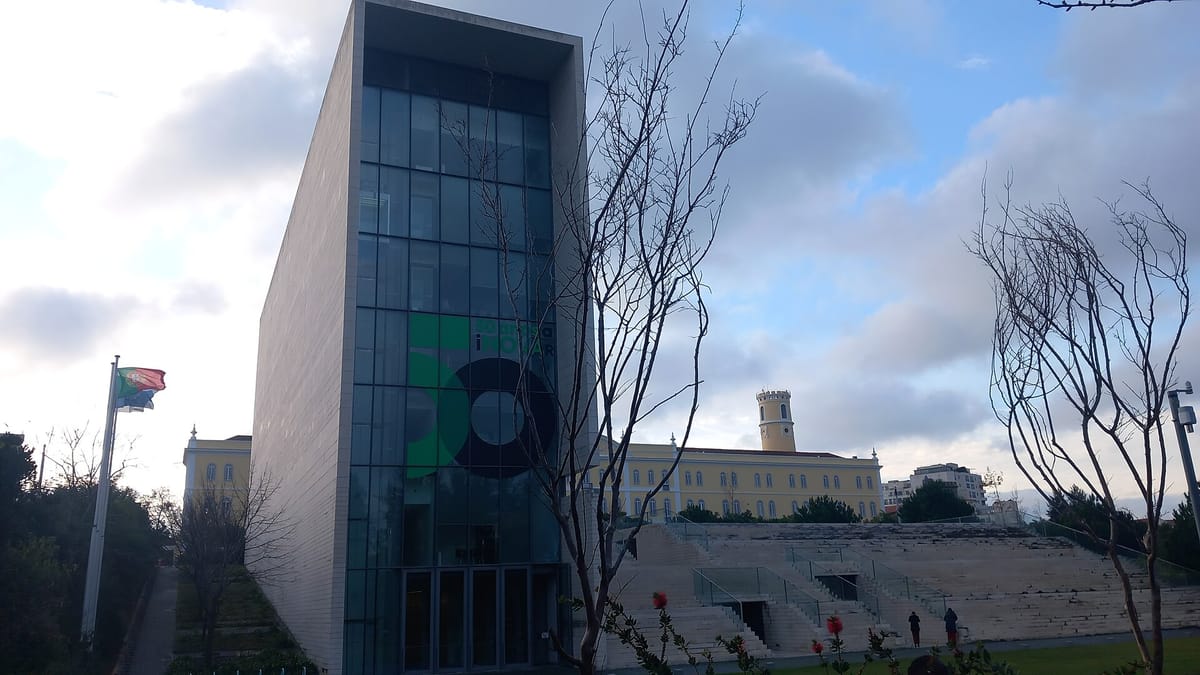
Nearly a year after its academic senate first chose a new leader, the Universidade Nova de Lisboa — one of the country's most prestigious public universities, and home to the Nova School of Business and Economics (Nova SBE) — still has no confirmed rector. What began as a routine election has hardened into an institutional standoff of ten lawsuits, a criminal complaint and a governing board that is preparing to refuse to sign off on the result.
The dispute has run since the autumn. Paulo Pereira was first elected rector on 16 September 2025, winning 14 of 27 votes on the university's general council. That vote was challenged and, in March, a court ordered the election to be re-run and admitted a rival candidacy, that of Pedro Maló. When the council voted again on 13 May 2026, it returned Paulo Pereira a second time, this time with 15 votes. The final step — ratification, or homologação, by the university's Conselho de Curadores (Board of Trustees) — is where the process has now stalled.
The trustees, chaired by Estela Barbot, are preparing to withhold that ratification, invoking four situations they say fall within the grounds for refusal set out in the Regime Jurídico das Instituições de Ensino Superior (the legal framework governing higher-education institutions, or RJIES). Chief among them is a complaint that candidacies were not fully reopened after the university struck out an internal rule restricting the post to full professors and senior researchers; the board also questions the timing and conduct of the successive election attempts, ballot papers that listed only one name, and procedural defects it considers disproportionate and unreasonable.
Running alongside the administrative fight is a criminal complaint lodged with the Departamento de Investigação e Ação Penal (the public prosecutor's investigation and criminal-action department) in Lisbon. It questions the hiring of a particular lawyer, Bernardo Diniz de Ayala, to produce a legal opinion, and probes the connections between him, the Nova SBE professor Pedro Santa Clara — one of the most vocal opponents of the process — and the law firm through which the opinion was commissioned. "If the goal was merely an independent opinion, why specifically that attorney over another independent jurist?" the complaint asks.
The result is a governance vacuum at an institution that educates tens of thousands of students and competes internationally for staff and research funding. With the trustees and the general council pulling in opposite directions, and the courts already seized of roughly ten separate actions, there is a real prospect that the deadlock will ultimately land on the desk of the government, which exercises supervisory authority — the tutela — over the public higher-education system.
For students returning in the autumn, and for the academics and administrators who keep a large university running, the immediate effect is uncertainty at the very top of the organisation. A rector sets budgets, signs off on hiring and represents the institution to funders and partners abroad. Until either the trustees relent or a court forces their hand, the Universidade Nova de Lisboa will keep operating under interim leadership, its choice of a permanent rector suspended somewhere between the ballot box and the courtroom.