Cash Is No Longer Accepted at the Terreiro do Paço Ferry Counter, and the European Rule That Would Settle It Is Still Unfinished
Transtejo Soflusa went card only at its staffed Lisbon ticket office on 14 September. An association has asked for the legal basis. Euro cash is legal tender, but what that obliges was left to a 2010 recommendation, and Portugal attaches no penalty to a refusal.
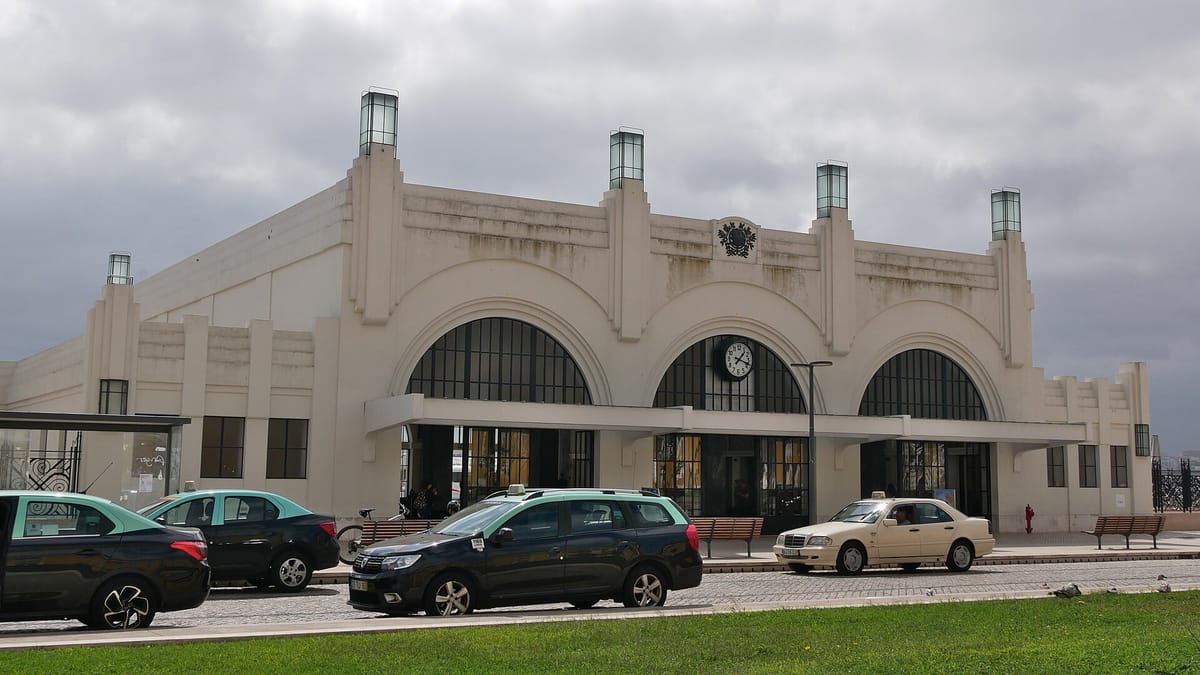
Since 14 September, the staffed ticket counter at the Terreiro do Paço ferry terminal in Lisbon has taken bank cards and nothing else. Transtejo Soflusa, the state-owned operator that carries the Tagus commuter traffic, announced the change on its social media on 11 September, describing card-only payment as "fast, secure, efficient and sustainable". On Sunday an association took the opposite view, in a communiqué that asks the operator for the legal basis it relied on.
The Associação 21/26, which campaigns on personal rights, put its objection in a single question: what is an assisted ticket office for, if a citizen who needs human service cannot pay with notes and coins? Its complaint is deliberately narrow. It is not about the ticket machines, which stand in every terminal and take cash. It is about the one counter in each station staffed by a person, which is where passengers go precisely when the machines will not do.
What legal tender actually obliges
The association argues that euro notes and coins have legal tender status and that accepting them is the general rule. That is right as far as it goes, and it is worth being precise about how far it goes.
Article 128 of the Treaty on the Functioning of the European Union gives euro banknotes legal tender status. Article 11 of Council Regulation (EC) No 974/98 does the same for coins, and adds the only hard numerical limit in the whole scheme: nobody except the issuing authority is obliged to accept more than fifty coins in a single payment. What legal tender means beyond that was never written into binding law. It was set out in a Commission Recommendation of 22 March 2010, 2010/191/EU, which says a creditor cannot refuse euro cash "unless the parties have agreed on other means of payment", that acceptance in retail should be the rule, and that refusal should only be possible on good-faith grounds such as having no change. A recommendation is not a regulation, and that gap is the whole argument.
Brussels has been trying to close it since 28 June 2023, when the Commission proposed a Regulation on the legal tender of euro banknotes and coins. The Council agreed its negotiating position in December 2025 and the Parliament's economic affairs committee adopted its own in November 2025. The file is still not law.
Portuguese law does set cash limits, but in the other direction. Article 63.º-E of the Lei Geral Tributária (General Tax Law), added by Lei n.º 92/2017, forbids paying or receiving cash in any transaction of 3,000 euros or more, raises that ceiling to 10,000 euros for non-resident individuals who are not traders, and caps cash payment of taxes at 500 euros. Nothing there requires a seller to take a five-euro note, and no Portuguese statute attaches a fine to refusing one. The association has asked Parliament to create proportionate sanctions, which is an acknowledgement that today there are none.
The operator's own page has not caught up
There is one detail the communiqué does not mention. Transtejo's published sales-network page still tells passengers that payment at its ticket offices "can be made with coins, notes and Multibanco", with a single exception for Porto Brandão, which has no card terminal at all. The same page confirms the vending machines take coins, notes and cards, and that at Terreiro do Paço they run from 5:20 to 2:00, far longer than the counter's 8:30 to 23:30.
So the practical answer for a passenger at Terreiro do Paço is the machine. The question the association is really pressing, and the one Lusa has now put to the company, is whether a public operator can withdraw cash from the counter designed for the people least able to use anything else, at a moment when the European rule that would settle it is still in trilogue.