Portugal Co-Founds Denária Europa, the First European Civil Platform Defending the Right to Pay in Cash
Portugal has joined Spain, France and Sweden in founding Denária Europa, a Brussels-based confederation set up to defend the right to access and use physical cash as digital payments and a possible digital euro reshape how Europeans pay.
Portugal has helped launch Denária Europa, the first pan-European civil-society platform created to defend citizens' right to access and freely use physical cash. The Brussels-based confederation was unveiled on 24 June 2026 and brings together cash-advocacy associations from four countries at a moment when card payments dominate everyday spending and the European Central Bank presses ahead with a possible digital euro.
The new body groups Denária Portugal with Spain's Plataforma Denaria, France's Droit au Cash and Sweden's Kontantupproret. Its stated mission is to act as "a European confederation of civil society created to protect and promote the right of European citizens to access and freely use cash" — defending, in its own words, a balanced coexistence between digital means of payment and notes and coins.
What Denária Europa says it will do
- Publish reports and barometers tracking access to, acceptance of, and use of cash across member states.
- Engage EU institutions, regulators and central banks in the wider debate on the future of payments.
- Run public-awareness campaigns, with particular focus on helping the most vulnerable understand how the shift in the payment ecosystem affects them.
- Coordinate national campaigns — Denária Portugal already runs one under the banner O digital nunca substituirá o físico ("The digital will never replace the physical").
Why the cash debate has heated up
The launch lands against a busy backdrop. The ECB is advancing work on a digital euro, a central-bank digital currency that, officials stress, would complement rather than replace physical money. Cash campaigners counter that without active protection, a digital-first system risks excluding people who rely on notes and coins — the elderly, the unbanked, and residents of rural areas where bank branches and ATMs have thinned out. Even the domestic payments agenda is tilting digital: the Bank of Portugal has set out a 2030 retail-payments strategy built around faster electronic transfers and fraud controls.
That concern became concrete during last year's sweeping April power outage across the Iberian Peninsula, when card terminals and ATMs went dark and physical cash was, for many households, the only payment method that still worked. Denária has repeatedly pointed to that episode as proof that cash is a matter of resilience, not nostalgia.
Domestically, the issue has reached government level. The Executive has floated a plan for juntas de freguesia (parish councils) to hand out cash in parishes left without a Multibanco machine — a direct response to the "cash deserts" that Denária Portugal flagged in 2025, where isolated communities can face long journeys simply to withdraw money. The private sector has been experimenting too: SIBS, which runs the national ATM network, has been piloting a community cash-access network across cash-starved interior parishes.
Cash is legal tender — but acceptance is contested
Euro banknotes and coins are curso legal (legal tender) across the eurozone, and Denária argues that refusing them is, in effect, an "aggression" against consumers. Its surveying has found strong public backing for the principle: around 85% of respondents believe the law should require shops to accept cash, with majority support for fines against businesses that turn it away.
Portugal does cap large cash transactions for anti-money-laundering reasons — payments of 3,000 euros or more generally cannot be settled in cash by residents (the ceiling is higher for non-resident travellers) — but for ordinary day-to-day spending, notes and coins remain a protected right that a growing share of merchants nonetheless discourage in favour of cards and mobile wallets such as MB Way and the Multibanco card rails.
What this means for expats
- You can still insist on cash for everyday purchases. Euros are legal tender; a corner shop or café that posts a "cartão apenas" (card only) sign is operating in a legal grey zone for low-value transactions, even if enforcement is rare.
- Keep a cash buffer for outages. The 2025 blackout showed that when the grid or the card network fails, cash is the fallback. A modest reserve of notes at home is sensible resilience, not paranoia.
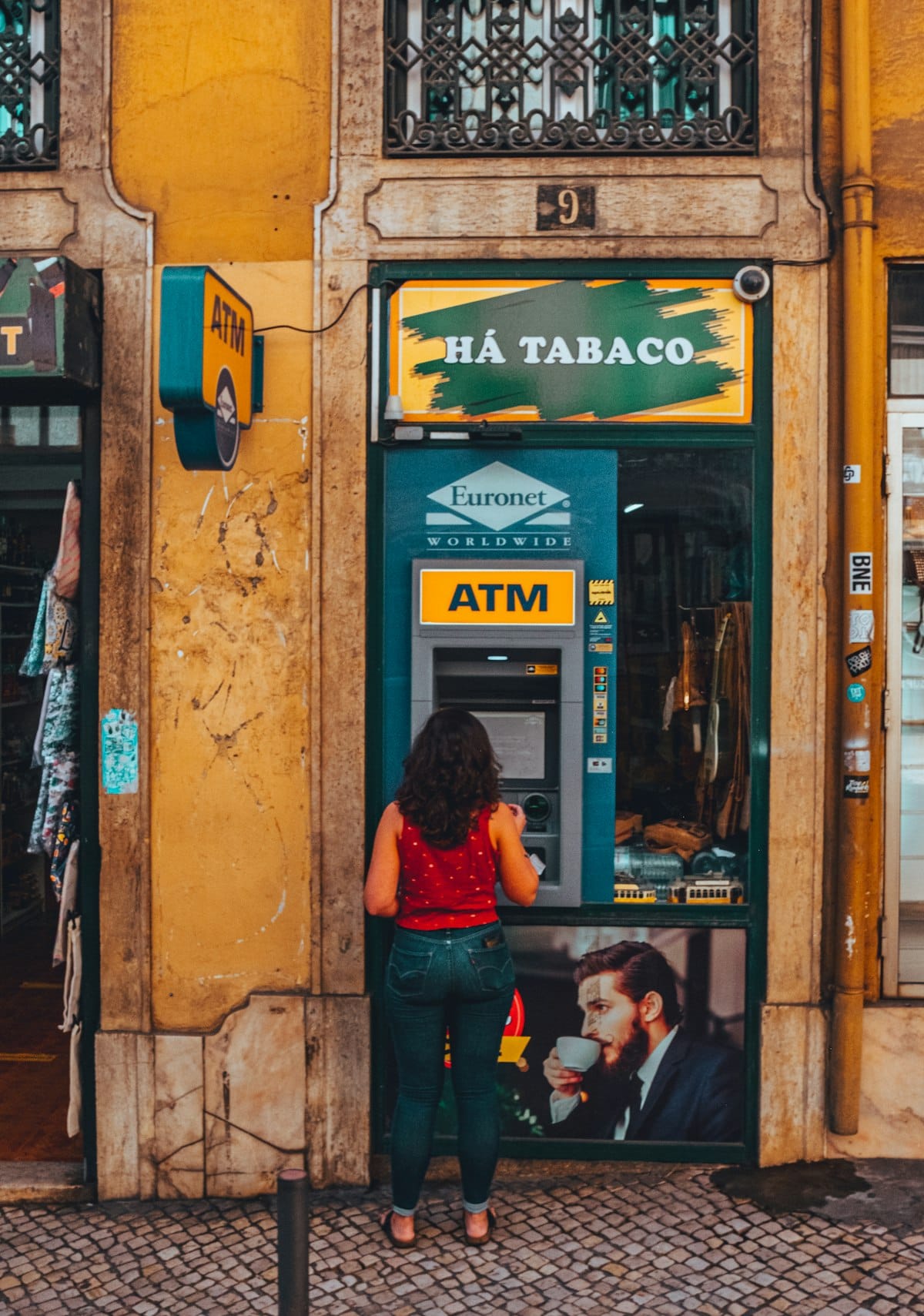
- Watch the fees on withdrawals. Non-bank ATMs — the standalone machines in tourist areas branded by operators like Euronet — often charge withdrawal fees that bank-network Multibanco machines do not. Use a bank ATM where you can.
- Rural residents, plan ahead. If you live inland, the nearest cash point may be some distance away. The parish-council cash schemes and SIBS pilots are aimed squarely at you — ask your junta de freguesia what is available locally.
- The digital euro will not abolish notes. If and when it arrives, the ECB's design keeps physical euros in circulation. Denária Europa's role is to make sure that promise holds in practice.
For now, Denária Europa is a lobbying and monitoring body rather than a regulator, and it cannot compel a single shopkeeper to take a five-euro note. But by federating four national movements under one Brussels roof, Portugal and its partners are signalling that the future of payments will be argued over in European corridors — and that the humble banknote intends to have a seat at the table. On the euro, the ECB and the currency-design side of the file, the public vote on the next euro banknote designs sets the latest reference.