A Two-Hour Computer Failure Knocked Out Portugal's Northern Emergency Dispatch Centre, Leaving Around 50 Calls Undispatched
The CODU do Norte in Porto, the busiest of Portugal's four medical dispatch centres, lost its computer system between 19:20 and 21:20 on Thursday. Technicians fell back to pen and paper while Coimbra, Lisbon and Faro absorbed the calls. INEM has not commented.
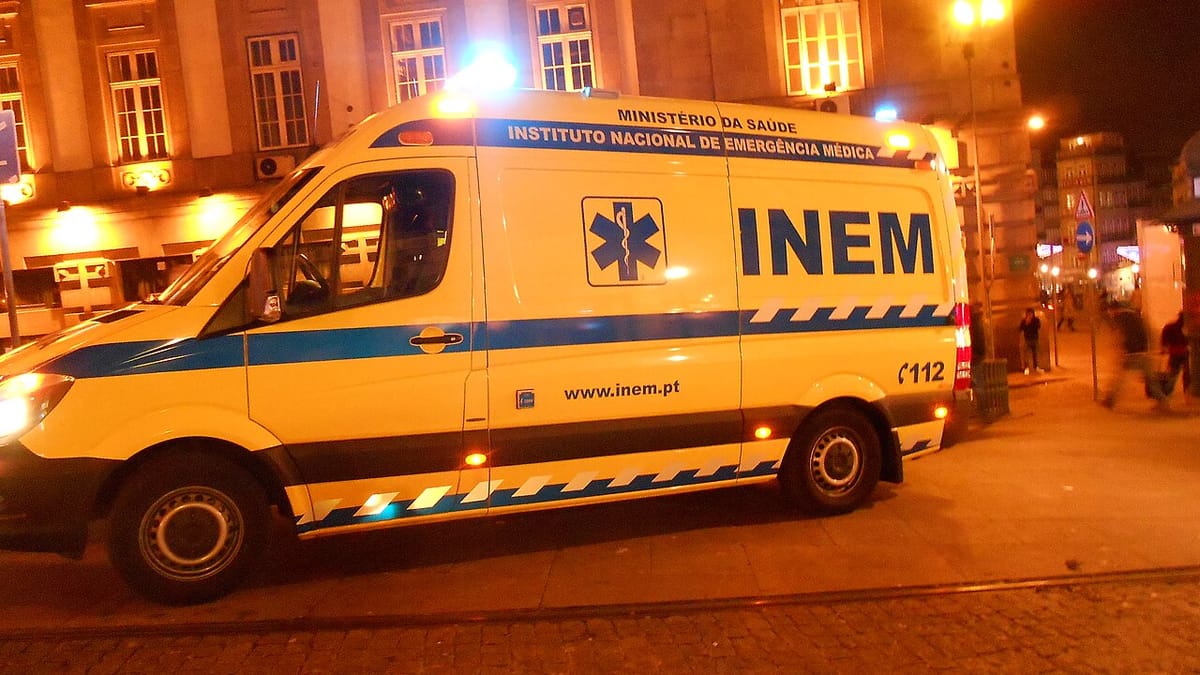
For two hours on Thursday evening, the computer system that dispatches ambulances across northern Portugal stopped working. By the time it came back, around 50 emergency calls were sitting in a queue that nobody could act on, according to the union representing the technicians who staff the room.
The failure hit the CODU do Norte (Centro de Orientação de Doentes Urgentes — Urgent Patient Guidance Centre) in Porto between 19:20 and 21:20 on 23 July. CODUs are the medical dispatch centres of INEM (Instituto Nacional de Emergência Médica — National Institute of Medical Emergency): when you dial 112 and the operator establishes that you need an ambulance, the call is passed to a CODU, where a technician takes the clinical history, decides what to send and tracks the vehicle until the patient reaches hospital. The northern centre is the busiest of the four.
What the union says happened
Rui Lázaro, president of STEPH (Sindicato dos Técnicos de Emergência Pré-Hospitalar — the Pre-Hospital Emergency Technicians' Union), described dozens of technicians sitting at their posts for several minutes with no response from the system. Staff fell back to pen and paper, writing down what callers told them and passing the details verbally to the colleagues responsible for sending vehicles.
Incoming calls that would normally have been answered in Porto were redirected to the CODUs in Coimbra, Lisbon and Faro, and Coimbra took over dispatch duties for the north while the northern room was blind. The union's count of roughly 50 occurrences waiting to be actioned refers to cases that had been logged but could not be pushed through to a vehicle during the outage.
The system returned at 21:20, but according to the technicians it was then run deliberately below full capacity for fear of overloading it again.
Lusa, the national news agency, sought a response from INEM and had not obtained one at the time of reporting. No injuries or deaths have been publicly attributed to the delay.
Not the first warning this month
The outage follows a complaint made the previous week by INEM's Comissão de Trabalhadores (Workers' Commission), which reported failures in OnCall, the software used across the CODU network. STEPH's question after Thursday night is the obvious one: whether INEM has a functioning backup system it can switch to, rather than a set of manual workarounds improvised by staff on the night.
That is the part that should concern anyone who might one day need to dial 112. The fallback worked in the sense that the other three centres absorbed the traffic and the north kept operating on paper. It worked because experienced technicians knew what to do without a system telling them — not because a designed redundancy took over.
The wider picture at INEM
Portugal's emergency medical service has been under near-continuous scrutiny. Earlier this month President Seguro signed a new charter for INEM that turns it into a public institute of special regime, brings in AI-assisted triage and allows a non-doctor to chair the board. And only a day before this week's outage, investigators published their final report into the INEM helicopter accident at a quarry in Mondim de Basto.
Technology sits at the centre of the reform agenda — AI triage, better call routing, faster clinical decision support. Thursday night was a reminder that all of it rests on a dispatch system that has to stay up.
What this means if you need help
Nothing changes about what you should do in an emergency: dial 112, which is free, works from any phone and is answered in Portuguese, English and other languages. If you were trying to reach an ambulance in the Porto region on Thursday evening and the wait felt unusually long, this is very likely why.
Our guide to medical emergencies in Portugal covers how 112, INEM and the SNS 24 line fit together, what the Manchester triage colours mean once you arrive, and when an urgência visit costs you nothing.