A Petition Against Building in the Sintra-Cascais Natural Park Grows Sevenfold in a Month and Crosses the Threshold for a Plenary Debate
Finis Terrae is running the drive on two platforms: about 1,000 signatures on Parliament's own portal and 6,920 on Peticao Publica by Saturday evening. Above 7,500, the right-of-petition law sends a petition to the floor of the house.
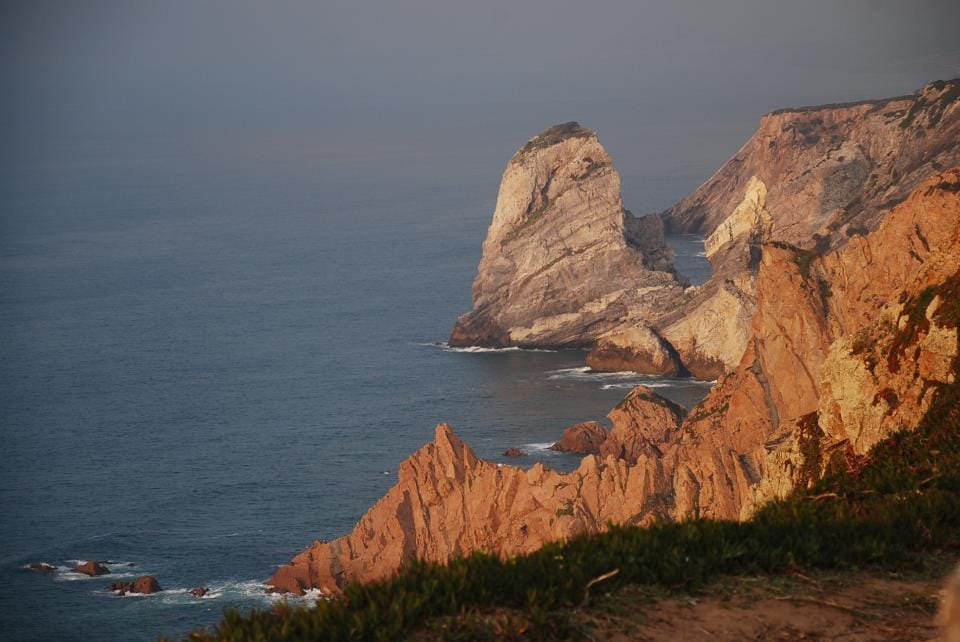
A petition against building inside the Parque Natural de Sintra-Cascais (Sintra-Cascais Natural Park) has grown roughly sevenfold in about a month, and the combined signature count has now passed the threshold that obliges Parliament to debate it in plenary rather than quietly in committee.
The drive is being run on two platforms at once by Finis Terrae, the citizens' association formed to defend the park. Around a thousand people have signed through the Assembleia da República's own participation portal. A parallel text on the Petição Pública platform, opened on 27 July and addressed to the President of the Assembleia da República, had reached 6,920 signatures by Saturday evening. Between them the total is above 7,500. The organisers say they are aiming for 10,000.
Why the number decides the venue
Portugal's right-of-petition law, Lei 43/90 as amended most recently by Lei 63/2020, sets three thresholds. Above 1,000 signatures a petition is published in the Diário da Assembleia da República and the petitioners must be heard by the responsible committee. Between 2,500 and 7,500 it is debated in committee. Above 7,500 it goes to the floor of the house. The difference is not procedural trivia: a plenary debate puts every parliamentary group on the record about a municipal planning document most of them would otherwise never have to discuss.
The petition makes seven asks. Among them: that Parliament monitor the revision of Sintra's Plano Director Municipal (Municipal Master Plan) given the park's national standing, that any proposal touching the park carry transparent scientific and legal justification, that conservation bodies and civil society be consulted, and, most directly, that Parliament "prevent the urbanisation of the Sintra-Cascais Natural Park as envisaged in the revision."
What has changed since the minister spoke
Two weeks ago the Environment Minister, Maria da Graça Carvalho, ruled out any declassification of the park, calling it "a national pearl" and noting that classifying or declassifying is a decision for central government on a proposal from the ICNF, not for a town hall. That answered the narrowest version of the question. It did not answer the practical one, which is that almost everything determining what gets built on this coastline is settled in the PDM, not in the park's legal status. A park can keep its designation and still absorb a great deal of construction if the zoning underneath permits it.
Finis Terrae has now widened the charge. It accuses Sintra council, already in court over a separate planning decision on tour coaches, of pursuing a development vision "incompatible" with protecting the park, and says illegal construction is increasing, with complaints lodged with the Ministério Público (Public Prosecutor's Office) and reports filed with environmental authorities. The association's original alarm centred on planning language flagging stretches of coast, from Praia das Maçãs and Azenhas do Mar down to Azóia near Cabo da Roca, as suited to "fazer cidade", making city, through densification and verticalização, building upwards.
That enforcement question is not hypothetical on this stretch of coast. In July, prosecutors moved to halt and demolish a near-finished hotel development on the Cascais shoreline, a reminder that licensing decisions here can be unwound years later, at somebody's cost.
What this means for foreign residents
- If you are buying near the park, read the PDM, not the park boundary. Protected status does not by itself tell you what can be built next door. The zoning classification of the specific plot does.
- The revision is still open. A PDM revision runs through public consultation before final approval. That is the window in which objections carry legal weight, and it is open to residents regardless of nationality.
- Licensing risk is real and retrospective. The Cascais hotel case shows that a permit issued by a council can be challenged by prosecutors long after the concrete is poured. Check the licensing history of anything recently built.
- Anyone can sign. Petitions to the Assembleia da República are open to residents, not just Portuguese citizens, which makes them one of the few national political levers available to foreign residents who cannot vote in legislative elections.
The committee stage comes first, with the petitioners entitled to be heard. If the count holds above 7,500 when the petition is formally assessed, the future of Sintra's coastline stops being a local zoning argument and becomes a matter the whole house has to take a position on, in public.
Feature image: Wikimedia Commons, CC BY-SA 3.0. Update: from 4 October 2026, dogs are allowed in the palace gardens of Sintra and Queluz and at the Capuchos Convent, on a free ticket and a short lead.