The Environment Minister Rules Out Declassifying the Sintra-Cascais Natural Park After a Municipal Planning Document Recommended Scrapping Its Protected Status
A residents' association sounded the alarm over a document in Sintra's master-plan revision that recommends declassifying the Parque Natural de Sintra-Cascais to open its coast to building. Environment Minister Maria da Graca Carvalho calls the park 'a national pearl' and says only the government, o
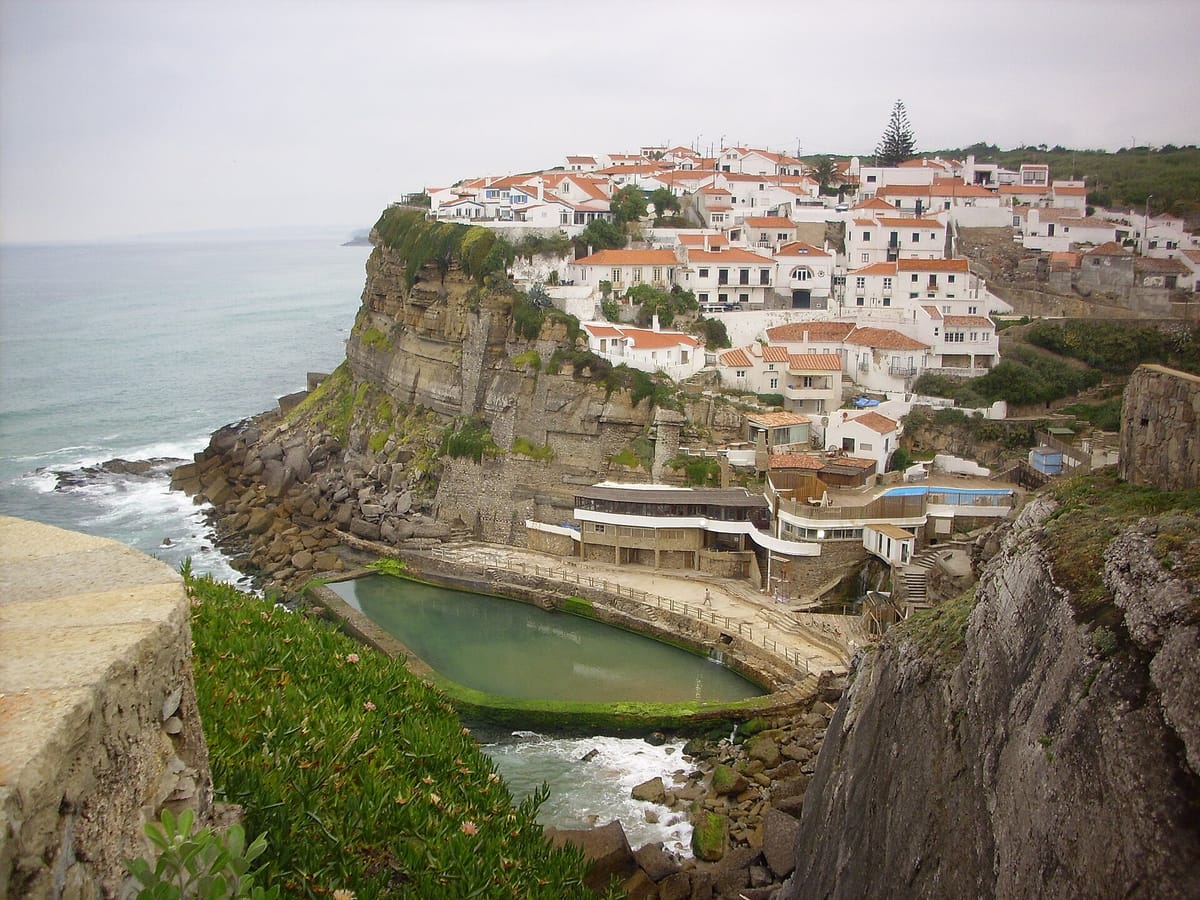
One of Portugal's best-loved protected landscapes — the wooded hills, cliffs and Atlantic beaches that ring Sintra and Cascais just west of Lisbon — has become the object of a public tug-of-war between conservationists who fear it is being quietly built over and a government that insists its status is untouchable.
The Environment Minister, Maria da Graça Carvalho, moved on Friday to shut down alarm that the Parque Natural de Sintra-Cascais (PNSC) could lose its protected status, calling it "a national pearl" and saying flatly that there is "no risk" of it being declassified. "I had never even heard of this issue," she told reporters, "and I just want to clarify the following: classifying or declassifying a park is a matter for the government alone, on a proposal from the national authority, which is the ICNF" — the Instituto de Conservação da Natureza e das Florestas (Institute for the Conservation of Nature and Forests). "There is no intention whatsoever to make any change to this park."
Where the alarm came from
The minister was responding to a warning raised not in Parliament but in the machinery of local planning. Finis Terrae — a citizens' association set up to defend the PNSC — wrote an open letter inviting Carvalho to come and see for herself what it calls the "real-estate predation" closing in on the protected area. The trigger is a document tied to the ongoing revision of Sintra's Plano Director Municipal (PDM, the Municipal Master Plan), the zoning blueprint that governs what can be built where.
That document — titled "Teses — Revisão e Alteração PDM 2020" and authored by a former lead on Sintra's first master plan back in 1999 — forms part of a revision proposal that the municipal executive has already approved, with the Socialist Party (PS) voting against. According to Finis Terrae, it describes the Natural Park's status as an obstacle to the "free action" of the Sintra and Cascais councils and recommends its declassification — in the association's blunt reading, "its extinction."
"Making city" on the coast
What worries the association most is where the pressure points fall. It says stretches of some of the most scenic coastline in the park — Praia das Maçãs and Azenhas do Mar, Praia Grande and Praia Pequena, and Azóia out towards Cabo da Roca, mainland Europe's westernmost point — are flagged in the document as having "a critical dimension suited to 'making city'." That phrase, Finis Terrae warns, is spelled out through planning concepts such as densification, a higher "compactness ratio" and even verticalização — building upwards.
"Although the new PDM has not yet entered into force, on the ground people are already building as if it had, with irreversible consequences for the landscape and the ecosystems of the PNSC," the association's board wrote. It framed the fight as one against the "de facto extinction" of the park, "under way on the ground and announced in an official document" of the council, and said it "flatly rejects" even discussing a revision built on that premise.
Sintra council put the opposite gloss on the same process. In a note, it called the PDM revision "a strategic opportunity to prepare Sintra for a new development cycle, reinforcing the municipality's competitiveness, territorial cohesion and the quality of life of its residents."
The minister's line: build, but not here
Carvalho did not dismiss the underlying pressure to build. "It is important to simplify, it is important to build," she acknowledged, and the country "needs more housing." But she drew the line at the park's boundary. Her argument was that Portugal has plenty of land to build on that carries "no natural value, no environmental value" and sits outside the maritime and river-water margins and the flood zones — and that the priority should be restoring the many degraded homes that already exist rather than pushing into protected ground.
She spoke at the Convento dos Capuchos, on the sidelines of the launch of a new app by Parques de Sintra-Monte da Lua that lets visitors calculate the carbon footprint of their trip — and she used the moment to argue that the direction of travel is towards more green space, not less. The Agência para o Clima (Climate Agency), she said, is financing green interventions in several cities, with more coming from municipalities and even Turismo de Portugal. "Tourism is going to be increasingly nature tourism and green-space tourism," she said, "because temperatures are rising and people are looking for places like these for their free time, for their holidays." The PNSC, she added, ranks alongside the Peneda-Gerês National Park as one of the country's natural crown jewels.
What this means if you live near the park
The Sintra-Cascais coast is one of the most heavily international corners of the Lisbon area, so the outcome of this planning fight is not abstract for a lot of readers.
- Nothing has changed today. The park's legal protection is intact, and the minister is right that a formal declassification would need a government decision on an ICNF proposal — a high bar that no one has moved to clear. The dispute is about a planning document and a direction of travel, not a done deal.
- The PDM is the thing to watch, not the headlines. The revised Sintra master plan is still working its way through the process and has not entered into force. If you own or are eyeing property in or near the park, the zoning categories in the final PDM — what each parcel is designated for, and any new building allowances near the coast — are what will actually bind, and they are still being fought over.
- Building inside a natural park is tightly conditioned. Land inside the PNSC is subject to the park's own rules on top of the municipal plan, which is precisely why campaigners are watching construction there so closely. Do not assume that a parcel's location near a beautiful beach means it can be freely developed — or that its current use is a guide to what is permitted.
- This is a live public consultation, not a closed one. A PDM revision passes through public discussion phases. Residents' associations like Finis Terrae are using open letters and the media precisely because the process is still open to objection, which is also the point at which affected residents can weigh in.
For now, the park keeps its status and its "pearl" label, and the government says that is not up for negotiation. The harder question — whether the everyday reality on Sintra's hillsides tracks the protection promised on paper — is the one Finis Terrae wants the minister to come and judge in person. On the national framework this now sits inside, the draft nature restoration plan Portugal has just delivered to Brussels sets out the 28 August filing under Article 16 of Regulation (EU) 2024/1991, the consultation that cut the measure list, the habitat targets of 30 percent by 2030 and 90 percent by 2050, the farmland bird index Portugal has to lift to 105 by 2030, and the twelve months of Commission assessment that follow. For anyone putting a camera in Portuguese airspace, our 2026 guide to flying a drone in Portugal: the ANAC operator number, the free A1/A3 exam, the compulsory insurance that starts at 900 grams, and the aerial-survey permission every camera drone needs from the AAN sets the latest reference. On the environmental licensing file, our report on the APA and ICNF restructuring reaching the Council of Ministers, with environmental impact assessment decisions moving to the centre and river basin directorates replacing the regional hydrographic administrations sets the latest reference. Update: from 4 October 2026, dogs are allowed in the palace gardens of Sintra and Queluz and at the Capuchos Convent, on a free ticket and a short lead.