Sintra's Tour Operators Take the Village's New Coach Ban to Court, Seeking to Freeze the Historic-Centre Traffic Plan
Coach and tour operators have asked the Sintra Administrative and Tax Court to suspend the traffic restrictions the town hall imposed on the historic centre this month, arguing the rules were rushed in at peak season and are strangling their business.
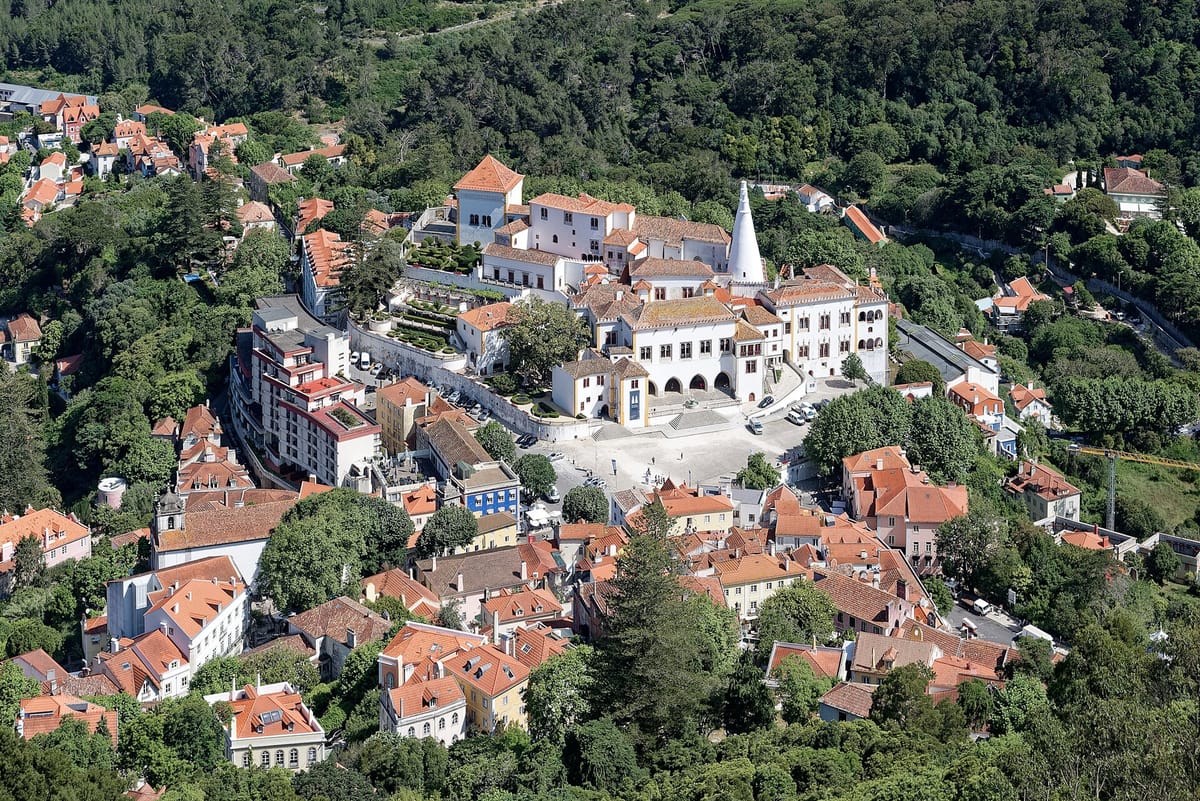
The fight over how tourists reach the heart of Sintra has moved into a courtroom. Tour and coach operators have asked the Tribunal Administrativo e Fiscal de Sintra (Sintra Administrative and Tax Court) to suspend the traffic restrictions the town hall imposed on the historic centre this month, arguing that the new rules were rushed in at the height of the season and are strangling their business.
The measures are part of a plan the municipality has branded “Viver e Visitar a Vila de Sintra” (Live and Visit the Village of Sintra), which took effect on 8 July. Its central move is to push tourist coaches out of the Volta do Duche, the tree-lined avenue that funnels visitors towards the Palácio Nacional (National Palace) and the tangle of streets around it. Coaches can no longer set down or pick up passengers there. Instead they are directed to a peripheral car park at Lourel, which offers 509 free spaces and a public-transport link into the village and up to the monuments, or to a temporary parking area in the Ramalhão zone. The plan also carves out dedicated “pick and ride” bays for TVDE (ride-hailing) vehicles.
Sintra's problem is one of the most acute cases of overtourism in Portugal. The town's cultural landscape is a UNESCO World Heritage site, and the Pena Palace ranks among the country's most-visited monuments, drawing millions of people a year up a small number of narrow, winding roads. On peak summer days the queues of coaches, tuk-tuks and rental cars have repeatedly brought the village to a standstill, and residents have long complained that they can barely move through their own streets. The council frames the restrictions as a way to reclaim the historic core for pedestrians and to spread the traffic load out to the edges of the village.
Operators see it differently. They argue that redirecting coaches to Lourel and Ramalhão adds time and cost to every tour, forces elderly and less mobile visitors onto shuttle transfers, and was introduced without enough notice for companies that had already sold summer packages. Their application to the court is a providência cautelar (interim injunction) — a request for the judge to freeze the new circulation rules immediately, before the substance of the dispute is decided, on the grounds that the damage being done in the meantime cannot easily be undone. It is not the first flashpoint: tuk-tuk and off-road-vehicle operators had already staged protests against the changes earlier in the process.
The plan itself was politically divided when it passed the municipal executive, carried by the PSD (Social Democratic Party), an independent councillor and Chega, with the PS (Socialist Party) abstaining — a split that the operators are now pointing to as evidence the scheme was not properly thought through. The council, for its part, maintains that the measures are seasonal, proportionate and necessary to keep the village functioning through the summer.
For visitors planning a day trip this summer, the practical message is simple: a coach or organised tour will most likely drop you at the edge of Sintra rather than at the foot of the palaces, with a shuttle or a walk to follow. Whether that arrangement survives the season now rests with a judge, who must decide whether to leave the town hall's plan in place or hand the operators the suspension they are asking for. On the mechanics of taking a Portuguese public body to court, our guide to the providência cautelar, the urgent administrative injunction that carries a 48-hour first order, an automatic freeze on executing a suspended act, and a 306 euro court fee sets the latest reference.