Prosecutors Move to Halt and Demolish a Near-Finished Hilton Development on the Cascais Coast
The Public Prosecutor's Office wants a court to suspend an almost-finished Hilton hotel and 120 apartments on the Cascais coast, annul the licences and, if needed, demolish the buildings — over a €313,000 sale of protected seafront land that names Infrastructure Minister Miguel Pinto Luz.
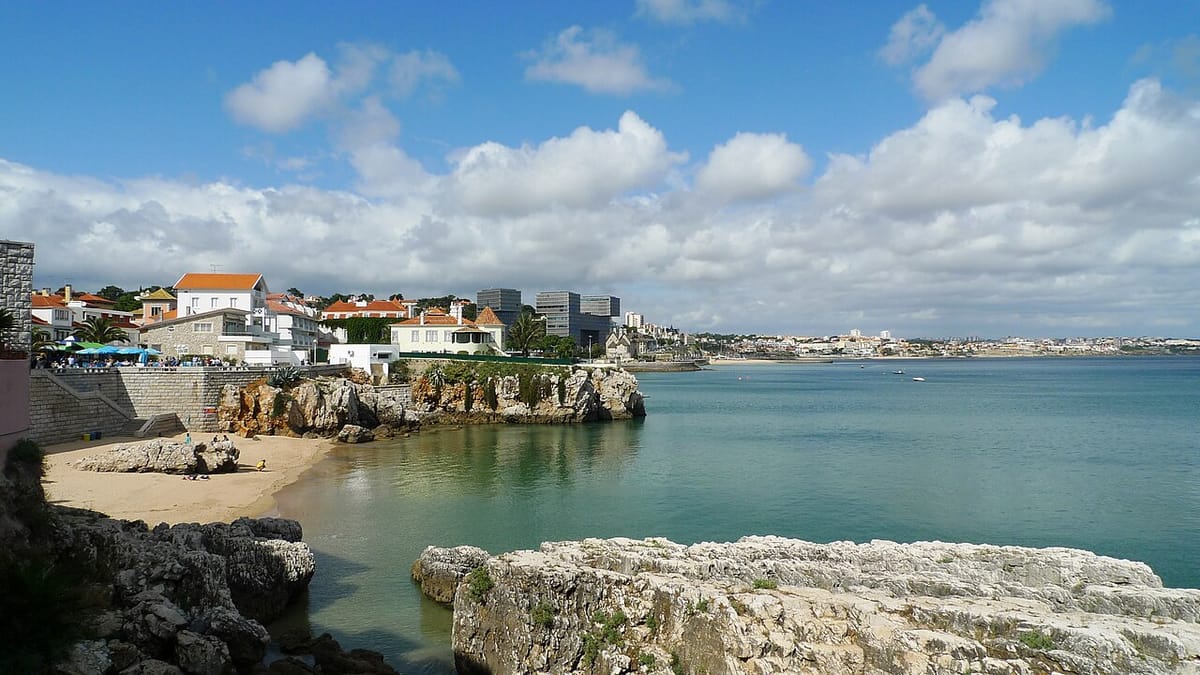
Prosecutors have asked a court to stop work on an almost-finished Hilton hotel and 120 apartments on the Cascais coast — and, if necessary, to have the buildings pulled down. The request, reported by RTP and confirmed across the Portuguese press, is the sharpest turn yet in a long-running investigation into how the municipality of Cascais came to sell a strip of prime seafront land for a fraction of its likely value, in a case that reaches all the way into the current government.
According to the reporting, the Public Prosecutor's Office (Ministério Público) is seeking the immediate suspension of the construction, the annulment of the building licences and of the council deliberations and orders that authorised it, and the demolition of the structures, which are close to completion. At the centre of the case is a plot of roughly 800 square metres in one of the most expensive stretches of coastline in the country, near the Cascais railway line, which the Câmara Municipal de Cascais (Cascais Town Council) sold for less than €313,000.
What makes the sale contentious is not only the price but the land itself. Part of the site fell within the Reserva Ecológica Nacional (National Ecological Reserve, or REN), the protected-land regime that restricts building on ecologically sensitive ground, and sits in an area exposed to the sea. Investigators allege that the classification was altered to clear the way for the project after construction had already begun, following proposals put forward by the council's leadership.
Those proposals, according to the investigation, carried the signatures of Cascais's long-serving mayor, Carlos Carreiras, and of his then deputy, Miguel Pinto Luz — now the country's Minister of Infrastructure and Housing (Ministro das Infraestruturas e Habitação). Pinto Luz is reported to have signed the majority of the disputed administrative acts during his years as vice-president of the Cascais council. He has previously said he is confident that “justice and truth” will prevail.
The affair did not begin this month. It surfaced in January 2024 after an environmental association filed a complaint over the deal, prompting an inquiry, and escalated in the spring of 2025, when the Judicial Police (Polícia Judiciária, or PJ) carried out searches at the Cascais council and in Lisbon on suspicion of favouritism towards the property company that bought the land. Those searches formed part of a wider probe by the national anti-corruption unit — the same body whose Cascais operations The Portugal Brief has reported on before. The complaint named the mayor, his deputy, two other councillors and the buyer.
The prosecutors' latest move raises the stakes considerably, because it targets not the paperwork but the concrete: a hotel and dozens of flats that are physically almost built. Courts are generally reluctant to order the demolition of finished buildings, and any decision is likely to be fought hard and take time. But the request signals that the Ministério Público believes the underlying licences may be void rather than merely irregular — a distinction that, if upheld, would leave little room to legalise the project after the fact.
For residents, the case lands on a familiar nerve. The Cascais and Estoril coast has become one of the hottest corners of the Portuguese property market, with foreign buyers pushing prices past those of central Lisbon, and the tension between coastal development and the protection of an eroding, sea-facing shoreline runs through much of the region's planning politics. That a serving cabinet minister responsible for housing is among those named only sharpens the scrutiny.
Neither the developer nor the council had issued a detailed public response to the demolition request at the time of writing, and the government has not commented on the specifics of the prosecutors' filing. The matter now rests with the courts, which will decide whether an almost-complete luxury development on protected land is allowed to open its doors — or comes down. On heritage colliding with a municipal building site, our report on the Braga administrative court admitting an injunction against Viana do Castelo's new municipal market over sixteenth-century convent remains, and the mayor's threat to bill the association for the delay sets the latest reference.