1,655 Submissions and Two Councils Against the Serra d'El-Rei Kaolin Mine, and the Consultation Shuts on 1 September
The Royal China Clay C-185 concession would work 51.4 hectares of open pit for 20.5 years, 100 metres from the nearest hamlet, for 12 jobs and 11 lorries an hour. Peniche, Óbidos and the parish council all want an unfavourable environmental decision.
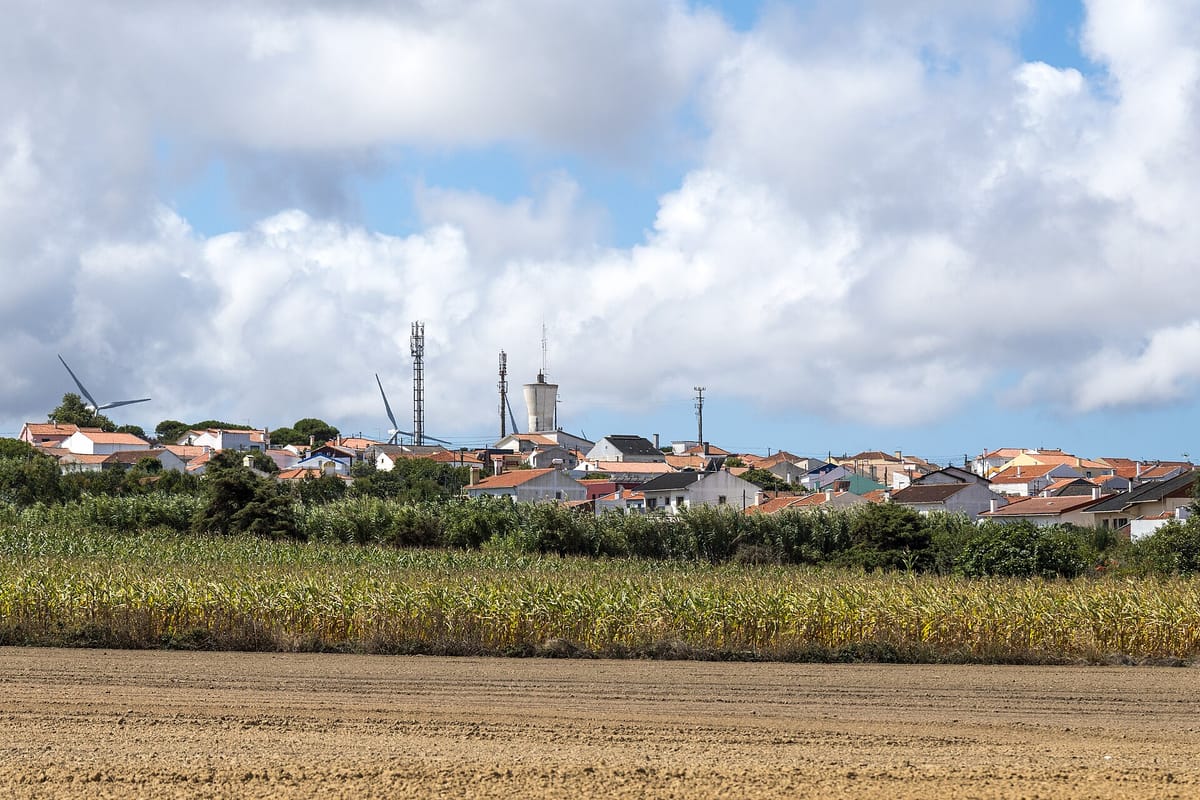
A public consultation on an open-pit kaolin and clay mine at Serra d'El-Rei, in the council of Peniche, closes on 1 September, and it has drawn 1,655 submissions on the Agência Portuguesa do Ambiente (Portuguese Environment Agency) participation portal. Two municipal councils, Peniche and neighbouring Óbidos, and the Serra d'El-Rei parish council have all come out against the project and have asked the agency for an unfavourable environmental impact decision.
The project is the Concessão Mineira C-185 "Royal China Clay", a mining concession granted by the Portuguese State to Motamineral, Minerais Industriais, S.A., a company in the MCS Portugal ceramic raw-materials group. The concession covers 107.7 hectares of what is currently eucalyptus plantation. Within it, three extraction cores are proposed: Núcleo A at 10.9 hectares, Núcleo B at 28.5 hectares and Núcleo C at 12 hectares, a total of 51.4 hectares of working ground.
What the mine plan actually proposes
- Life of mine: about 20.5 years, on the reserves identified.
- Output: around 569,100 tonnes a year in total, split into roughly 31,800 tonnes of kaolin, 270,000 tonnes of washed sand and 267,300 tonnes of common clay.
- Traffic: an average of 11 lorries an hour for despatch, according to the non-technical summary of the environmental impact study.
- Jobs: 12 direct posts, which the study itself presents as one of the project's main positive impacts.
- Processing: a 3.2-hectare sand washing and classification plant to be built in Núcleo A, at the northern end of the concession.
- Distances: the settlement of Talhos da Charneca sits 100 metres to the north, Casais de Mestre Medo 450 metres to the west, and the village of Serra d'El-Rei 1,300 metres to the south. One dwelling stands inside the concession itself, about 150 metres from the nearest extraction core.
The kaolin is destined for ceramic pastes, sold in part to the promoter's own group. The sand and clay are secondary raw materials sold on to the construction sector and to structural and roofing ceramics factories. The environmental impact study was drawn up by VISA, Consultores de Geologia Aplicada e Engenharia do Ambiente, S.A., and is dated June 2026. The consultation opened on 22 July.
The five-year detail that ties Óbidos in
Óbidos is not the host council, and it says so plainly: the mine sits administratively in a Peniche parish. Its objection rests on the argument that "the effects do not respect administrative boundaries" and will fall on Óbidos and the wider Oeste region regardless of which side of the line the pit is on.
There is a more concrete link. The washing plant in Núcleo A will not exist at the start. The mine plan states that until it is built, which is expected within the first five years of operation, the kaolinitic sands will be shipped out untreated and processed instead at the industrial unit that serves the company's other concession, C-19, known as Casal dos Braçais. That plant is described as already operating. Casal dos Braçais lies in the parish of Amoreira, in the council of Óbidos, roughly 5 kilometres north of Serra d'El-Rei, on a 103.6-hectare concession held by the same company under a contract with the State signed in June 2020.
In other words, for the first phase of its life the Peniche mine would be an extraction site whose material is trucked north into Óbidos to be washed. The council objecting to the traffic and the water use is also the council where a good deal of the processing would happen.
What the objections say
Peniche has already sent its unfavourable opinion to the environment agency and has stated that it has no formal role in the licensing of the project, which is a national mining process. Its argument is framed around duration: "It is essential to safeguard the populations, quality of life, the environment, the landscape and municipal infrastructure in the face of an activity with a predicted duration of more than two decades." The council says it is co-ordinating with the parish councils on what to do next.
Óbidos, whose mayor Filipe Daniel signed the council's statement, raises the cumulative depletion of natural and territorial resources: high water consumption in the industrial washing operations, removal and degradation of soils, loss of flora, fauna and habitats, irreversible landscape change, and the undoing of what it calls the sustainable territorial model the Oeste has been building. Its submission also flags heavy lorry traffic on a road network built essentially for light vehicles, road degradation, accident risk, and the continuing pressure of noise, vibration, dust and suspended particles.
The Serra d'El-Rei parish council, whose president Jorge Amador says the parish only learned of the project on 19 August, argues that the study omits the presence of people living in the area and that "citing the creation of 12 jobs as a positive factor is to forget the potentially disastrous environmental impact" for local residents. A meeting of all the council and parish bodies in Peniche is set for 31 August, the day before the consultation closes.
Where the study and the objectors disagree
On water, the promoter's case is that the washing circuit is closed, with only circuit losses replaced, so the impact on groundwater is negative but not significant and lasts only while the mine operates. Óbidos calls the same operation high water consumption. Both statements can be literally true: a closed circuit still needs its losses topped up, and the study does not put a figure on that make-up volume in the non-technical summary.
On air quality, the study concedes that extraction produces dust, notes that there are dwellings in the surroundings, and concludes that they will not be affected and that legal thresholds will not be exceeded. On noise, it accepts that sensitive receptors are "relatively close" but expects no significant change to the acoustic environment. Because the surrounding area has not been acoustically classified, the default limits of the Regulamento Geral do Ruído (General Noise Regulation) apply, at 63 dB(A) Lden and 53 dB(A) Lnight. Readers who want the mechanics of that regime will find them in our guide to noise and neighbours in Portugal.
One ecological constraint sits in the study and has not featured much in the public argument: the area falls inside the 5-kilometre protection buffer of the "Serra d'el Rei" bat roost, which the study classifies as of national importance. The southern grey shrike, which has a threatened conservation status, is recorded in the area.
What this means for residents and property owners
- The window is days, not weeks. Submissions close on 1 September. Anyone can file one on the participa.pt portal, in favour or against, and the closing report has to address them. After that the decision passes to the environment agency's impact assessment.
- An unfavourable opinion from a council is not a veto. Mining concessions are granted by the State, and the exploitation authorisation comes from the Direção-Geral de Energia e Geologia (Directorate-General for Energy and Geology). Municipal opposition is an input to the environmental decision, not a decision in itself.
- Check what is under your land, not just next to it. A mining concession is a separate layer from the land register and from your municipal plan. If you are buying rural property in the Oeste, the concession map is worth a look alongside the usual searches.
- The nuisance case is a legal case. Dust, noise and heavy traffic are regulated separately from the mining licence, with their own limits and their own complaint routes. Those routes stay open after any environmental decision, favourable or not.
- Watch the traffic figure. Eleven lorries an hour on rural roads is the number most likely to be tested in the closing report, because it is the one impact that lands squarely on people who are neither the promoter nor the host parish.
The Oeste has not had a mining fight of this profile before, and 1,655 submissions is a large number for a project of this size. It joins a run of contested extraction cases across the country, from the objections to renewing the Panasqueira tungsten licence to the lithium easements at Boticas, and it follows the same pattern as the council-level rejections of renewable-energy zones: a national resource policy meeting a local one, with the environmental impact procedure as the only place the two are made to argue in public.


