Portugal's Over-65s Lived Through a Record 39 Million Heatwave Days in 2025, Lancet Countdown Data Show
The 2026 Lancet Countdown puts older people in Portugal at 16.3 heatwave days each last year, and attributes about four in five of the average resident's heatwave days to climate change. What the data say, and the DGS advice.
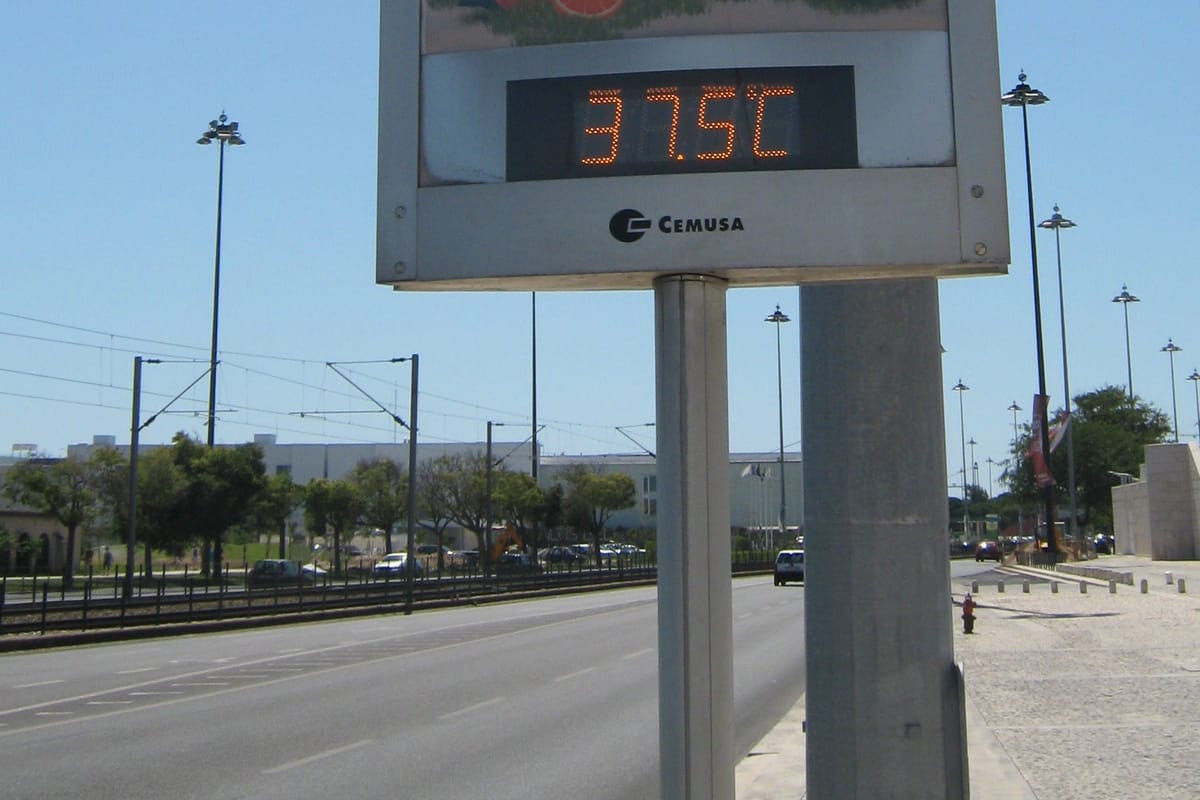
People aged 65 and over in Portugal went through about 39 million heatwave days between them in 2025, the highest total in a series that starts in 1980. The figure comes from the country data behind the 2026 global report of the Lancet Countdown on health and climate change, released on Tuesday. The report also finds that about four in five of the heatwave days the average resident lived through last year would not have been expected without climate change.
This is the tenth Lancet Countdown report, written by 146 experts from 71 institutions and led by University College London. Its authors call for climate change to be recognised as a global health emergency.
What the data say about Portugal
The Countdown's data explorer counts a heatwave as at least three days in a row when both the daytime high and the night-time low are above the local 95th percentile for 1986 to 2005. IPMA uses a different definition, so these totals are not comparable with IPMA's count of a record 98 heatwave days this year.
- Everyone: the average person in Portugal was exposed to 12.8 heatwave days in 2025. The model attributes 10.4 of them to human-caused climate change. Worldwide, the figure is 11.3 of 13.5 days (83 percent).
- Over-65s: 16.3 heatwave days each in 2025, the fourth-highest figure since 1980. Their yearly average went from 6.2 days in 2006 to 2015 to 8.7 days in 2016 to 2025, about 40 percent more.
- Babies under one: 14.8 days each in 2025. Their yearly average went from 6.2 to 8.2 days over the same two decades.
The global report gives no estimates of heat deaths for individual countries. Its European edition, published in April, found the steepest rise in Portugal in Trás-os-Montes. There, yearly heat-related deaths went from 11.5 to 26.7 per 100,000 people between 1991 to 2000 and 2015 to 2024 (regional data sheet).
The global picture
The report's heat mortality indicator links about 710,000 deaths worldwide to heat in 2023, a record, and attributes 71.5 percent of them to climate change. Lusa reported the figures from the Lancet's press release through Observador. From 2016 to 2023, heat was linked to an average of 540,800 deaths a year, and 68 percent of them were attributed to climate change, against 55 percent in 2006 to 2015. On that basis, the yearly average of heat deaths has risen almost 36 percent since the Paris Agreement. The report attributes nearly three million heat deaths over 2016 to 2023 to climate change.
This summer in Portugal
The national health institute INSA and the health directorate DGS counted 680 more deaths than expected from all causes, spread over three periods in summer 2026. Lusa reported the figure through RTP on 6 August. The worst period was 2 to 8 July, with 555 excess deaths. Over the summer as a whole, most of the excess deaths were among people aged 75 or over.
Protecting yourself
The DGS heat advice (in Portuguese) names young children, people aged 65 and over, people with a chronic illness, outdoor workers and people living alone as the most vulnerable. Older people often do not feel thirsty, so they should drink water anyway. If you have no air conditioning, the DGS advises spending two to three hours a day somewhere cool. Keep in touch with neighbours who live alone. For advice, call SNS 24 on 808 24 24 24; in an emergency, call 112. Warm nights matter too: see our report on nights above 20 °C.