Winter Storms Drag Portugal's Fruit and Vegetable Exports Down 3.5%, Widening the Trade Gap Toward €300 Million
Fresh-produce exports fell 3.5% in value and 5.9% in volume in the first half of 2026, to EUR1.226 billion, as three winter storms — the 'Kristin effect' — cut harvests. The sector's trade deficit passed EUR300 million, nearly double 2024.
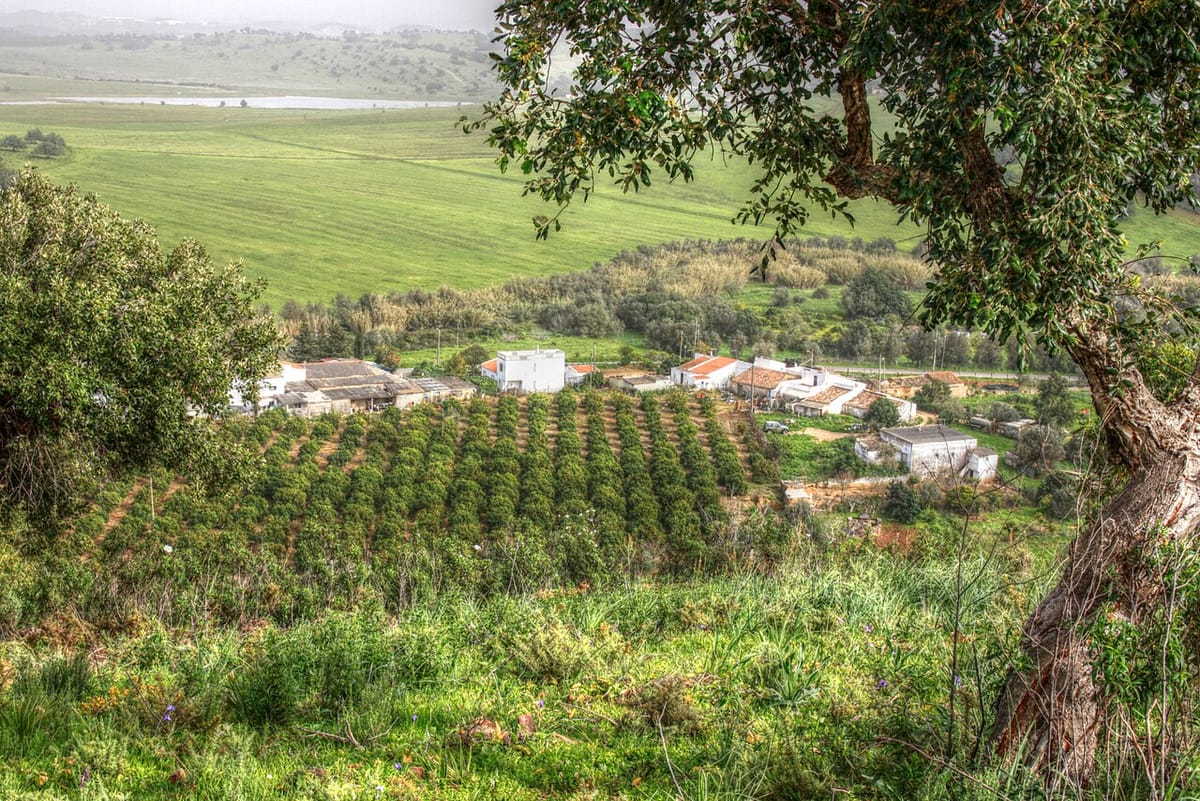
A run of winter storms is still showing up in Portugal's trade figures. Exports of fruit, vegetables, plants and flowers fell 3.5% in value and 5.9% in volume in the first half of 2026 against the same period last year, according to figures compiled by the sector association Portugal Fresh. Overseas sales came to €1.226 billion, while imports climbed 4.2% in value — pushing the sector's trade deficit past €300 million.
Producers have a name for the culprit: the "Kristin effect." Three consecutive storms — Ingrid, Joseph and Kristin — battered the country early in the year, flattening crops, tearing greenhouses and knocking out irrigation systems. The damage cut into what growers could pick and ship, and the export data is the delayed bill for that lost production.
The numbers behind the fall
- €1.226 billion in fresh-produce exports in the first six months of 2026, down 3.5% by value.
- 5.9% drop in the quantity shipped — a steeper fall than the value figure, a sign that lost volume, not weaker prices, drove the decline.
- Over €300 million sector trade deficit, nearly double the €178 million recorded in 2024 and well above the €197 million gap in the first half of 2025.
- €446 million — 37% of exports — went to Spain, comfortably the largest single market. But Spain also supplies 57% of Portugal's imports in the category, leaving a bilateral shortfall of more than €400 million.
A competitiveness worry, not just a weather one
Portugal Fresh's president said the numbers were "expected," pinning them chiefly on the storm damage and on what he called minimal support from the European Union and the government for affected producers. His pointed comparison was with Spain, whose growers — Portugal's main rivals and biggest customers — received more generous financial help to recover.
That framing matters. A single bad winter is a shock any farming sector can absorb; a structural gap in state support that leaves Portuguese growers less able to bounce back than their neighbours is a longer-term threat to a business that is one of the country's export success stories. Fresh produce has been a rare bright spot in Portugal's trade balance, and the widening deficit is a warning that the advantage is not guaranteed.
What this means for expats
- Grocery bills: Lower domestic harvests and rising imports tend to feed through to prices on the shelf, particularly for seasonal fruit and vegetables. Expect less of the cheap local abundance summers usually bring.
- If you farm or invest in agriculture: The episode is a reminder of how exposed Portuguese growing is to extreme weather, and how thin the state safety net can be when storms hit. Insurance and resilience planning matter.
- Rural economies: Regions such as the Oeste, Ribatejo and the Algarve lean heavily on export horticulture. A weaker season ripples into local jobs and seasonal work.
- The bigger picture: Watch whether Lisbon responds with support measures. Growers are openly arguing they are being out-subsidised by Spain — a political pressure point heading into the next budget.
The storms have passed, but their mark on the balance sheet will linger into the second half of the year. Whether 2026 proves a one-off dip or the start of a slide depends as much on policy in Lisbon as on the weather. On the Portuguese industrial-investment tape, our report on SRAM breaking ground on a third Coimbra factory, a 57.5 million euro project carrying 527 contracted jobs and 16.9 million euros of state support, due to open in the middle of 2028 sets the latest reference. On how the fruit and vegetable support scheme is actually administered, the filing deadline the government moved four days before it fell sets out Portaria n.º 430/2026/1, the shift from 15 to 30 September for operational programmes and amendment requests, and the preamble that concedes the old date landed in the middle of the harvest.