While Volkswagen Sheds 50,000 More Jobs Worldwide, Portugal and Spain Are Being Asked to Build One in Ten of Its Cars
Ten billion euros goes to Autoeuropa, Martorell, Pamplona and the Sagunto battery plant, and the group's Iberian production chief says a record million vehicles is reachable next year. August output here fell 45 percent.
On 3 September the supervisory board of Volkswagen signed off on a restructuring plan that cuts a further 50,000 jobs across the group and halves its range of cars by 2035. None of the plants being closed are on the Iberian Peninsula. On Sunday the business daily Jornal de Negócios reported the other half of that arithmetic: the group is putting 10 billion euros into its Portuguese and Spanish factories, and expects those factories to build roughly one in every ten cars it makes anywhere in the world.
The figure comes from André Kleb, the executive who runs production for Volkswagen across both countries. Speaking to the Spanish daily El Mundo, Kleb said the Iberian plants could reach a record one million vehicles next year, which would be about 10 percent of the group's global output.
Where the money goes
The 10 billion euros covers four sites. Three are in Spain: the battery gigafactory being built at Sagunto, near Valencia; Martorell, outside Barcelona, where the group assembles small electric models including the Volkswagen ID.Polo; and Pamplona, which builds the Skoda Epiq and the Volkswagen ID.Cross. The fourth is Autoeuropa at Palmela, south of Lisbon.
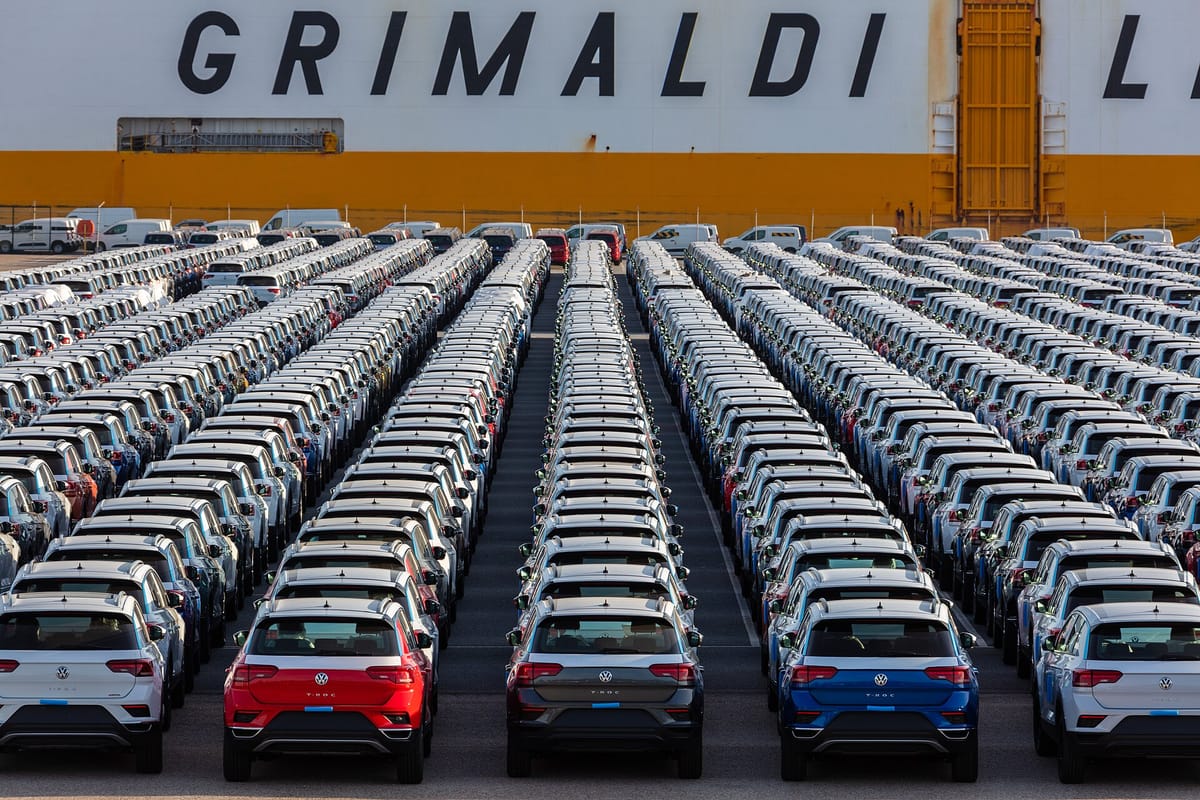
Autoeuropa's current best seller is the T-Roc. From 2027, according to Jornal de Negócios, the Palmela line switches to the ID.1, the small electric city car the group is counting on to win back buyers from Chinese rivals. That is consistent with what Volkswagen has been saying since the spring, when it confirmed new electric models for the Portuguese plant.
Two cautions belong with the headline number. The 10 billion euros is a two-country total published without a timetable, and the one million vehicles is a projection by the executive who would have to deliver it, not a commitment in writing.
The near-term picture is much worse
Whatever 2027 holds, this year has been poor. ACAP, the Associação Automóvel de Portugal (Portuguese Automobile Association), recorded 8,976 vehicles built in Portugal in August, a fall of 45.1 percent against August 2025. Passenger cars were down 54.7 percent at 6,591 units. Heavy vehicles effectively stopped: one was built in the whole month.
Most of that is Palmela. Autoeuropa took its summer break from 25 July to 16 August, added a week of lay-off from 17 to 23 August while the plant was retooled for its new small electric model, and restarted only on 24 August.
Across January to August, Portugal built 206,782 vehicles, down 6.3 percent on the same period last year, with every category falling. We reported the four-year low when the mid-year figures landed, and in July the components sector was already bracing for a third down year.
Why it matters here
- Almost none of it stays in Portugal. Of the vehicles built here between January and August, 97.9 percent went abroad. Europe took 93.1 percent, led by Germany at 22.1 percent, France at 12.3, Italy at 12.2 and Turkey at 11.1. That makes Portuguese car output a bet on German and French demand rather than on the domestic market.
- Palmela is an anchor, not just a factory. A components industry is built around it, and its shutdowns show up directly in the national statistics. When Autoeuropa pauses, the country's output halves.
- The comparison that matters is with Wolfsburg. The group is closing German capacity while funding Iberian capacity. Portugal is on the right side of that split for now, which is a better position than a Portuguese plant has held in several of the last restructurings.
In April, Portugal passed Italy in EU car production on the back of one busy year at Palmela. The Iberian plan, if it holds, would make that less of a one-off.