Trains Are Running Again on the Whole of the Beira Baixa Line, and the Buses That Stood In for Them Since March Are Gone
The Mouriscas-A to Vila Velha de Rodao section reopened on Sunday after 3.4 million euros of repairs to two landslides left by Storm Kristin. Regionais, Intercidades and freight run the full 240 kilometres again.
The replacement buses stopped on Sunday. Rail traffic resumed on the Beira Baixa Line between Mouriscas-A and Vila Velha de Ródão, the stretch that has been shut since 16 March, and with it Regional and Intercidades services run along the whole 240 kilometres of the line for the first time in six months. Freight is moving again over the same section.
Infraestruturas de Portugal (the state infrastructure manager for road and rail) and CP, Comboios de Portugal (the state railway), named today's date on 3 September. They met it.
What closed the line
Storm Kristin crossed Portugal in February and left two landslides between kilometres 39.150 and 39.270, which destabilised the rail platform. Roughly 120 metres of embankment had to be rebuilt. The bill came to 3.4 million euros.
The joint note from the two companies sets out what that bought. Contractors stabilised the slopes with about 5,500 cubic metres of rockfill, then founded two reinforced concrete structures on micropiles, with an intermediate capping beam running between them, to hold the platform in place. Drainage was rehabilitated and the culverts improved. Track, telecommunications, earthing systems and the rest of the lineside equipment were replaced outright rather than patched.
What travellers get back
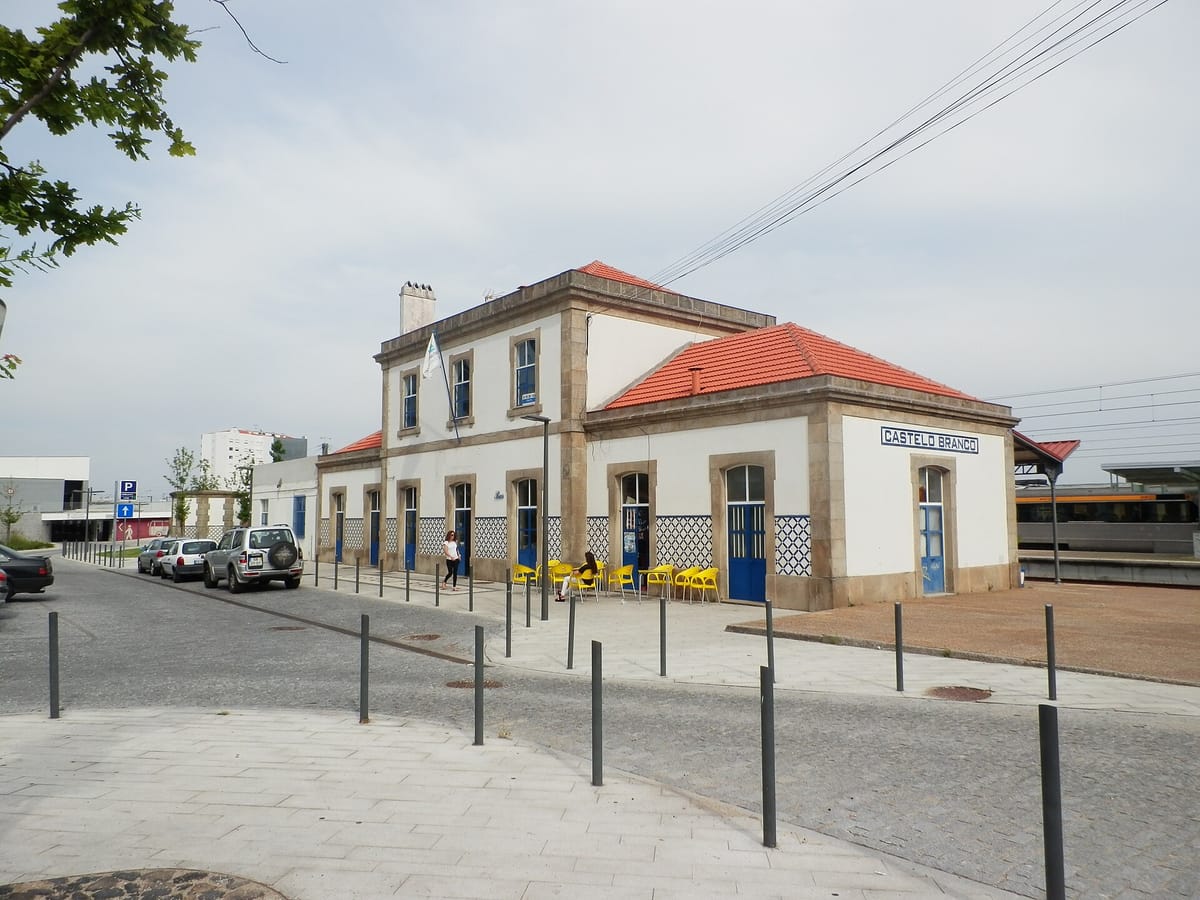
Since March, passengers on this part of the network have been riding buses. The Intercidades service was replaced by road between Abrantes and Guarda, and the Regional service between Mouriscas-A and Vila Velha de Ródão. Regional trains ran only as far as Mouriscas-A from the Entroncamento end, and between Vila Velha de Ródão and Castelo Branco at the other; the Intercidades turned back at Abrantes instead of continuing to Lisboa Santa Apolónia.
The Beira Baixa Line runs about 240 kilometres from Entroncamento to Guarda, through Abrantes, Castelo Branco and Covilhã. For anyone living in the interior of Beira Baixa, the reopening restores a direct rail connection towards Lisbon that has spent half a year in a coach. Timetables for the restored services are the thing to check before travelling, because the bus substitutions had their own published times and those now fall away.
The freight argument
The passenger case is the visible one, but the section also matters to goods traffic. With the Beira Baixa open along its full length, the national network regains a second route towards the Spanish border alongside the Beira Alta Line. Redundancy of that kind is what allows freight operators to keep moving when one corridor is blocked by works or weather, and the last six months have been a demonstration of what happens when it is missing.
Why it matters
- Interior connections are thin to begin with. Castelo Branco, Covilhã and Fundão are served by one line. When it closes, there is no alternative rail route, only a bus on the parallel road.
- Weather damage is now a recurring line item. Kristin took one embankment out of service for six months at a cost of 3.4 million euros. That is the real price of a single February storm on a single stretch of track.
- Rail demand is rising. Portuguese trains carried 3.7 million more passengers this spring than a year earlier, which makes six-month closures on secondary lines more costly than they once were.
Paulo Carmona, the president of Infraestruturas de Portugal, called the reopening "much more than the conclusion of a piece of work" when the date was announced, framing it as the return of an essential link for the people who live along it. As of Sunday, that is what it is.