Portugal's Car Output Slips to a Four-Year Low as Autoeuropa Pauses for Its EV Overhaul
National vehicle production fell about 1% to roughly 176,000 units in the first half — the weakest H1 since 2022 — after Autoeuropa's June output dropped around 25%. The Palmela plant is halting lines for a €300 million retooling for electric vehicles; nearly all output is exported.
Portugal's car factories have just closed their weakest first half in four years, a reminder that the country's most valuable export industry is not immune to the disruption reshaping the European auto sector. According to figures from the Automobile Association of Portugal (Associação Automóvel de Portugal, or ACAP), the trade body that compiles the sector's data, national output reached about 176,000 vehicles between January and June — a decline of roughly 1% on the same period last year, and the lowest half-year total since 2022, when a global shortage of semiconductors throttled production lines everywhere.
The headline drop is small, but it masks a sharp late-quarter reversal. Production had actually been running ahead of last year's pace through the spring; by the end of May, cumulative output was up more than 3%. What turned a positive half into a negative one was a steep fall in June, when the country's largest plant slammed on the brakes.
That plant is Autoeuropa, the Volkswagen factory at Palmela, near Setúbal, which on its own accounts for the great majority of the vehicles Portugal builds. Its June output fell by around a quarter year-on-year, enough to drag the whole national figure into the red. The likely explanation is not weak demand but deliberate downtime: Autoeuropa had already flagged that 2026 production would drop by roughly 10%, as it halts its lines for an investment of about 300 million euros to retool for electric vehicles. Extended stoppages of that kind cut output in the short term even when the long-term goal is to secure the plant's future.
Not every factory shrank. Stellantis's plant in Mangualde, which builds light commercial vans, was the exception, posting a small increase and partly cushioning the national total. But no other site in Portugal produces at anything like Autoeuropa's scale, so when Palmela pauses, the whole country's numbers move with it.
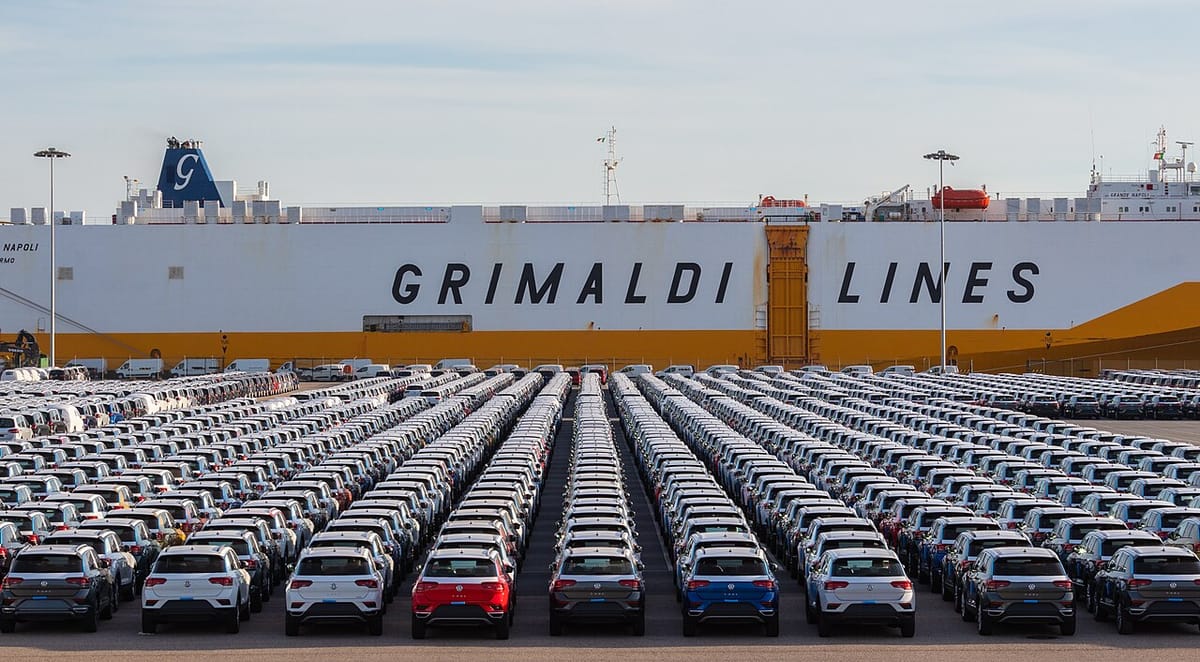
What is not in doubt is how much rides on these lines. The overwhelming majority of the vehicles assembled in Portugal — on the order of 98% — are shipped abroad, and Europe absorbs the lion's share. Germany is the single biggest destination, taking more than a fifth of national output, followed by Turkey, Italy, France and Spain. That export dependence is a strength in good years and an exposure in bad ones, tying Portuguese factory jobs to demand and model cycles decided in boardrooms far from Palmela.
For now, the industry's trajectory is less a crisis than a transition showing up in the statistics. The dip reflects a plant deliberately reinventing itself for an electric era rather than a collapse in orders, and Autoeuropa's overhaul is meant to leave it better placed for the years ahead. Even so, the half-year figures are a useful corrective to the idea that Portugal's export machine runs on autopilot. A single factory's retooling schedule can tip the national numbers, and the second half of the year will show whether the rebound authorities are counting on actually materialises once the lines at Palmela are running at full tilt again.