Universidade Nova de Lisboa and a Macau University Plan Joint Nanotechnology Programmes, With the First Chinese Students Due in Lisbon in 2027
Nova's nanotechnology institute has agreed with the Macau University of Science and Technology to train its students in Lisbon from 2027/2028, with 35 to 55 a year expected. The university making the commitment still has no confirmed rector.
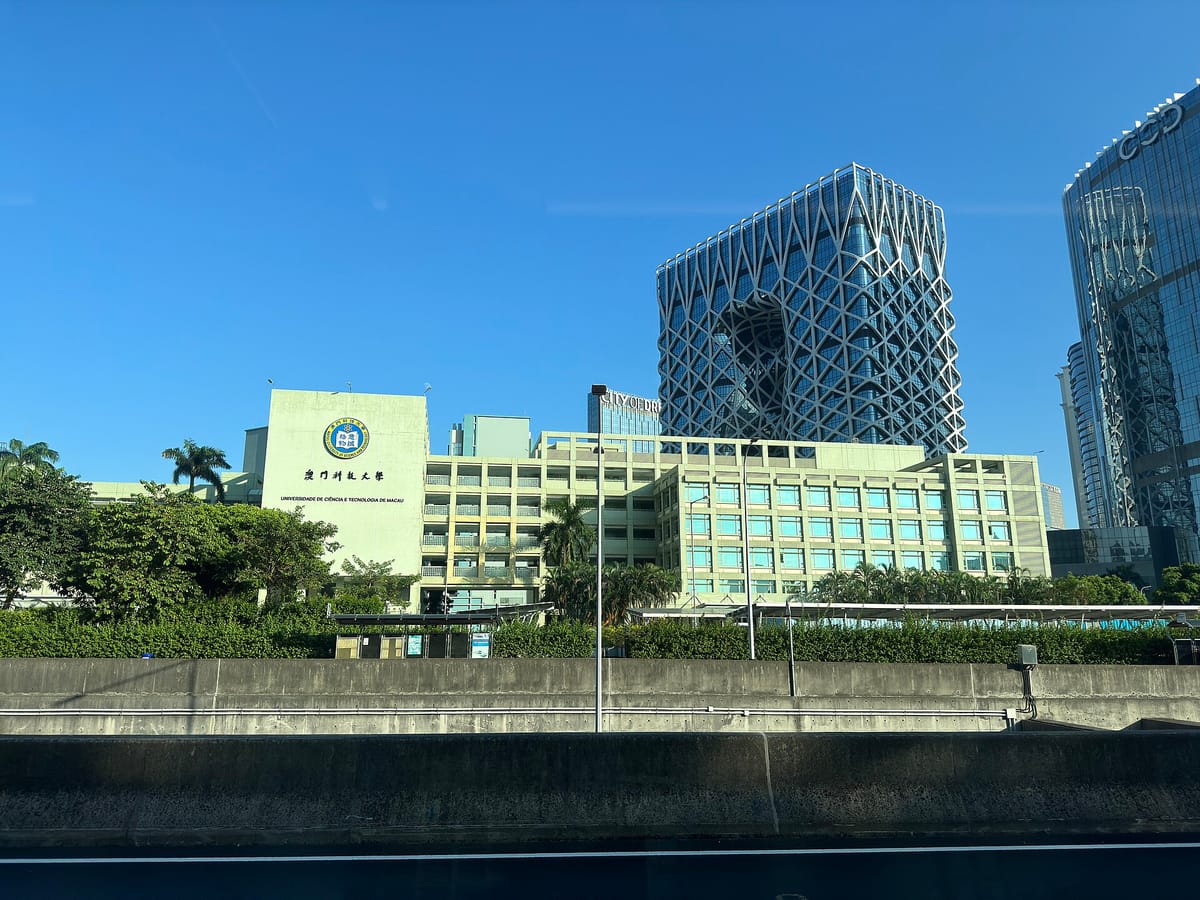
The Universidade Nova de Lisboa and the Macau University of Science and Technology (MUST) have agreed to build joint nanotechnology programmes, with the Chinese institution proposing to send master's and doctoral students to Lisbon under joint supervision from the 2027/2028 academic year. The agreement was reached this week in Macau and disclosed on Sunday by Elvira Fortunato, the materials scientist who served as Portugal's Minister of Science, Technology and Higher Education from 2022 to 2024.
It builds on infrastructure already in place. In April, Nova's i3N (Instituto de Nanoestruturas, Nanomodelação e Nanofabricação, the Institute of Nanostructures, Nanomodelling and Nanofabrication) opened a Sino-Portuguese Joint Laboratory of Optoelectronics based in Macau. Fortunato and Rodrigo Martins, who coordinates i3N-Nova and presides over the European Academy of Sciences, returned to the territory this week to turn that laboratory into a teaching pipeline.
The numbers on the table
MUST's Institute of Materials Science and Engineering has enrolled 87 undergraduates in nanotechnology this year, the first time it has run the programme. Fortunato described it as unique in Macau and uncommon worldwide. Nova has no equivalent undergraduate degree, but Martins expects an adaptation in which Macau students spend one or two years in Lisbon.
On his estimate, i3N-Nova could take 20 to 30 undergraduates, 10 to 15 master's students and five to ten doctoral candidates from MUST as early as 2027, with visiting professors coming for short periods to run research projects alongside the doctoral training.
The traffic is meant to run both ways. Lee Shuit-Tong, who heads the MUST materials institute and sits in the Chinese Academy of Sciences, told Lusa he expects Nova students, Portuguese and from other Portuguese-speaking countries, to travel to Macau, and wants the collaboration to end in cotutela degrees carrying diplomas from both institutions. MUST will seek authorisation from the Macau government before launching joint programmes, and Lee said he is optimistic, framing the territory's role as "a kind of window from China to the world, particularly in science and technology".
An institution doing this without a rector
The timing is awkward in a way the announcement does not mention. Nova has been without a confirmed rector since a contested succession produced ten lawsuits and a blocked confirmation, and on 25 August a Lisbon court annulled the second election over inadequate notice. International agreements of this kind are normally signed at rectoral level and require institutional authority to convert into accredited degrees. The research institute is moving faster than the university's governance can currently follow.
The Macau channel itself is not new. The territory has been positioned repeatedly as a bridge between Portugal and China, from the 109 cooperation deals signed with Portuguese and Spanish firms in a single week in April to the parliamentary visits that preceded them. What distinguishes this one is that it moves people rather than memoranda.
Fortunato also learned during the visit that she has been awarded the Chinese Friendship Award, one of Beijing's highest distinctions for foreign nationals. The ceremony is set for Beijing on 30 September, a year to the day after Martins received the same award.
What this means for foreign residents
- A new inbound student cohort for Lisbon. If the 2027 figures hold, Nova would receive between 35 and 55 additional Chinese students a year in one institute alone, concentrated in Caparica rather than the city centre.
- Joint supervision is the mechanism to watch. Joint supervision and cotutela degrees, not exchange semesters, are what make a partnership durable. They also require accreditation on both sides, which is where the timeline may slip.
- Lusophone students are explicitly included. Lee named students from other Portuguese-speaking countries as intended beneficiaries of the reverse flow, which would make Nova a routing point rather than only a destination.
Nothing is signed at government level yet. MUST's request to the Macau authorities is the next step, and on the Portuguese side the programmes will need a university able to approve them. Whichever comes first, the 2027/2028 target leaves roughly a year to settle both.