Time Out Market Porto Sues the City's Metro Company for 615,000 Euros Over the Pink Line Works at Its Door
The food hall beside São Bento station says the metro building site cost it sales, advertising money and its image. Metro do Porto blames its contractor, says access was never cut and argues that disruption from public works gives no automatic right to compensation.
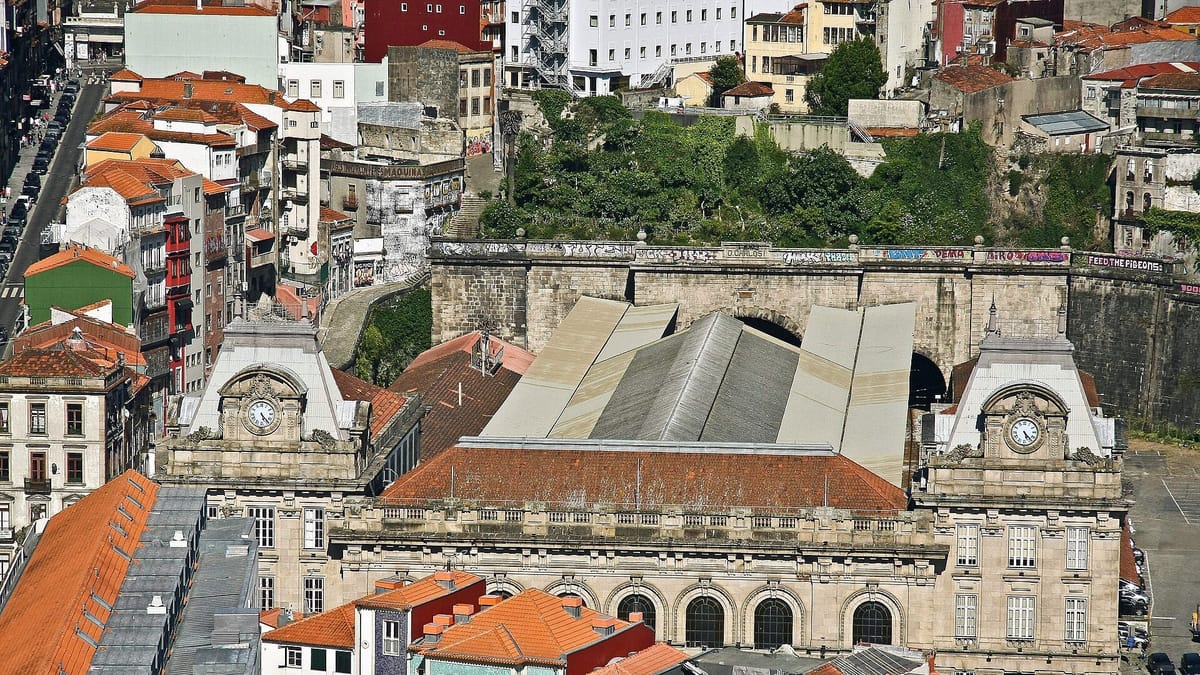
The Time Out Market in Porto, the food hall beside São Bento railway station, is suing Metro do Porto for 615,000 euros. It says the building site for the city's new Pink Line (Linha Rosa), planted outside its main entrance, drove customers away and forced it to spend heavily to win them back. The metro company denies any liability.
The case has been before the Tribunal Administrativo e Fiscal do Porto (Porto Administrative and Tax Court) since May, and the Lusa news agency has seen the filings.
How the claim adds up
The market breaks its claim into three parts.
- 175,500 euros in extra spending between October 2024 and December 2025, which it says went only on offsetting the works. The list includes extra events, paid advertising on Google and Meta, outdoor and radio campaigns, one-off promotions, additional entertainment in the food hall, cashback offers, parking schemes and new lighting.
- 239,600 euros in lost profits between October 2024 and February 2026. The market says its vendors' sales fell short of budget as footfall dropped as soon as the site went up. Its 2025 budget, it argues, assumed the Pink Line works around it would be finished.
- 200,000 euros for damage to its image and reputation, citing the site "in front of the main entrance" and the noise, dust, blocked views and difficult access that came with it.
It also claims late-payment interest.
Metro do Porto's defence
In its reply, Metro do Porto argues that it "did not carry out any administrative, technical or material act directly attributable" to the alleged damage, and that the works are the sole responsibility of the contractor, the Ferrovial and ACA consortium. It has asked for the consortium to be brought into the case, which the market opposes. The metro company also blames the contractor for the delay: the works were meant to finish in 2024, and the line is now due to open in the first quarter of 2027.
Its central argument is that disruption is the normal price of a public project. Works "in the heart of the historic centre, next to a working railway station and in an area of very heavy pedestrian and tourist traffic" necessarily bring temporary restrictions, it says. Those restrictions fall on residents, visitors, shopkeepers and tour operators alike, and do not "by themselves" create an automatic right to compensation.
The company also points to the timeline. The market opened in May 2024 "already fully aware of the works under way", it says. The site at São Bento was built before 2023 and only extended as far as Rua do Loureiro, in front of the market's entrance, in October 2024. The market can also be reached through the railway station, "full access" was kept at all times, and the market "never had to close because of the works", according to the metro company.
Why it matters beyond one food hall
The case tests a question that matters to any business beside a long-running public building site in Porto, where the Pink Line has overlapped with works such as the Metrobus: whether trade lost to ordinary, if prolonged, disruption can be claimed back from the public company behind the project.
No hearing date has been reported.