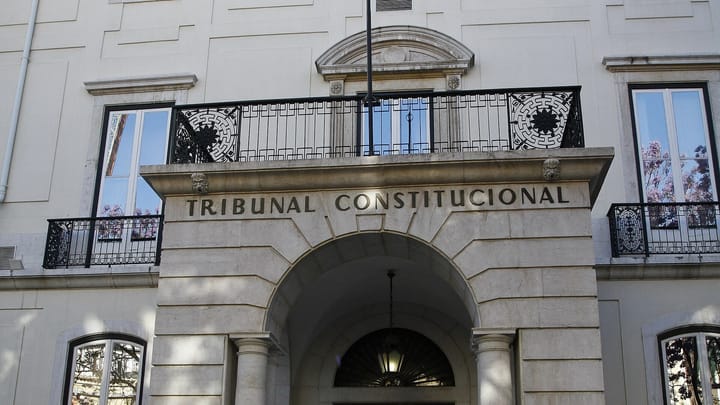
The Tax Authority Reclassifies Wind and Solar Parks as Single 'Properties,' and Their Municipal Tax Bills Could Double
A Tax Authority circular signed off on 27 July now treats each wind or solar farm as a single taxable 'property' — towers, blades, panels, substations and all — rather than a set of separate parts. One wind park's taxable value could jump from €63m to €150m. The renewables body APREN is fighting it;
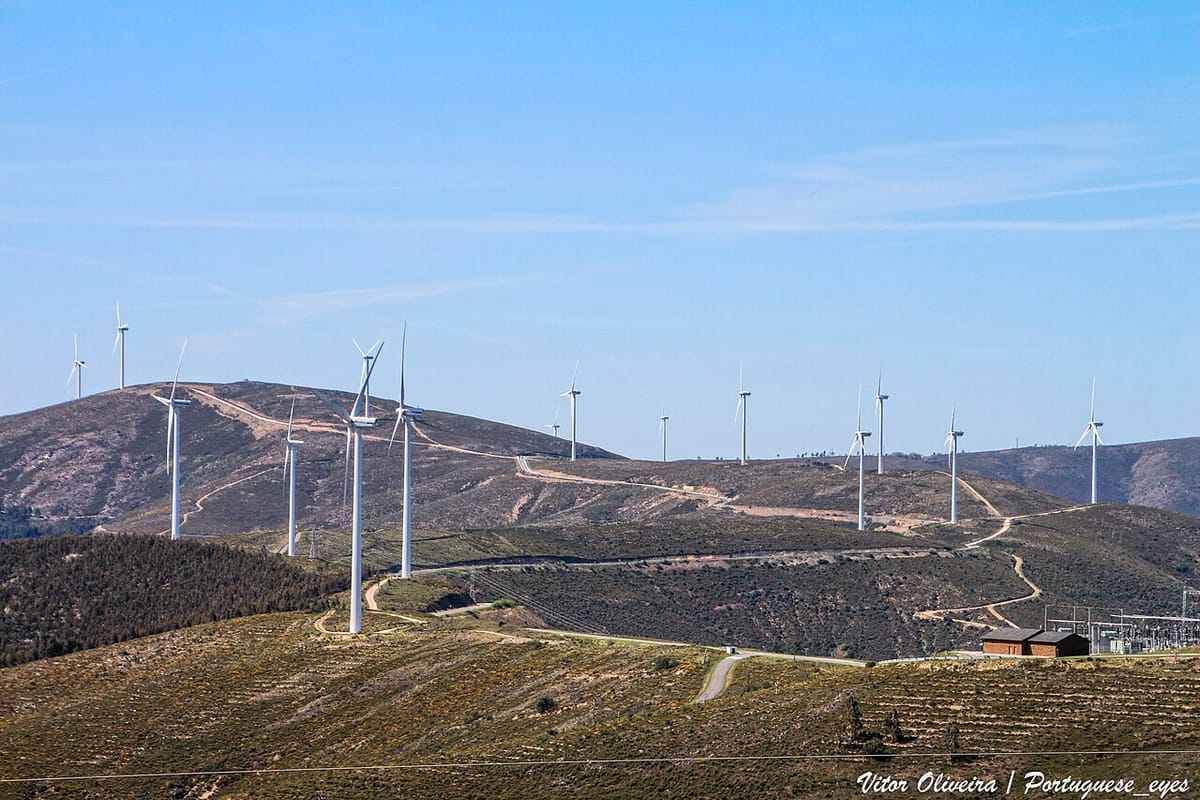
A single administrative circular, signed off in the final hours of one tax chief's tenure, could sharply raise the property-tax bills of Portugal's wind and solar farms — and pour fresh revenue into the rural councils that host them. The move has set the renewables industry against the municipalities, and it lands before Parliament has had any say.
What the Tax Authority changed
On 27 July, the Autoridade Tributária e Aduaneira (Tax and Customs Authority, or AT) issued Circular n.º 4/2026, rewriting how wind and solar installations are valued for IMI (Imposto Municipal sobre Imóveis — Municipal Property Tax). The new reading treats a renewable-energy centre as a single economic unit — a "universality of goods, equipment and infrastructures" needed to produce electricity — rather than a collection of separate parts.
In practice, that means an assessor must now value the whole productive system: towers, rotors, blades, nacelles, solar panels, substations and support structures. A 2021 circular had applied narrower rules that excluded certain wind-turbine components. The AT says its new "unitary vision" reflects recent case law from the Supremo Tribunal Administrativo (Supreme Administrative Court, or STA).
How big the jump could be
The numbers are eye-catching. The circular cites the Alto Minho I wind park, operated by Finerge, whose taxable property value could climb from about €63.24 million to roughly €150 million — more than double. That single park holds 130 turbines and five substations.
The potential reach is national. Portugal has 243 operational wind parks with 2,861 turbines, amounting to around 6 gigawatts of installed capacity, plus 148 solar facilities totalling some 2,830 megawatts. The new methodology applies both to new installations and, through revaluation requests lodged by municipalities, to parks that already exist.
Industry versus town halls
APREN (Associação Portuguesa de Energias Renováveis — Portuguese Renewable Energy Association) has come out firmly against the reinterpretation, arguing that productive equipment should not be folded into a property valuation at all. The association warns of a heavier fiscal burden on a strategic sector, knock-on effects for project viability, financing and ultimately consumer costs, and what it frames as double taxation on top of levies the industry already pays.
Municipalities see it differently. António Preto, a lawyer acting for local authorities, argues the circular "finally brings justice" to the territories that host these installations and considers the higher IMI take "inevitable." For thinly populated interior councils, a wind or solar park can be one of the largest taxable assets within their borders.
A decision made without Parliament
The timing is pointed. The circular was signed digitally at 23:04 on 27 July by the outgoing AT director-general, Helena Borges, days before Mário Campos took over the post on 1 August. The government had been preparing its own amendments to the IMI Code — work led by Dulce Neto — that would classify renewable centres as commercial, industrial or service properties, but that draft never reached Parliament before the AT acted on its own. The result is an administrative reinterpretation now in force while the legislative fix remains unwritten.
What This Means for Expats
- Energy costs to watch: If operators pass higher IMI through, it feeds into the broader debate over Portuguese power prices — the same backdrop as the regulator's plan to reconfigure six million meters and simplify time-of-use tariffs.
- Rural finances: For anyone living in the interior, this is real money for cash-strapped councils — potentially funding local services from a handful of large taxpayers.
- Legal uncertainty: With the tax authority and the legislature out of step, expect appeals — a reminder that in Portugal, a circular can move faster than a law.
For now, the meters keep spinning and the turbines keep turning. Whether their owners end up paying twice as much to the towns beneath them is a fight only just beginning.