The Council of Ministers Recasts Portugal's Arts-Funding Model, Tying Four-Year Grants to Inflation and Widening It to Comics, Crafts and Digital Art
The Council of Ministers has approved a revision of the arts-support model. Four-year grants will be indexed to inflation up to 2%, cumulative support is capped at €450,000 per entity, the 2027-2028 pot rises to €39.2 million, and comics, digital arts, crafts and archives join the eligible fields.
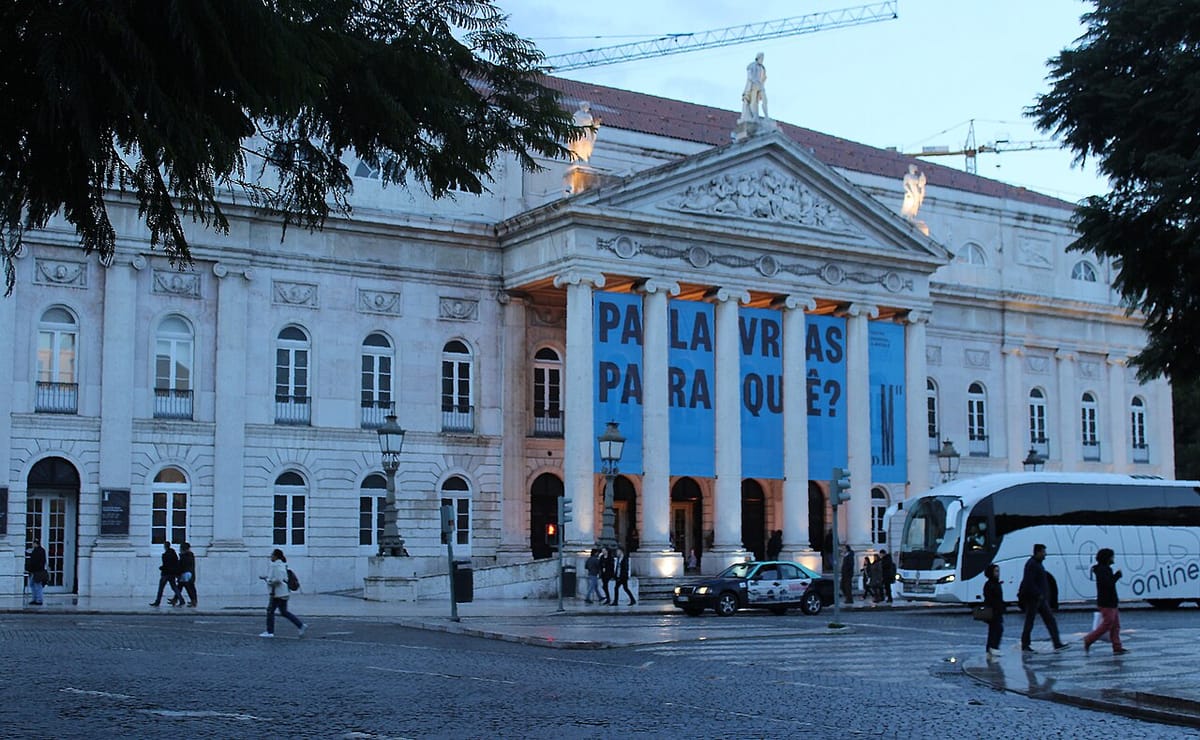
Portugal's system for funding the performing and visual arts is getting its most significant rewrite in years. The Conselho de Ministros (Council of Ministers) has approved a revision of the modelo de apoio às artes (the arts-support model), the framework through which the state channels money to theatre companies, dance troupes, music ensembles, galleries and other cultural bodies. The overhaul, presented by the Minister of Culture, Youth and Sport, Margarida Balseiro Lopes, answers a grievance the sector has been voicing for years and widens the range of art forms the state is willing to bankroll.
Grants that keep pace with inflation
The headline change is that four-year support grants will now be indexed to inflation, up to a ceiling of 2% a year. In practice that means the multi-year funding awarded to arts organisations will rise automatically with the cost of living rather than being frozen at the figure set when the contract was signed — a long-standing complaint from companies whose costs climbed while their state support stood still. The indexing applies from 2027 onwards to the renewed four-year cycle covering 2027 to 2030, and the government puts the value of the measure at around €7 million.
To keep the money from concentrating in a handful of large institutions, the revision also caps cumulative support at €450,000 per entity across all of the programmes combined — a limit designed to spread public funding more widely across the cultural ecosystem.
More money, and two new programmes
The biennial programme covering 2027 and 2028 is set at €39.2 million, roughly €4 million more than the previous cycle. Of the 135 entities that received support under the 2023-2026 round, 125 are expected to have their funding renewed for 2027-2030, giving established companies a measure of continuity.
Alongside the renewals, the government is creating two new strands. One is a dedicated line for new creators and debut works, aimed at artists at the start of their careers who have historically struggled to break into a system built around already-established organisations. The other is an External Cultural Action programme intended to help Portuguese work circulate abroad — touring, festivals and international co-productions.
New art forms come inside the tent
The revision also broadens the definition of what counts as fundable art. Comic books (banda desenhada), digital arts, traditional crafts (artes e ofícios) and archives are being added to the eligible artistic domains, extending state recognition to fields that had sat outside the core theatre-dance-music-visual-arts framework.
The regulatory detail that will govern how all of this works in practice was put out for public consultation, with the window running through 30 July, so the fine print of the implementing rules is still being settled even as the headline model is approved.
The backdrop
Arts funding has been one of the more combustible corners of Portuguese cultural policy. The apoios às artes competitions run by the DGArtes (Direcção-Geral das Artes — Directorate-General for the Arts) have produced recurring rounds of protest over which companies win support, how much and for how long, with organisations warning that unstable, non-indexed funding makes it impossible to plan seasons or keep staff. Tying grants to inflation and guaranteeing renewals for most existing beneficiaries is a direct response to that instability. The pattern continued in September, when DGArtes turned away 131 eligible music and opera applications because the money ran out.
It is a different lever from the one the government pulled earlier this year on the private-money side, when it sweetened the tax breaks for cultural patronage and Parliament approved a new mecenato regime to coax more corporate donations toward the arts. This week's move works on the public-spending side of the same equation — and it lands in a sector where relations with government have been tense, as the “Festas Sem Abril” petition by 600 Lisbon cultural workers made plain earlier in the year.