Portugal's Arts Agency Funds 77 Music and Opera Projects and Turns Away 131 That Qualified, Because the Money Ran Out
DGArtes is spending 2.195 million euros on 72 music and five opera projects, most of them in the Norte and the Centro. Of 222 applications, 131 cleared the eligibility bar and still got nothing, the same pattern as every other call in this year's programme.
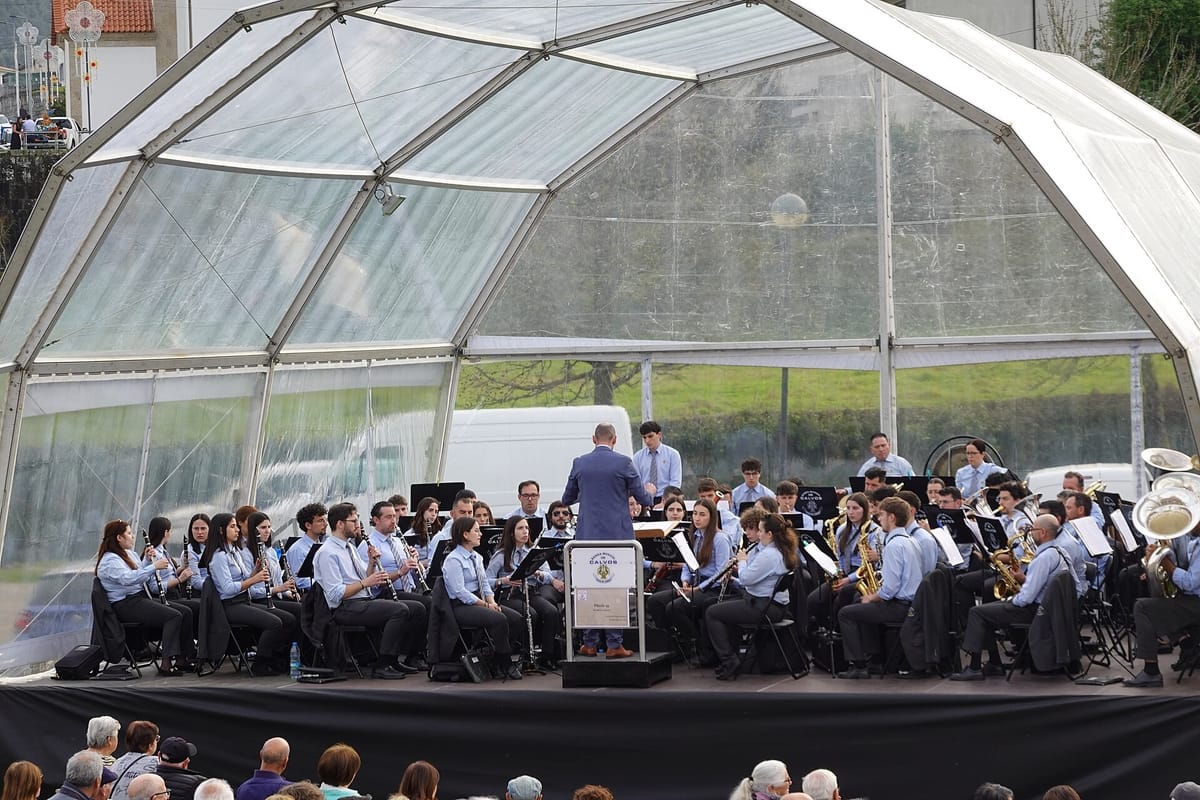
The Direção-Geral das Artes (DGArtes, the Directorate-General for the Arts) announced on Tuesday that it will fund 77 new music and opera projects across Portugal with 2,195,000 euros. Seventy-two are music projects and five are opera. The same decision leaves 145 applicants with nothing, and for 131 of them the reason given is not the quality of the work. The money ran out.
The result closes the creation call for music and opera in the Programa de Apoio a Projetos (Project Support Programme), and with it the last of the programme's seven calls. DGArtes says the seven together support 575 projects with a combined 12.66 million euros.
Who got money, and where
The funded projects are spread across every region, and the distribution leans heavily away from the capital. According to DGArtes, 26 are in the Norte region, 23 in the Centro, 11 in Grande Lisboa, 7 in the Alentejo, 5 in Oeste e Vale do Tejo, 2 in the Algarve, and 1 each in the Península de Setúbal, Madeira and the Azores.
That spread is by design. The opening notice for the call, Aviso n.º 1471/2026/2 of 26 January, allocates support region by region first and only then ranks the remaining applications nationally from the highest score down. It also allows an applicant whose funding tier has been exhausted to be offered the fixed amount of the tier immediately below, which is how some projects end up funded at less than they asked for.
Funded activity runs until the end of February 2028. It can cover the conception, production and public presentation of new work, artistic residencies and, for music, performance, as well as touring within Portugal, programming, international work, training, audience mediation, publishing and research. DGArtes lists the call's strategic aims as territorial cohesion and strengthening local communities, particularly in low-density areas; environmental sustainability; and the use of music to improve wellbeing and build skills among groups facing social exclusion.
Among the artists and organisations funded, the Lusa news agency named the musicians Dela Marmy and Filipe Raposo, the Associação Robalo Music, the Associação Quarteto de Cordas de Matosinhos, Filho Único, the Jazz ao Centro Clube and AREPO, an association for opera and contemporary arts.
The 131 who qualified and still got nothing
Lusa, reporting the final decision published on DGArtes' own site, put the number of applications at 222. Of the 145 left without support, 14 scored below the 60 percent minimum that any applicant must reach to be eligible. The other 131 were turned away because "the overall amount available had been exhausted", the formula the decision uses for applications that were eligible but fell below the funding line.
Music and opera is not an outlier. Lusa's tally of the programme's other calls this year shows the same pattern in each:
- Internationalisation: 115 projects supported, 41 left out for lack of money despite scoring above 60 percent.
- Programming: 71 supported, 110 left out for lack of money despite scoring above 60 percent.
- Cross-disciplinary creation and programming: 99 supported, with around a third of applications unfunded because the budget ran out.
- Visual arts: 74 supported with about 1.9 million euros, 60 left out for lack of money.
- Creation in street arts, circus, dance and theatre: more than half of applications unfunded because the budget ran out.
- Publishing: 54 supported, 52 left out for lack of money. DGArtes put the value of that call at 1.06 million euros.
Across the five calls where Lusa gave an exact count, that is at least 394 applications turned away for want of money alone. The two calls where only a proportion was given would add to it.
A 2025 programme decided in September 2026
The programme carries the label 2025, but it only opened at the end of January this year. Lusa reports that it opened with a total of 13.35 million euros, the same amount as in 2023 and 2024. The application deadline was 12 March, and it was pushed back to 2 April because the storms early in the year had hit the arts sector, particularly in the Centro region. The digital signatures on the music and opera decision are dated Tuesday, almost six months after applications closed.
Arts organisations have complained repeatedly about late openings and about underfunding. The pattern of eligible projects going unfunded is not new either: Lusa notes that the same thing happened when the results of last year's round were published, and in the rounds before that.
What this means for you
- If you go to concerts outside Lisbon, most of this money is aimed at you. More than six in ten of the funded projects are in the Norte and the Centro, and the call explicitly favours low-density areas. The funded programmes run until February 2028.
- If you are an artist or run a cultural association in Portugal, the arithmetic is the lesson. Clearing the 60 percent bar is necessary but nowhere near sufficient; in music and opera, fewer than four in ten applications were funded. The regional first stage means where you are based can matter as much as your score.
- Funding rules are changing too. Separately, the government is turning six years of recovery-fund spending on traditional crafts into a permanent network, the Rede Portuguesa Saber Fazer, with membership the condition for support, with draft rules open for comment until 1 October.
For the 131 music and opera applicants who met the bar, the decision offers no route to money in this round. DGArtes has not said when the next project programme will open or what it will be worth.