The Alentejo Certifies Its First 18 'Stay Cool' Climate Refuges, With €1 Million Nationally Behind the Scheme
Almodovar and Cuba have seven each, Mourao two, Arronches and Castelo de Vide one apiece. Turismo de Portugal's call covers 80% of eligible costs to a ceiling of €75,000 per application, and stays open until the €1 million is gone.
Eighteen places in the Alentejo now carry the "Stay Cool" climate refuge mark, the first cluster in a national network that Turismo de Portugal (the national tourism board) opened this summer with €1 million behind it. The idea is simple: publicly signposted spaces, indoors or out, where anyone can get out of extreme heat, sit down and drink water without paying for the privilege.
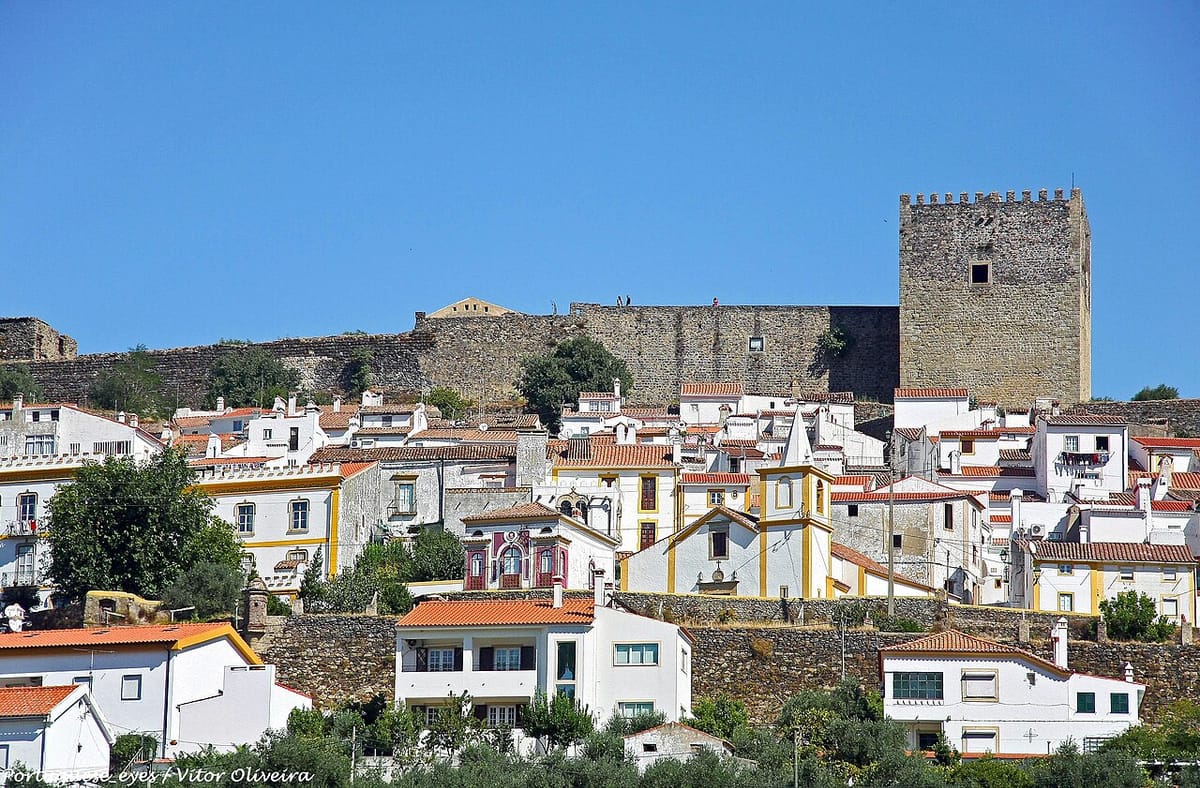
The eighteen are spread across five councils. Almodôvar and Cuba, both in the Beja district, have seven each. Mourão, in the Évora district, has two. Arronches and Castelo de Vide, in Portalegre, have one apiece. The regional tourism board wants the network extended across the whole of the Alentejo.
What counts as a refuge
Turismo de Portugal describes a refuge as an accessible, thermally comfortable space that is safe to spend time in during a heat episode. That covers two quite different things: an air-conditioned interior such as a library, museum, church, shopping centre or cultural venue; or an outdoor space with real shade and vegetation. Certified places display an official symbol, and the programme is building a public map. The Alentejo eighteen offer climate control, drinking water and somewhere to rest. The scheme was presented in June, in Monsaraz, and sits inside Turismo de Portugal's Agenda for Climate Action in Tourism 2030.
The money
The funding call opened in early August under the Crescer com o Turismo (Growing with Tourism) programme. Councils and parish councils can apply, individually or jointly. The support is a non-repayable grant covering 80 percent of eligible costs, capped at €75,000 per application or per entity in a joint bid. Turismo de Portugal has 20 working days to decide on each application, and the window stays open on a rolling basis until the €1 million runs out or the programme expires.
What the money buys is unglamorous and specific: high-efficiency air conditioning, mechanical ventilation, ceiling fans and thermal curtains; awnings, shade sails and tree planting; drinking fountains, public water points and evaporative cooling; seating and public Wi-Fi so people actually stay; ramps and handrails for accessibility; and signage so the refuge can be found.
Why it exists
The public health case is not theoretical. INSA, the national health institute, attributed an estimated 680 excess deaths to three heat spells this summer, concentrated among the very old. Two earlier heatwaves this year were tied to about 123 excess deaths, almost all among people over 85. The government's 2030 climate-adaptation strategy names heatwaves as a priority, and a report this month argued Portugal has the science to adapt but lacks the nerve to act on it.
It is worth being clear about what a €75,000 ceiling buys. This is not adaptation infrastructure; it is retrofitting rooms and squares that already exist. That is a sensible use of a small budget, but the Alentejo, where summer afternoons routinely pass 40°C, needs considerably more than eighteen rooms.
What this means for you
- If you live in the interior: ask your junta de freguesia whether the local library, museum or municipal building is signed up. The scheme is voluntary and council-driven, so coverage depends entirely on whether your council applied.
- If you care for an older relative: the excess-death figures fall overwhelmingly on the over-85s, and a refuge within walking distance matters far more than one across town.
- If you are travelling in the Alentejo in summer: the marked refuges are open to visitors as well as residents. Turismo de Portugal is assembling the map at refugiosclimaticos.turismodeportugal.pt.
- If you run a tourism business: hotels and tourist enterprises can register spaces with the programme, which is free visibility on a national map for something many properties already have.
Portugal has been reaching for this idea in pieces: Lisbon, Castelo Branco and Beja have all announced heat shelters of their own. A single national label, with money and a map attached, is the first attempt to make the pieces legible to the people who need them.