Portugal Has the Science to Climate-Proof Its Land. A New Report Says It Lacks the Nerve to Act.
Portugal already knows how to protect its soil and forests from a changing climate, a new report argues. What it lacks is the nerve to set targets, the centralised data to back them and the institutions to turn science into policy.
After a summer in which fires again tore through the interior and the Alentejo's soils baked, a quieter document lands with an uncomfortable message: Portugal, for the most part, already knows how to protect its land from a changing climate. What it lacks is the nerve to set targets, the data to back them and the institutions to turn research into decisions.
That is the central conclusion of an executive summary from a March 2026 conference on science-based policymaking, run by the CHANGE and TERRA research laboratories and reported by Público. Drawing on five workshops — covering soil and agriculture, nature restoration, land use, climate and energy resilience, and "One Health" — the report identifies one obstacle running through all of them: the mismatch between the time of science, which needs long cycles of research and validation, and the time of politics, driven by urgency and short electoral mandates.
Cristina Branquinho, a researcher at CHANGE and the Centre for Ecology, Evolution and Environmental Changes (cE3C), points to a habit of working in disciplinary "silos" that ignores trade-offs. Her example is telling: rules that require scrubland to be cleared can be essential against fire in the north and centre, yet in the drier south the same clearing accelerates erosion and desertification. "The same policy does not produce the same results," she notes, because it is not adapted to local risk. Worse, she argues, Portugal rarely checks whether its policies worked at all: "When we implement a policy, nobody evaluates whether it was counterproductive," and monitoring tends to be swept away whenever a new party takes office.
Susana Filipe, executive director of CHANGE, sharpens the point on soil. Portugal has no aggregated national targets for soil health, she says — a gap other countries have closed — and even where European rules define the parameters, laboratories struggle to return results fast enough to keep farmers engaged. She singles out the ProSolo law, drafted to protect soil, that was never approved: leaving it "in a drawer," she says, "is absurd," especially while the polluter-pays principle remains standard elsewhere in Europe. Nor is the problem a shortage of information. "In Portugal we don't lack data. We have data scattered across many places," she says, in contrast to the centralised, open platforms other countries maintain.
The proposed fixes are institutional rather than technological: knowledge "intermediaries" who can translate between researchers and officials; open, interoperable data; stronger technical capacity inside the public administration; and "living labs" that bring academia, business, government and civil society together from the start. Filipe also urges a shift from subsidies based on farm size to Austrian-style "payment by results," rewarding measurable gains in soil organic matter, biodiversity or reduced erosion.
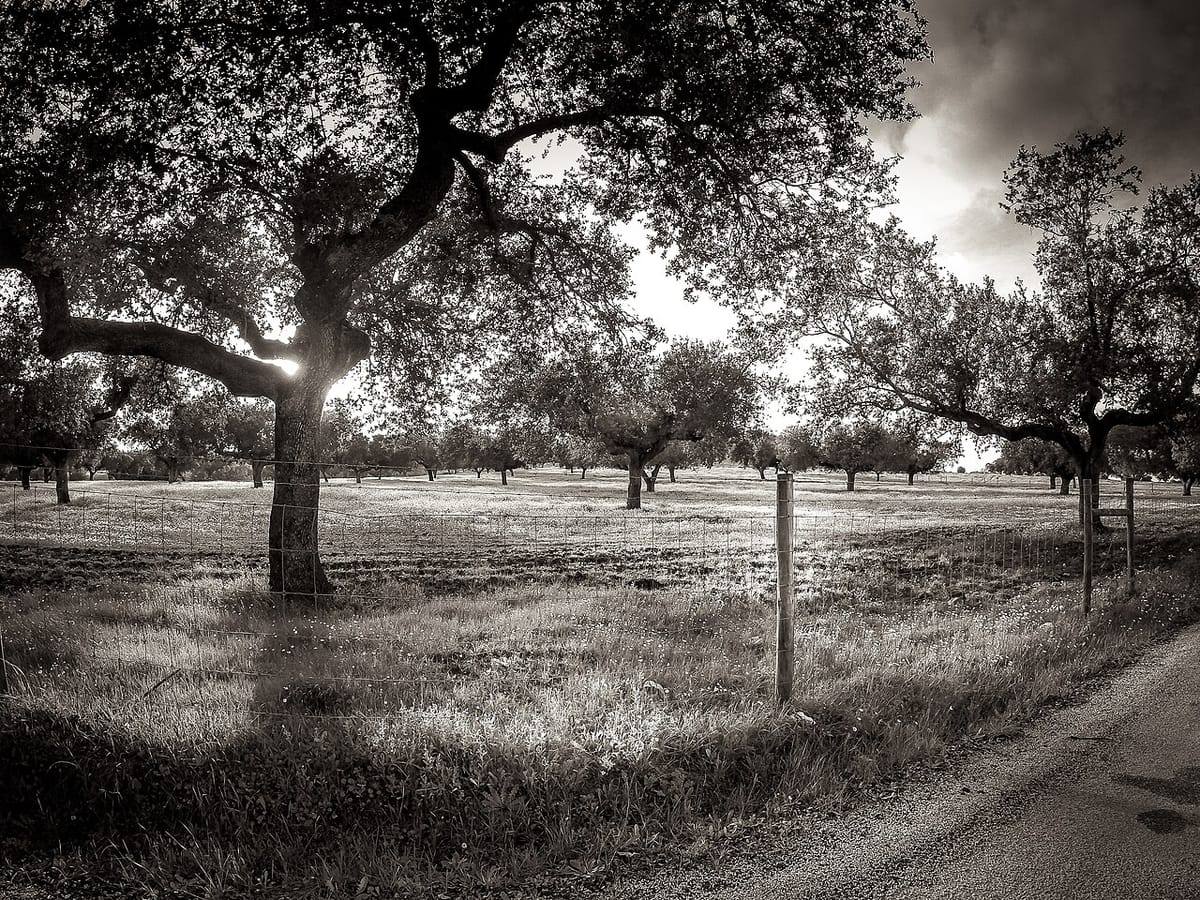
None of this is entirely new terrain for the government, which last year tabled a 2030 climate-adaptation strategy aimed at heat, drought, fire and floods. But the warning chimes with the structural weaknesses that campaigners at Zero have already flagged in Portugal's emissions trajectory, and with the slow decline of the Alentejo montado. The report's authors now plan to send their findings to the relevant ministries — hoping, as the summary puts it, that the recommendations do not end up filed away in a drawer of their own.