Portuguese Cork Sector Guards Its 50% Slice of Global Raw Production as Apcor Weighs Climate Pressure on the Alentejo Montado — 59% of Stands Now Show No Natural Regeneration in Frontiers Research
Portugal holds roughly 50% of global raw cork production and ranks as the world's largest cork exporter, anchoring a €1 billion-plus export sector — but Frontiers research flags 59% of Portuguese cork-oak stands now show no natural regeneration under climate stress.
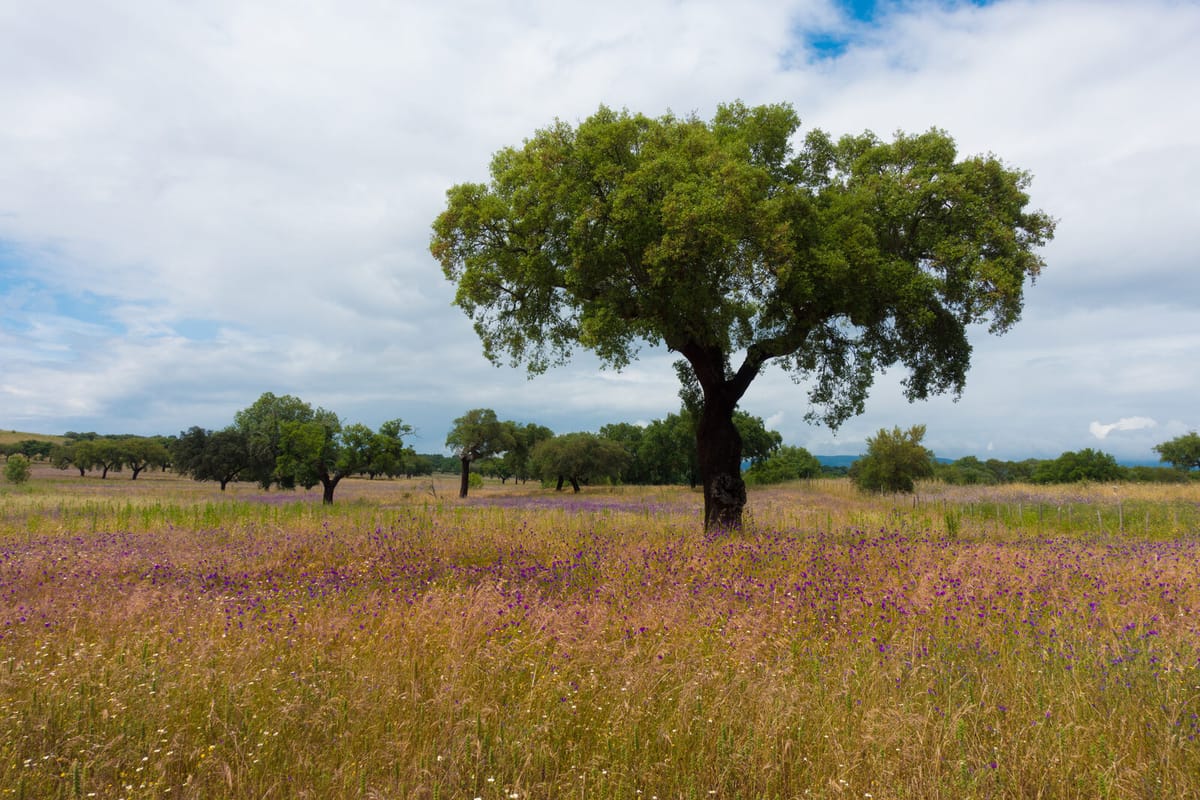
Portugal accounts for roughly 50% of global raw cork production and ranks as the world's largest cork exporter, according to data published by the Associação Portuguesa da Cortiça (Apcor, Portuguese Cork Association). The sector exports over €1 billion of cork products annually, anchored by Corticeira Amorim — the world's largest cork manufacturer by revenue — and a cluster of smaller processors concentrated around Santa Maria da Feira, Coruche and Évora. The Alentejo and Ribatejo regions hold the bulk of the montado, the agro-silvo-pastoral landscape on which the entire sector depends. But research published in Frontiers in Forests and Global Change last year flagged that 59% of Portuguese cork-oak (Quercus suber) stands now show no natural regeneration — and the lag time on the cork-oak life cycle means that gap, if left to widen, lands as a supply problem in the second half of this century.
The production dominance
Portugal harvests roughly 100,000 tonnes of raw cork in an average production year, against world output of around 200,000 tonnes — yielding the 50% global share Apcor cites. Spain sits in second place at roughly 30%, followed by Italy, Morocco, Algeria and Tunisia. Cork accounts for around 2% of Portuguese goods exports — modest in headline terms, but disproportionately important in rural Alentejo employment and Portuguese trade-balance optics. The sector employs roughly 12,000 directly and supports an estimated 30,000 livelihoods across cork forest management, harvest, processing and conversion.
Wine stoppers still drive the revenue line
Wine-bottle closures — natural cork stoppers, technical corks and micro-agglomerated cork — account for the bulk of sector revenue, with construction, fashion (cork leather), industrial gaskets and aerospace insulation rounding out the demand mix. The wine-stopper segment has faced sustained competition from screw caps and synthetic closures, particularly in New World wines, but Amorim's NDtech individual-cork screening technology — which inspects each natural cork for 2,4,6-trichloroanisole (TCA, the compound behind cork taint) — has substantially closed the historic quality-perception gap. Premium wine producers have largely stayed loyal to natural cork on the back of TCA-screening progress and the sector's carbon-footprint argument.
The carbon math the sector leans on
Each kilogram of cork produced is associated with roughly 73 kilograms of CO₂ captured by the cork-oak system over the harvest cycle, according to industry figures. The montado is one of Europe's most efficient carbon-sequestration landscapes per hectare under active human management, and cork-oak is the only tree species whose bark fully regenerates after stripping — harvest happens once every nine years and does not kill the tree. The lifecycle carbon balance of a natural cork stopper compares favourably with aluminium screw caps and synthetic closures, a calculation the sector has leaned on increasingly hard in European Union retailer sustainability conversations.
The regeneration alarm
The Frontiers in Forests and Global Change 2024 paper — the most-cited recent academic flag on Portuguese cork sustainability — assessed natural regeneration across the Portuguese montado and found that 59% of cork-oak stands show no successful natural regeneration cohort. The drivers are well understood: hotter and drier summers under the climate trajectory, reduced and increasingly erratic winter rainfall, intensified cork-oak pest pressure (particularly the Lymantria dispar caterpillar and Phytophthora cinnamomi root rot), overgrazing by free-ranging livestock, and an elevated wildfire risk. The lag is what makes this a strategic problem: cork-oak takes roughly 25 years from planting to first harvest, and a stand without a regeneration cohort behind the working trees today sets the sector up for a 25-to-50-year supply hole later in the century.
The adaptation playbook
Apcor and the Instituto da Conservação da Natureza e das Florestas (ICNF, Institute for the Conservation of Nature and Forests) are working through the Plano Nacional para a Defesa do Sobreiro e da Azinheira (National Plan for the Defence of the Cork Oak and Holm Oak), which targets fenced regeneration plots, drought-resistant clone trials, controlled grazing protocols, prescribed-burn fire-load management and continued European Union Política Agrícola Comum (PAC, Common Agricultural Policy) eco-scheme funding for the montado. Corticeira Amorim's own forestry arm is investing in irrigation-supported nursery stock and cork-oak agroforestry pilots in Alentejo and the Algarve interior.
What this means
The cork sector's near-term commercial outlook through 2030 remains broadly stable — existing mature stands continue to yield commercial-grade cork on the standard nine-year cycle, demand from premium wine producers is holding, and the sustainability story works in the sector's favour with European retailers. The medium-term supply curve, however, is set by regeneration cohorts going into the ground over the next decade. The 59% no-regeneration figure is the metric Apcor and Lisbon should be watching most closely — it determines whether Portugal still holds half of the global cork supply in 2055. On the land itself, the rush of institutional money into Portuguese farmland shows who is buying up the countryside. On the landowner side of the file, our guide to what you may and may not cut down on your own land sets out the cork oak and holm oak authorisation, the olive and holly bans, and the 25-year freeze that follows an illegal felling. Separately, our guide to who may hunt on Portuguese land, and how a landowner stops them sets out the four kinds of hunting zone, the days shooting is lawful, the 250-metre ring around a dwelling and the direito à não caça. On the protected-areas side of that, the decree closing the Sado Estuary conservation area sets out the building ban on rustic land, the 30-working-day ICNF opinion with silence counting as consent, and the 41,250 euro daily EU penalty that explains its timing.