The 20-Euro Green Rail Pass Arrives on Lisbon and Porto Commuter Trains in the Third Week of September
The Passe Ferroviario Verde extends to CP urban services in both metropolitan areas during European Mobility Week, 16 to 22 September. Rail-only commuters can pay 20 euros instead of the 40 euros a Navegante or Andante costs.
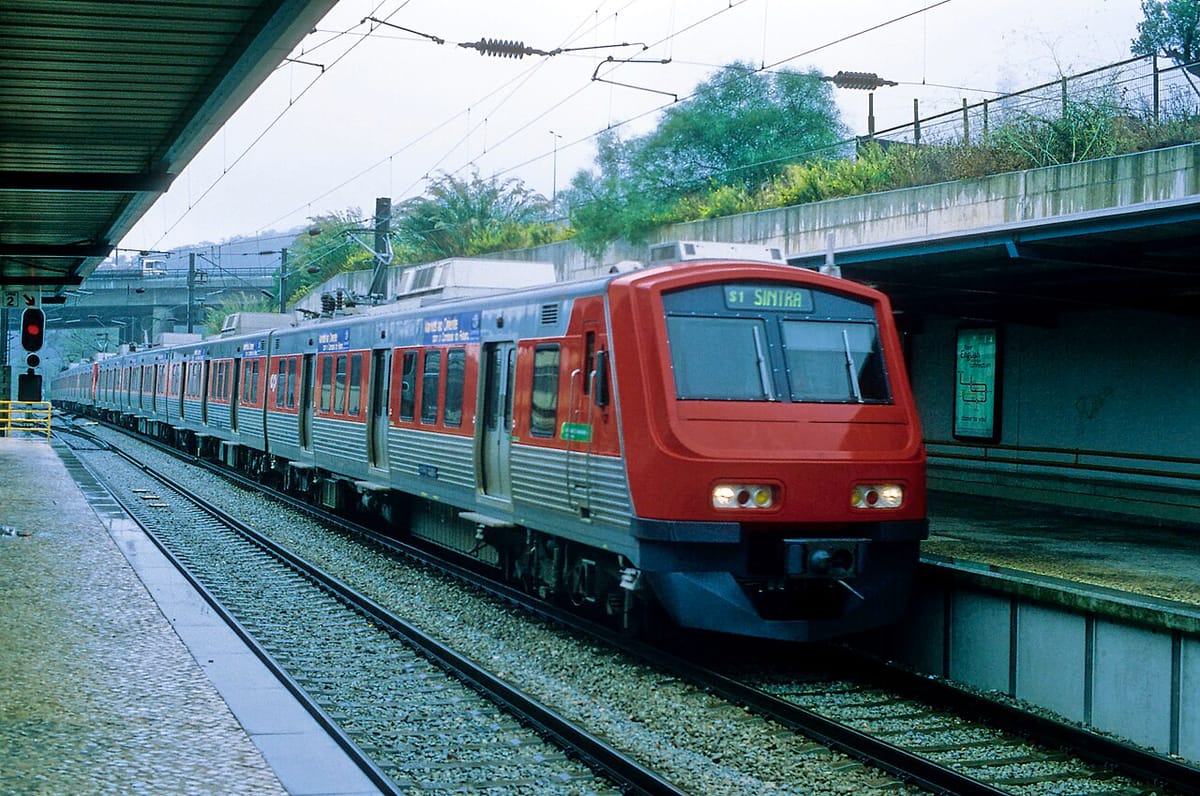
The date has finally been pinned down. Portugal's Passe Ferroviário Verde (Green Rail Pass), the flat-rate national train ticket that costs 20 euros for thirty days, will start working on CP's urban services inside the Lisbon and Porto metropolitan areas from the third week of September, timed to coincide with European Mobility Week from 16 to 22 September. Until now the pass covered almost the entire national network but stopped short of exactly the commuter lines most people use every day.
The Ministry of Infrastructure and Housing, under Miguel Pinto Luz, confirmed the timing after Prime Minister Luís Montenegro promised the extension in the Algarve in mid-August without committing to a date. "The reinforcement of the Green Rail Pass offering reduces costs for families and gives more reasons to leave the car at home," the ministry said.
What it costs and what it covers
- Price: 20 euros for 30 days, 40 euros for 60 days, 60 euros for 90 days.
- Network: the whole national railway, including the Fertagus line across the Tejo, plus, from September, CP's urban trains inside the Lisbon and Porto metropolitan areas.
- Excluded: Alfa Pendular services and first class on Intercidades. Intercidades journeys also require a seat reservation.
- Not included: anything that is not a train. Metro, bus, tram and ferry stay outside the pass.
The arithmetic that makes it interesting
The monthly intermodal passes in the two metropolitan areas, Navegante in Lisbon and Andante in Porto, cost 40 euros. Both will continue exactly as they are: the ministry has been explicit that there is "no change to usage rules" for either. What changes is that a commuter whose journey is entirely by train now has a second option at half the price.
For that traveller, swapping a 40-euro intermodal pass for the 20-euro rail pass saves roughly 240 euros a year. The ministry puts the upper end of the saving at about 480 euros a year, which applies to people currently buying two titles: a metropolitan pass for local journeys and something else for travel beyond the metropolitan boundary. Those passengers can collapse both into one 20-euro product.
The catch is the word "entirely". If your commute is train plus metro, or train plus a bus at the far end, Navegante or Andante still does a job the Green Rail Pass cannot. The saving is real but it is concentrated on a specific kind of traveller: station to station, no connection off the rails.
Where this sits in a wider push
Extending a national flat-rate pass into the two big commuter markets is the most consumer-visible piece of a broader effort to move traffic onto the railway. The Autoridade da Concorrência (Competition Authority) this week urged the government to open rail contracts to international tender, and the operator has been steadily replacing older rolling stock, including the switch to electric units on the Algarve line that added 18 percent more regional service. Cheap tickets and constrained capacity do not always sit comfortably together, and the September launch will be the first real test of whether the Lisbon and Porto lines can absorb whatever demand a half-price option creates.
What this means for you
- Do the sum before you switch: add up every leg of your daily journey. If any part is metro, bus or ferry, keep the intermodal pass. If every leg is CP or Fertagus, the 20-euro pass is a straight halving of your commuting cost.
- Longer validities are not discounted: 60 days costs 40 euros and 90 days costs 60 euros, exactly two and three times the monthly price. Buying in bulk saves trips to the ticket machine, not money.
- Plan around Intercidades: the pass covers standard class but you still need a reservation, so a spontaneous intercity trip on a busy weekend may not have a seat available.
- Watch the start date, not the month: the extension begins in the third week of September, so a pass bought on the first will not yet reach the metropolitan urban services.
The pass launched as a way to make the long-distance network affordable for people who rarely used it. Pulling the busiest commuter corridors inside it turns it into a daily-use product competing head to head with the metropolitan pass that has anchored transport pricing in Lisbon and Porto for years. How many people actually make the swap this autumn will say more than any ministerial estimate.