The Competition Authority Asks Portugal to Open Its Railways, and Says Any Rival Should Be Able to Use CP's Trains and Drivers
A study published on Thursday urges international tenders for future rail contracts and a strictly limited extension of CP's directly awarded deal. Across eight European cases, opening passenger rail cut ticket prices by an average of 28%.
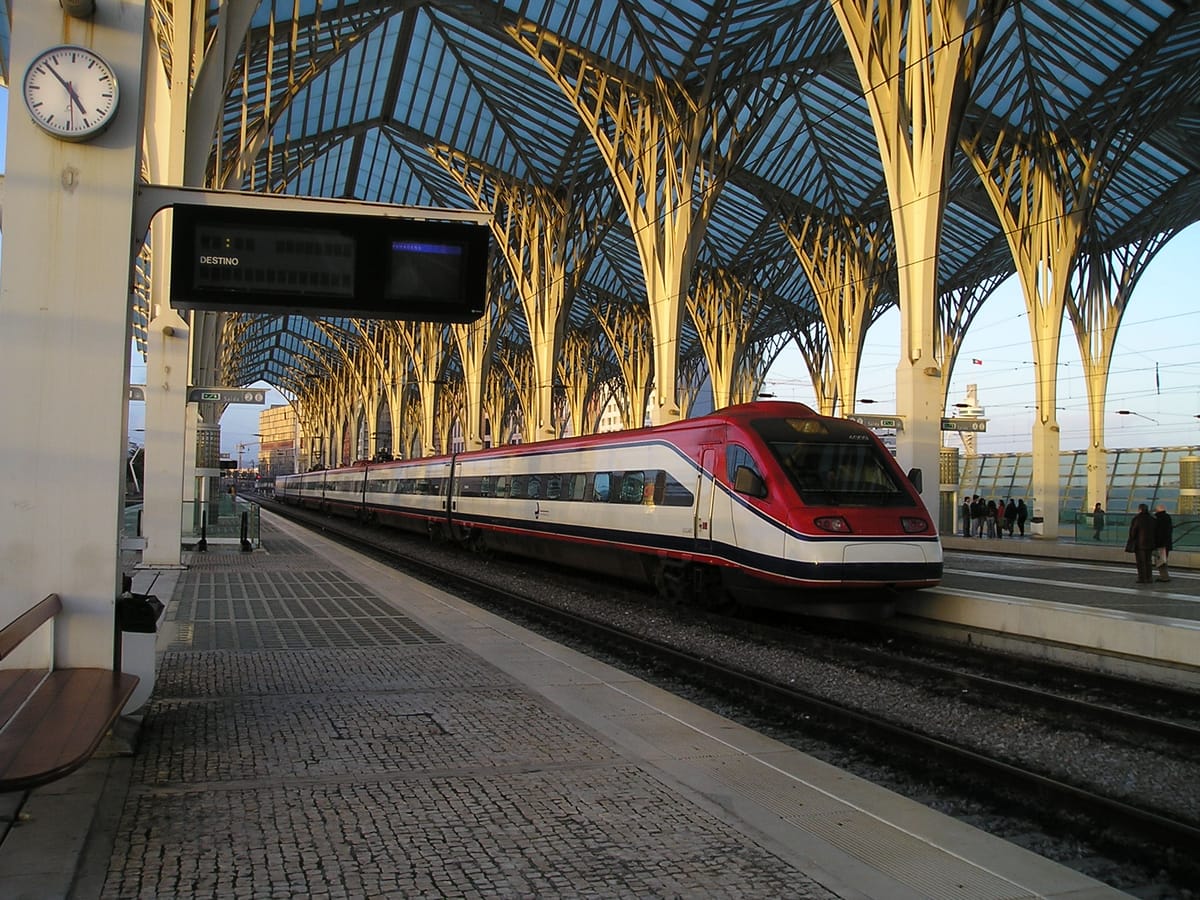
Portugal's competition regulator wants rival operators running trains on the national network, and it has told the government that any private company bidding to run Lisbon's suburban lines should be able to use CP's trains, CP's maintenance depots and, if necessary, CP's drivers.
The Autoridade da Concorrência (AdC) published a study on Thursday into competition in Portuguese passenger and freight rail. It is addressed to the government, to the transport regulator AMT, to infrastructure manager Infraestruturas de Portugal and to the operators themselves, and its purpose is to strip out the barriers that keep new entrants off the tracks.
Two routes to competition
The AdC frames the problem in two halves. There is competition for the market, meaning tenders that award public service contracts, and competition in the market, meaning commercial operators free to run services on routes where the economics work without a subsidy. It wants both. The timing, it says, is deliberate: significant investments are under way in the network and in rolling stock, and the future public service contracts are being drawn up now.
Its evidence is European. Across eight cases examined by the European Commission, opening passenger rail to competition cut ticket prices by an average of 28% in the period immediately afterwards. Service frequencies rose sharply too: by 40% on Vienna to Salzburg and by more than 56% on Rome to Milan. In freight, the regulator points to lower prices, operational efficiency gains, a wider range of services and, in some markets, higher demand.
The message to the government on CP
The sharpest recommendation concerns CP's own contract. The current public service contract was signed in 2019 by direct award, runs to 2029 and can be extended by a further five years. In January 2026 the government announced it intended to extend it to 2034.
The AdC recommends that any extension be limited to the period strictly necessary to amortise the investments already made, and that new public service contracts then be awarded through international public tenders. It also wants a route-by-route reassessment before those contracts are drawn, identifying services with genuine commercial potential that may not need a public service contract at all.
Trains, depots and drivers
The government has signalled it will subconcession the Cascais line, which operates in isolation from the rest of the network, and has left the door open to doing the same on the Sintra line. Those are the two urban services CP runs at a profit. The tender is expected in September, with a six-year term, and the winner is expected to pay rent for the new Alstom trains arriving from 2029.
For the AdC, a tender only attracts bidders if it hands them the "relevant inputs": above all "effective and non-discriminatory access to the necessary rolling stock". It says it is equally crucial to weigh measures guaranteeing access to CP's maintenance facilities and services, and to human resources such as drivers, in the event that existing employment contracts are not carried over.
What this means for you
- Suburban commuters are first in line. If you use the Cascais or Sintra lines, the operator behind the ticket barrier could change within a few years, even though the fare system stays public.
- Fares are the point. The European precedent the AdC cites is a 28% average price fall, though Portuguese suburban fares are already capped by the national passes, which limits how far that can travel.
- Long-distance travellers may see new names. Competition "in the market" would allow commercial operators on viable intercity routes without any subsidy.
- Nothing changes this year. The CP contract runs to 2029 at the earliest, and the recommendations are not binding on the government.
Portugal has spent the past two years deciding what to build, from new trains to the gauge its future high-speed line will use. The AdC's study is a reminder that it has not yet decided who gets to run on it. Update: the decree extending the 20-euro Green Rail Pass to Lisbon and Porto commuter trains and to Fertagus is in force from 26 September 2026; CP still has to set the start date and the rules of use.